Remembering Semyon F. Gluzman, MD: A Psychiatric Hero and Role Model

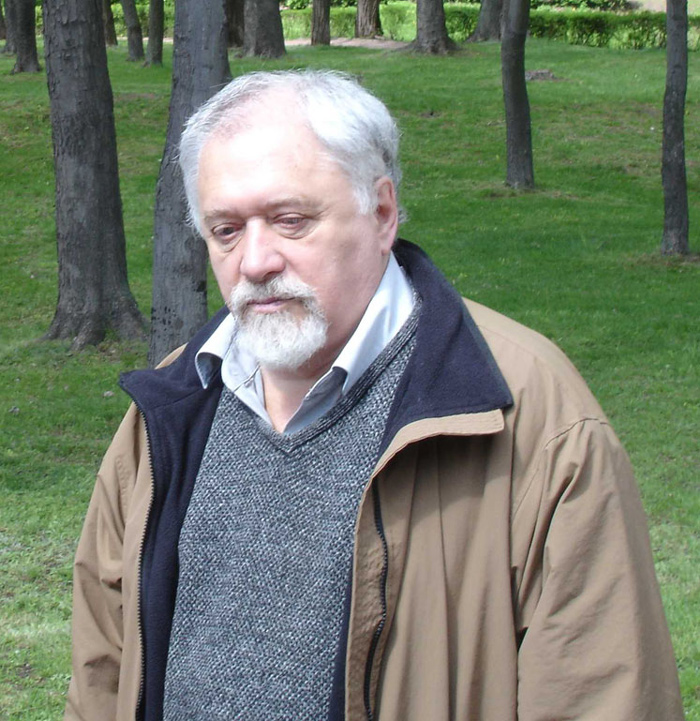
Most psychiatrists whose names are recognized beyond their professional colleagues have made significant intellectual contributions to our understanding of human behavior through their explorations of psychology and its neurologic underpinnings. Semyon F. Gluzman, MD, who died earlier this year at age 79, will be counted among the few psychiatrists who merit being remembered for their professional integrity and personal courage. Like Viktor Frankl, who psychologically supported fellow prisoners while interred in Auschwitz, and Janusz Korczak, a psychologically oriented pediatrician who accompanied the orphans in his care into the Warsaw Ghetto and then to their death in Treblinka, Gluzman has earned a place in the pantheon of psychiatric heroes.
Photo: Mikhail Kalnitsky, CC BY-SA 3.0, via Wikimedia Commons
Gluzman earned esteem among and beyond his colleagues for his brave insistence on the maintenance of professional standards and ethics in the face of Soviet exploitation of psychiatry which tried to silence political dissidents during the 1970’s. As a young psychiatrist, Gluzman audaciously inserted himself into the case of General Pyotr Grigorenko who had been committed to a hospital for the criminally insane for his defense of the rights of deported Crimean Tatars. Gluzman, after a comprehensive review of available clinical records related to Grigorenko’s psychiatric evaluation and commitment, determined that he was sane; Gluzman published his findings in a samizdat titled, “Forensic-Psychiatric Diagnosis of P.G. Grigorenko in Absentia.” His admission of authorship led directly to his own arrest. Thereafter he assumed the contentious posture of an adversary of the Moscow School of Psychiatry.
I first became aware of Semyon Gluzman when I read “Psychiatric Terror: How Soviet Psychiatry Is Used to Suppress Dissent,” by English psychiatrist Sidney Bloch, who had written about state abuses of psychiatry, and political scientist Peter Reddaway, whose work focused on Russia (1). I, a newly minted psychiatrist, was well aware of the criminal roles played by psychiatrists and physicians during the Nazi era. Their book awakened me to the nefarious ways in which my specialty was continuing to be abused. Gaining insight into how psychiatry might be used or abused differently across societies, my idealistically shaded realism was tainted by hard-nosed skepticism. The authors revealed an Orwellian world in which the psychiatrist’s fundamental duty was to the state rather than the individual patient. “… a clause in the Soviet physician’s oath … states that he must ‘work conscientiously wherever the interests of society demand.’” Gluzman memorably asserted that “Psychiatry is a branch of medicine not of penal law” (2). Illuminating their world of doublethink, a Dr. Martynenko of the Serbsky Institute of Forensic Psychiatry, to which political dissidents were committed, testified, “The absence of symptoms of an illness cannot prove the absence of the illness itself” (3). For me, the most haunting evidence of the plasticity of psychiatry in service of a totalitarian state was the invention of the diagnostic category of “sluggish schizophrenia,” invented in the 1950s. “He (Professor Daniil Lunts, a forensic psychiatrist) commented that ‘sluggish schizophrenia is not characterized by explicit, well-defined, psychotic phenomena such as delusions, hallucinations, etc. The illness takes its course without affecting the patient’s fitness for work or his former intellectual level and skills’” (4). It was for that reason that it was the diagnosis most frequently assigned to dissenters, including to General Grigorenko.
What Gluzman, along with rare others, exposed about the abusive political use of psychiatry in the Soviet Union led to heightened awareness by international psychiatric organizations, such as the World Psychiatric Association (WPA), and human rights advocacy organizations including the United Nations. The WPA, refuting the Moscow School of Psychiatry, issued its Declaration of Hawaii (1977), which outlined ethical standards for the practice of psychiatry. In 1983, the Soviet All-Union Society of Neuropathologists and Psychiatrists, which was entirely controlled by the Soviet state, withdrew from the WPA just prior to being expelled due to condemnation for its political abuses of psychiatry. It was allowed conditional readmission to the WPA in 1989 along with the newly formed Independent Psychiatric Association.
Gluzman, charged with spreading anti-Soviet propaganda, was detained by Soviet police in 1972. He subsequently served seven years in a labor camp in the Ural Mountains followed by three years of internal exile in Siberia. During his time in detention, he co-authored “A Manual on Psychiatry for Dissidents,” which was smuggled out from prison. It gained widespread attention in the international media. During his time of imprisonment, Gluzman was included on Amnesty International’s 1977 list of 92 medical professionals imprisoned for their political beliefs. Released from detention in 1982, Gluzman returned to Kyiv. Initially he was not allowed to practice medicine, but later was permitted to practice as a pediatrician. After the dissolution of the Soviet Union in 1991, he was instrumental in establishing the Ukrainian Psychiatric Association, which was open to all professionals who accepted its foundational principles of ethics, science, and independence from the state.
Sad to say, the Soviet Union was not alone in its abuse of psychiatry for political ends. Other countries accused of systematic abuses included China, several Eastern Bloc countries, and Cuba, among others. Unsurprisingly, the practice has resurfaced in today’s Russia and is reported as existing in Belarus, Kazakhstan, and Iran. Occasional articles continue to appear informing of the release of dissidents. A New York Times article from 2007 reported that Larisa Arap, who had written an exposé of harsh care of patients, experienced coerced psychiatric treatment at a psychiatric hospital in Murmansk (5). That article was based on a news release by the Committee to Protect Journalists, which saw her treatment as a throwback to the Soviet era. More recently, Reuters reported about the increased use of compulsory psychiatric retention of political dissidents in Russia since the start of the Ukraine war (6).
Recognizing Semyon Gluzman as a psychiatric hero should prompt psychiatric and human rights organizations to take stock of and call out systemic abuses of psychiatry, past and ongoing. His actions should encourage those organizations, both national and international, to monitor the adherence of the psychiatric profession to ethical standards of practice across the globe and take action when egregious violations are identified.
Dr. Barry B. Perlman is a retired psychiatrist. He is a longtime member of the board of Mental Health News Education, publisher of Behavioral Health News, was a president of the New York State Psychiatric Association, and past chair of the New York Mental Health Services Council. His memoir, “Rearview: A Psychiatrist Reflects on Practice and Advocacy In a Time of Healthcare System Change,” was published in 2021.
References
1) Bloch, Sidney; Reddaway, Peter: (1977). Psychiatric Terror: How Soviet Psychiatry Is Used to Suppress Dissent. Basic Books.
2) Ibid. 236
3) Ibid. 250
4) Ibid. 139
5) Russia: Activist Freed From Psychiatric Clinic. New York Times: Aug. 22, 2007
6) In Russia, dozens of dissenters are held as psychiatric patients. Reuters. February 20, 2025