Some symbols are universal from the start. Others become so through the length of human use. A gesture that can mean “it’s hot out” in one country can mean “I think you’re attractive” in another. But how do these things evolve? Do they come naturally as people develop cultures? Or do they predate nations and form their very foundations instead?
These questions seem awfully deep for a manga called Billy Bat, where the eponymous mammal is either a Disneyesque cartoon or a stylized glyph. But that’s part of what makes it all work. The bat is designed to tap into several specific associations in our brains, both pop and high culture, to name two. We readers, as well as the characters in the story, need to know the bat on an almost instinctual level. That’s how he holds sway. That’s how stories get told.
Where the first volume of Naoki Urasawa and Takashi Nagasaki‘s series laid out the basics of what appears to be the main storyline, this sophomore outing plays with the idea of the bat as a universal symbol, and much more. The book opens with Kevin Yamagata’s 1949 plot. A Japanese-American cartoonist, Kevin came to Japan as an army translator after the war, pursuing the specter of the character he thought he created. This journey lands him in the middle of a larger post-war situation, where murders and manga are linked, something that, at the end of the last volume, had him abandoning his job and staying with a sex worker. During this time, he dreams of Billy Bat, and both Billy and the Osamu Tezuka lookalike manga creator, who drew Billy’s story before Kevin, tell him that he has to be the one to write the next chapter. This appears to have at least a dual meaning: in a literal sense, Kevin is supposed to pick up writing about Billy now that the old mangaka is done, but in the grander scheme of things, we can interpret Billy’s directive as being Kevin’s job to ensure that he remains in the public eye.
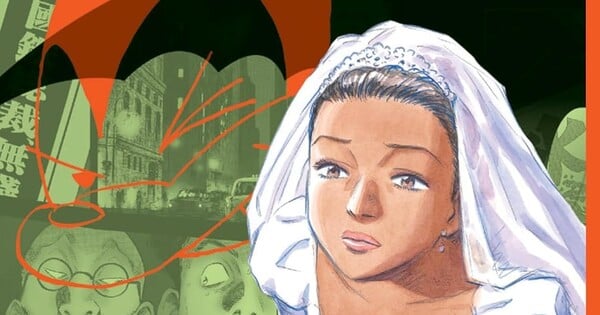
This larger meaning is where the book really takes off. The story moves to Ancient Judea, civil rights-era New York City, and Sengoku Japan from this point, and in each of these times and places, the bat has a role to play. In terms of volume one and the first half of this book, the civil rights era storyline is the most meaningful, although I do not doubt that the others will pay off further down the line. Taking place ten years after Kevin’s time, in 1959, this plot features Billy as an established mainstream character – although we’re told that Kevin stopped drawing it and it’s now the work of his protégé, Chuck Culkin. Chuck’s Billy is much more commercialized, with a theme park in Florida and tons of merchandise. Randy, the Japanese-American cab driver who quite literally drives this part of the plot, has a Billy mascot hanging from his rearview mirror, and much as Billy used to talk to Kevin, this one chats with him. Randy calls Billy his “navigator,” and that seems to be for more than just which street to take to avoid the various civil rights protests going on the night the chapters are set. Billy isn’t quite a moral compass – Randy is already determined to help the interracial couple whose wedding was broken up by racists (in the groom’s family). He’s more of an affirming presence who helps Randy to land the couple on the right side of history, literally driving his cab between warring groups of protesters.
This is, essentially, the bat’s role in the Ancient Judea storyline as well. Here the person who interacts with the bat is Judas, and he’s essentially guided by the bat to betray Jesus in what is implied to be a necessary step to get him recognized as a messianic figure. I’m not sure how entirely comfortable this section will be for religious Christians, as that’s not my culture or religion; I can only comment on what happens on the page. But it’s an interesting approach and does do a good job of showing the turmoil the Roman occupation of Judea caused, right down to their penchant for crucifying people. But the idea that the bat has always been with humanity, shaping it and guiding its journey, is the significant piece here, rather than the historical or religious figure specifically involved. Whether he’s the bat, Billy, or a psychomachic manifestation of the angel and the devil on someone’s shoulder, he’s always there. He wants Judas to betray Jesus. He wants interracial marriages normalized and racism shut down. He wants a specific group to win a war. (Interestingly, so far the bat seems silent on eliminating war.) The only thing we don’t know is why.
At times during this volume, it does feel like maybe Urasawa and Nagasaki are being a bit too ambitious. Everything only partially fits together, and while we can acknowledge that this is only volume two, it can still be frustrating. But more than that, it makes me curious what the bat, or Billy, truly represents. What does he want? Why does he want it? And most importantly, should Kevin Yamagata be giving him a voice?