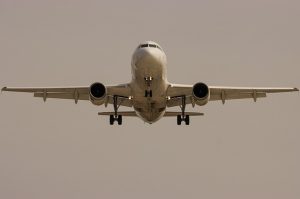

Landing gear assemblies consist of more than just wheels and struts or shocks. Many of them feature braces as well. They are found on a wide range of airplanes, particularly those with retractable landing gear. If an airplane’s landing gear can retract within its body, there’s a good chance it will use braces for additional support. What are landing gear braces exactly, and how do they work?
Overview of Landing Gear Braces
Landing gear braces are structural components that support and stabilize an airplane’s landing gear. They typically consist of metal rods or links. Once attached, braces support and stabilize the landing gear when the airplane is on the ground.
Landing gear assemblies are exposed to extreme stress when airplanes are on the ground. Upon landing, they’ll absorb the initial impact of the touchdown. Once on the ground, landing gear assemblies must continue to support the weight of the airplane during taxiing and turning. Braces offer a means of reinforcement so that landing gear assemblies can safely manage these loads.
Side vs Drag Braces and How They Work
There are two primary types of landing gear braces: side and drag. While they both provide support and stabilization, they are located in different areas.
Also known as side stays, side braces are located on the sides of the landing gear struts. They run vertically and provide lateral support, which in turn protects the landing gear from wobbling under loads.
Drag braces, on the other hand, extend forward or backward from the landing gear struts. They are designed to resist longitudinal forces and protect the wheels from folding during impact.
Why Braces Are Commonly Found on Retractable Landing Gear
Retractable landing gear allows airplanes to achieve a more aerodynamic shape during flight. When landing gear assemblies are fully extended, they produce drag. Drag, of course, will make airplanes less efficient, which translates into increased fuel costs for operators and airlines. Retractable landing gear offers a solution. Pilots can retract the airplane’s landing gear after takeoff to achieve a more aerodynamic shape and minimize drag.
Braces are often found on retractable landing gear because they provide additional support and stabilization. Retractable landing gear must follow a fixed path when retracting and extending. When the landing gear extends, a brace can move into this position. Hinged braces, for instance, are designed to lock into place during extension and fold during retraction.