What can everyday patterns tell us about mental health and what does it take to study them well?

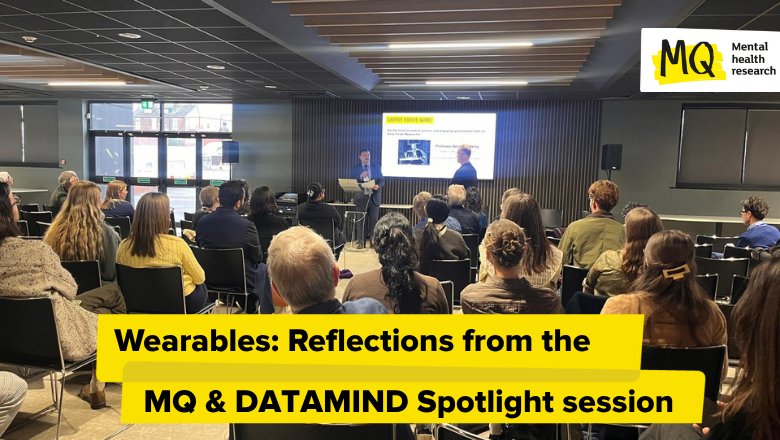
On the 9th October in Sheffield, the UKRI Mental Health Platform hosted its annual Mental Health Summit. MQ and DATAMIND brought together experts in mental health data to share their knowledge and experience with early-career researchers. In this blog, Hala Rachidi, Research Funding and Programme Lead at MQ, shares her reflections on the two-day event.
What can everyday patterns tell us about mental health, and what does it take to study them well?
That question stayed with me after the MQ & DATAMIND Spotlight session on building trustworthy research using wearables and nearables at the Mental Health Platform Research Summit in Sheffield.
Much of life unfolds between appointments. Body-worn devices and contactless home sensors can help researchers explore patterns in sleep, activity and daily rhythms, alongside what people tell us about how they feel.
The New Questions Wearables Help Us Ask
This research is already helping us ask new questions. Do changes in sleep timing tend to precede changes in mood, or follow them? Is a shift from someone’s usual activity pattern more informative than comparison with a population average? And how do those patterns change during treatment? Following people in their everyday lives gives researchers opportunities to explore these questions, alongside participants’ own accounts of how they feel.
From Signal to Support
The next challenge is understanding whether these measurements can reliably inform more personalised support or help identify when someone may be becoming unwell.
Collecting a signal, interpreting it and knowing how to respond are different steps.
Bringing It Back to the People Taking Part
The panel discussion brought those steps back to the people taking part. Which questions do they want answered? Which devices fit their lives? What information would they find useful?
There are practical questions too. Devices need charging. People spend nights away from home or need a break. Gaps in the data need understanding, and participants need clarity about who reviews their information and when.