

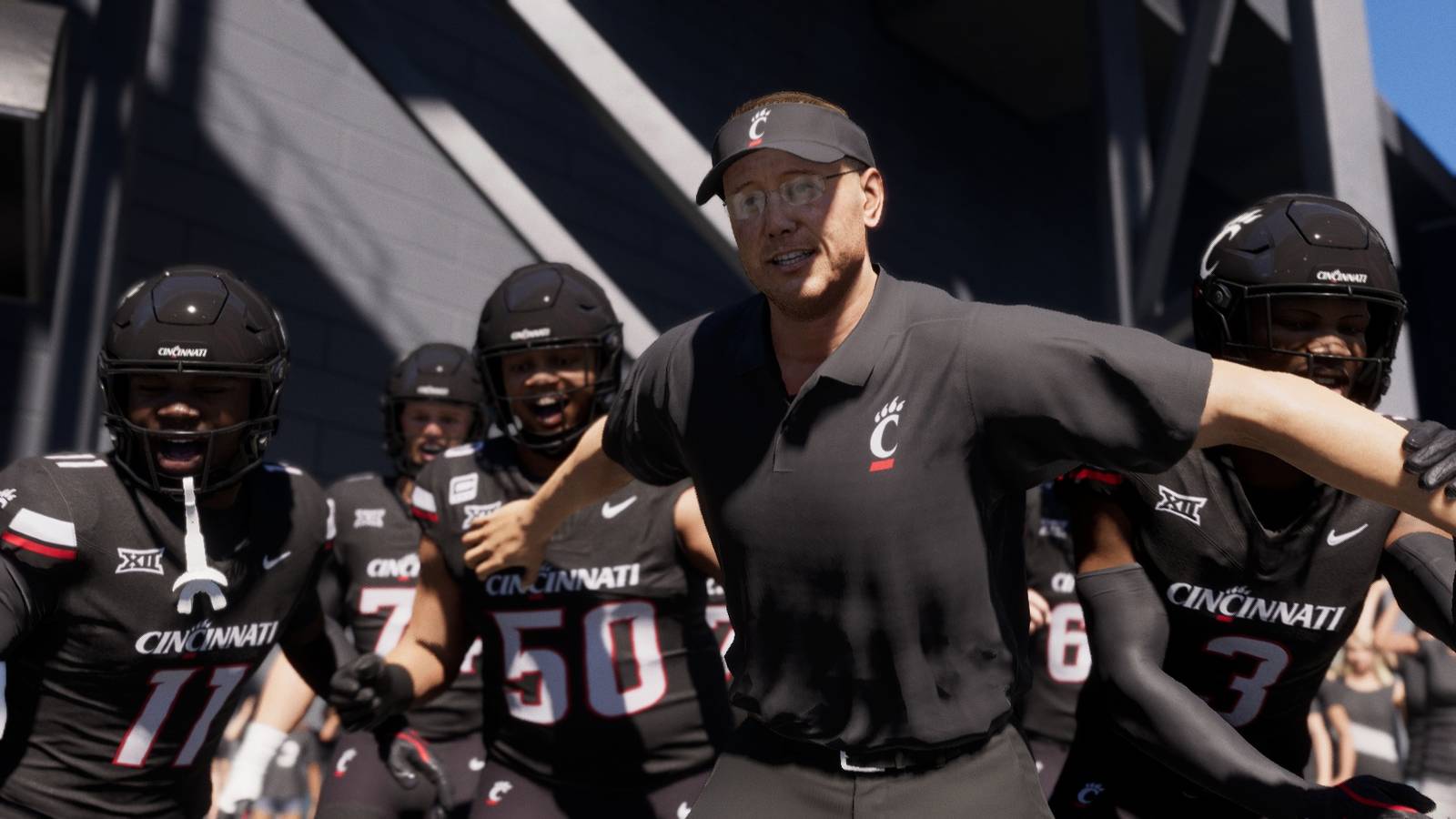
Each game mode in College Football 27 will represent a unique challenge when it comes to learning about every player and their stats. Stats are incredibly important, and it’s not just the OVR rating you need to look at, which is why we’ll explain every stat in College Football 27 so you know how they work and which ones you should aim for to complement your play style so you can master the game!
Key General Stats in CFB 27, Explained

Some attributes do not depend on the position. These are general stats that all players share regardless of where they play on the field or what their task is.
Of course, Speed is not a major factor for choosing one center over another, but Impact Blocking is quite important. Although these attributes apply to all players, some of them are still more important for certain positions:
|
Stat |
Description |
|---|---|
|
OVR (Overall Rating) |
A final and simplified rating that represents how good a player is compared to another one. You can think of it as an average of all other stats, but with different weights. |
|
SPD (Speed) |
Represents the top speed that a player can reach when running. |
|
ACC (Acceleration) |
Represents how quickly a player can reach their top speed. |
|
AGI (Agility) |
Represents how quickly a player will react to your movement inputs. |
|
COD (Change of Direction) |
Represents how quickly a player can change their direction of movement while already in motion. |
|
STR (Strength) |
Represents how effectively a player can block or run through a block. |
|
AWR (Awareness) |
Represents the player’s ability to react to the developing situations in the game and make a decision. |
|
IBL (Impact Blocking) |
Represents the chances of winning a block. |
|
STA (Stamina) |
Represents the durability of the player during the game. Players with lower Stamina will get tired faster and will lose more energy while sprinting. |
|
TGH (Toughness) |
Represents how quickly a player can recover from an injury. |
|
INJ (Injury) |
Represents the player’s immunity against injury. Players with a lower Injury rate will get injured more often. |
QB Stats in CFB 27, Explained

These stats only belong to the QB positions, and they are the most crucial stats that you need to pay attention to when picking a QB for the lineup. Throw Power, Play Action, and Break Sack are some of the key attributes that distinguish a good QB from a legendary one:
|
Stat |
Description |
|---|---|
|
THP (Throw Power) |
Represents how far a player can throw the ball. |
|
SAC (Short Throw Accuracy) |
Represents a player’s accuracy when throwing the ball within 20 yards. |
|
MAC (Medium Throw Accuracy) |
Represents a player’s accuracy when throwing the ball between 20 and 40 yards. |
|
DAC (Deep Throw Accuracy) |
Represents a player’s accuracy when throwing the ball beyond 40 yards. |
|
RUN (Throw on the Run) |
Represents the accuracy of a throw when the thrower is in motion. |
|
TUP (Throw Under Pressure) |
Represents the accuracy of a throw when the thrower is under pressure from the opposing team’s defenders. |
|
BSK (Break Sack) |
Represents the success rate of a quarterback in evading a sack when tackled by defenders. |
|
PAC (Play Action) |
Represents the success rate of a quarterback in faking out moves and plans. |
Defensive and Offensive Stats in CFB 27, Explained
-
 Image: GameRant via EA
 -
 Image: GameRant via EA
 -
 Image: GameRant via EA
These stats are shared between both defensive and offensive players. These are some of the most important attributes for WR, HB, CB, and FS players. Stiff Arm is a highly valuable attribute for a halfback, determining their ability to rush through the defenders. The same goes for the jumping attribute on wide receivers and cornerbacks:
|
Stat |
Description |
|---|---|
|
PBK (Pass Block) |
Represents a player’s ability to block another player in a pass play. (Applies to both offense and defense) |
|
PBP (Pass Block Power) |
Represents an offensive player’s ability to break through a defender’s power block shed. |
|
PBF (Pass Block Finesse) |
Represents an offensive player’s ability to break through a defender’s finesse block shed. |
|
RBK (Run Block) |
Represents the player’s ability to block another player in a rush play. (Applies to both offense and defense) |
|
RBP (Run Block Power) |
Represents the player’s ability to block a direct running play. |
|
RBF (Run Block Finesse) |
Represents the player’s ability to block a zone running play. |
|
LBK (Lead Block) |
Represents the player’s ability to block when leading from the backfield or pulling from the line. |
|
RET (Kick Return) |
Represents the player’s ability to return a kicked ball from the other end of the gridiron. |
|
JMP (Jumping) |
Represents how high a player can jump to catch the ball. |
|
CAR (Carrying) |
Represents how well a player can protect the ball or avoid a fumble when carrying it. |
|
JKM (Juke Move) |
Represents how quickly a player can perform juke moves. |
|
SPM (Spin Move) |
Represents how quickly and effectively a player can perform spin moves. |
|
SFA (Stiff Arm) |
Represents how effectively a player can push defenders out of his way with a Stiff Arm move. |
|
TRK (Trucking) |
Represents a player’s ability to perform a trucking move, which is simply rushing through defenders, making minimal to no contact. |
Defense-Only Stats in CFB 27, Explained
The stats below only matter for the defenders. It determines their effectiveness in successfully blocking the offensive players, catching the ball carriers, and even forcing a sack or a fumble:
|
Stat |
Description |
|---|---|
|
PRC (Play Recognition) |
Represents a player’s ability to read the offensive team’s plan before the snap. |
|
PMV (Power Moves) |
Represents a player’s ability to break through the offensive linemen. |
|
FMV (Finesse Moves) |
Represents a player’s ability to use finesse moves to get past the offensive linemen. |
|
BSH (Block Shedding) |
Represents a player’s ability to detach from the offensive lineman’s block. |
|
TAK (Tackle) |
Represents the success rate of a player’s tackle. |
|
POW (Hit Power) |
Represents the effectiveness and power of a player’s Hit-Stick tackle to force a fumble. |
|
PUR (Pursuit) |
Represents how well a defensive player can chase a ball carrier. |
|
ZCV (Zone Coverage) |
Represents a player’s ability to cover his area against an opponent’s receiver. |
|
MCV (Man Coverage) |
Represents a player’s ability to neutralize his target receiver. |
|
PRS (Press) |
Represents a player’s ability to disrupt the opposing receiver’s moves on their route. |
Kicker and Punter Specific Stats in CFB 27, Explained

Lastly, you can take a look at the few stats that only matter for kick and punter plays. These stats usually aren’t too concerning, but players with a high Kick Accuracy will make it easier to score from a longer distance:
|
Stat |
Description |
|---|---|
|
KPW (Kick Power) |
Represents how far a player can kick the ball. |
|
KAC (Kick Accuracy) |
Represents how accurately a player can kick the ball in the target direction. |


