The First 30 Days After Receiving Your First Startup Funding
Winning a startup competition is an exciting milestone.
Whether it’s $5,000 to validate an idea or $15,000 to build your first prototype, that funding represents more than a cash prize. For many founders, it’s the first external investment in their business, and the first time they’ll need to think about taxes, bookkeeping, budgeting, and financial operations.
Recently, I had the opportunity to speak with the founders from the 2026 Zahn Innovation Center Demo Week at The City College of New York. More info on that here. This year’s competition awarded more than $82,000 to eight student-led ventures spanning AI, healthcare, hardware, social impact, and software after completing a 12-week incubator program.
The questions they asked weren’t about raising venture capital or negotiating valuations.
Instead, they asked the questions almost every first-time founder eventually faces:
- How do I handle taxes on prize money?
- Should I create an LLC?
- Do I need QuickBooks?
- How do I pay contractors?
- What happens when I get my first customer?
These are exactly the right questions to be asking. Here are five practical steps every founder should take after receiving their first startup funding.
1. Know Who Actually Received the Money
One of the biggest misconceptions is assuming the startup received the prize.
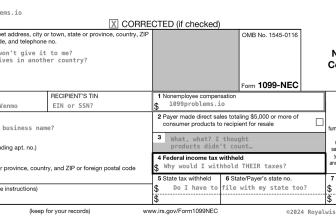
In many university competitions, the payment is made directly to an individual founder, who completes a Form W-9 and later receives a Form 1099 for tax reporting purposes. That individual, not necessarily the startup, becomes responsible for reporting the income on their personal tax return.
Before anyone spends the money, make sure your team agrees on:
- Who received the funds
- Who will receive the tax forms
- Who is responsible for reporting the income
- How the money will be distributed among teammates
Having this conversation early prevents confusion and avoids surprises when tax season arrives.
2. Give Every Dollar a Job
Winning a competition doesn’t mean every dollar is available to spend immediately.
One of the biggest mistakes I see is founders distributing all of the prize money without considering future obligations. If one person receives the funds personally, they may still be responsible for the taxes, even after the money has been shared among the team.
Instead, create a simple spending plan before making your first payment.
Allocate your funding intentionally across categories such as:
- Product development
- Prototypes or equipment
- Software subscriptions
- Contractors
- Legal or incorporation costs
- Marketing
- Tax reserve
- Emergency contingency
Every dollar should have a purpose.
Treat prize funding the same way you would treat investor capital. Thoughtful budgeting helps your runway last longer and gives you flexibility as your business evolves.
3. Keep Your Financial Record Keeping Simple
Many founders assume they need sophisticated accounting software from day one.
In reality, most early-stage startups don’t.
If you’re only managing a handful of transactions, a simple process is often the best solution.
Start with:
- A dedicated bank account used only for startup activity
- A Google Sheet or Excel workbook to track transactions
- A Google Drive or Dropbox folder for receipts and contracts
For each transaction, record:
- Date
- Vendor
- Purpose
- Category
- Amount
This makes tax preparation significantly easier and provides clear documentation if questions ever arise.
As your business grows, you can graduate to accounting software like QuickBooks or other cloud-based solutions. At the beginning, consistency matters far more than complexity.
4. Collect Documentation Before You Need It
Good documentation isn’t something you scramble to assemble in January.
It’s something you build throughout the year.
If you’re hiring contractors, collect a completed Form W-9 before making payment. Save invoices, receipts, reimbursement requests, and contracts as they happen, not months later. Even though the 1099-NEC threshold for 2026 is $2,000, it’s best practice to collect a W-9 even if you pay them far less so you have it for your records.
One simple habit can save hours of frustration:
Whenever you pay someone, make sure you also have:
- Their completed tax forms
- Their email address
- Their current mailing address
- A copy of the invoice or agreement
Future you will be thankful when it’s time to prepare tax filings or answer questions about prior payments.
5. Think Beyond This Competition
One point I emphasized during the workshop had very little to do with taxes.
Many of the founders in the room are still students. Some will continue building their companies. Others may pursue graduate school, join startups, or begin careers at established companies.
Every one of those paths is a success. That’s why it’s important to develop good organizational habits now.
Keeping receipts, maintaining a simple budget, documenting expenses, and separating business activity from personal finances isn’t just about tax compliance. It’s about reducing future stress.
I’ve seen founders spend more time trying to reconstruct what happened months later than it would have taken to stay organized in the first place. Searching old emails for receipts, figuring out reimbursements, or remembering why money was transferred becomes an unnecessary burden when you’re balancing classes, internships, or a new job.
Even if your startup ultimately doesn’t continue, you’ll be able to close things out cleanly, file your taxes with confidence, and move forward without unfinished administrative work hanging over you.
The habits you build now will serve you well wherever your career takes you.
Final Thoughts
What impressed me most about the founders at the Zahn Innovation Center wasn’t simply the quality of their ideas. It was the quality of their questions.
They were already thinking about budgeting, customer invoicing, entity selection, contractor payments, and runway planning. Those are the kinds of operational decisions that lay the foundation for successful businesses.
Whether your first funding comes from a university competition, an accelerator, an incubator, or an angel investor, treat those dollars with care.
The habits you establish with your first $5,000 often become the habits that carry your company through its first $5 million.
Need Help Navigating Your Startup’s Next Financial Milestone?
At Shay CPA, we work with early-stage technology companies from formation through fundraising and beyond. Whether you’ve just won a startup competition, are deciding between an LLC and a Delaware C Corporation, or need help setting up your accounting systems, we’re here to help.
Disclaimer:
The content provided on this blog is for general informational purposes only and does not constitute professional accounting, tax, or legal advice. Reading or accessing this material does not create a CPA-client relationship, nor should it be construed as a substitute for individualized guidance from a qualified professional. While we strive for accuracy, Shay CPA PC makes no warranties—express or implied—about the completeness, reliability, or timeliness of the information, and we expressly disclaim liability for any errors or omissions. You should not act or refrain from acting based on any blog content without seeking the advice of a qualified CPA or other professional who can address your specific circumstances. Links to external resources are provided for convenience only and do not imply endorsement. Shay CPA PC is under no obligation to update this content and disclaims responsibility for decisions made in reliance on it.