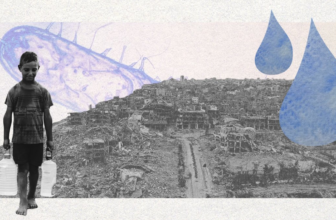
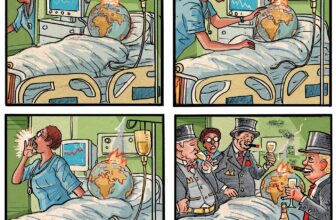
(Beth Clifton collage)
University of Washington faculty lose three-year court battle to keep anonymity
SEATTLE, Washington––Responding to March 2025 ruling by the U.S. District Court for the Western District of Washington, members of the University of Washington Institutional Animal Care & Use Committee on May 28, 2025 agreed to drop a three-year legal effort to keep their identities secret.
The outcome is expected to have ripple effects throughout the U.S. animal-based research sector.
Explained Science online news editor David Grimm, who has followed the convoluted case from the start, “The University of Washington, home to one of the largest animal research programs in the United States, must now hand over the names,” of Institutional Animal Care & Use Committee members, “sparking fears that other universities could soon be forced to do the same.”

(Beth Clifton collage)
Biggest break for lab accountability in nearly 60 years
This could potentially open up animal experimentation to closer scrutiny than any other development since the passage of the Laboratory Animal Welfare Act in 1966, followed a year later by the 1967 passage of the federal Freedom of Information Act.
Understanding why requires understanding what an Institutional Animal Care & Use Committee does, which in turn explains why identifying the membership matters to the 80-million-or-so animals per year used in experiments.
An Institutional Animal Care & Use Committee, required by the Animal Welfare Act, called an IACUC for short, reviews research protocols and supervises the care and housing of animals kept for research use. This includes inspecting all animal use facilities every six months.

NIH chief Jay Bhattacharya, M.D., Ph.D. (NIH photo)
IACUCs report to the NIH
Each IACUC reports to the National Institutes of Health [NIH] Office of Laboratory Animal Welfare annually, and is required to promptly report any significant noncompliance with animal use requirements to the NIH Office of Laboratory Animal Welfare.
These records are accessible to animal advocates through the federal Freedom of Information Act. Obtaining and reviewing IACUC records, and seeking stiff penalties for egregious violations of Animal Welfare Act care standards, is almost the entire program of Stop Animal Experiments Now!, SAEN for short.
Reviewing IACUC records is also a frequent activity of other antivivisection organizations including People for the Ethical Treatment of Animals [PETA], White Coat Waste Project, and many others.

(Beth Clifton collage)
Supposed to monitor lab animal welfare
IACUC reviews of animal use protocols are to be done by the full IACUC committee at least once every three years, in the case of long-running experiments, and can be done more often, as the IACUC deems appropriate.
The reviews include considering the rationales for animal use in each experiment, including the appropriateness of the species and numbers used, the procedures used to ensure that discomfort and injury to animals will be limited to whatever is unavoidable in pursuit of the research goals, and euthanasia methods to be used in terminal studies.
Each IACUC is supposed to ensure that euthanasia methods are consistent with the recommendations of the American Veterinary Medical Association Panel on Euthanasia, “unless a deviation is justified for scientific reasons in writing by the investigator,” says the Public Health Service Policy on Humane Care and Use of Laboratory Animals.

(Beth Clifton collage)
Secret tribunals
An IACUC is required to have a minimum of three members, appointed by the chief executive officer of the research facility, including a chairperson, a veterinarian, and a member who is not affiliated in any other way with the institution hosting the research.
The non-affiliated member is often an academic ethicist, attorney, or member of the clergy, as recommended by the NIH, but animal advocates who have no philosophical objection to animal use in experiments, for example officers of mainstream humane societies and animal control agencies, sometimes are appointed to fill this role.
Traditionally, the identities of IACUC members have been kept secret, presumably to spare them from academic peer pressure and activist protest.
Secrecy, however, has allegedly enabled animal-using institutions to pack IACUCs with members who simply rubber-stamp approval of any proposed experiment, and overlook any cruelty or neglect inflicted on laboratory animals unless it comes to light in some other manner.

(Beth Clifton collage)
Secrecy equals non-accountability
Because IACUC members are not identified, they have historically not often been held accountable, either.
Wrote Grimm, “For several years, PETA has alleged that the University of Washington’s IACUC is biased toward individuals who support animal research. But because most major IACUCs keep their membership confidential, PETA was unable to prove this. So in 2020, it began to file a series of public information requests with the school,” specifically to the Washington National Primate Research Center, housed within the University of Washington, “asking for the names of current and former committee members.
“In early 2022, the University of Washington announced it would comply with the requests, citing Washington state’s open records law.”

Jane Sullivan.
(University of Washington photo)
Injunction overturned
However, explained Seattle Times data journalist Manuel Villa, Washington National Primate Research Center IACUC committee chair Jane Sullivan “and over 70 former members” of the IACUC, obtained an injunction preventing the University of Washington from disclosing their letters of appointment, “which contain personal identifying information, arguing it would violate their right of expressive association under the federal and state constitutions.”
In February 2025, the Ninth U.S. Circuit Court of Appeals “ruled the letters relate to the members’ service on an official committee, an activity not protected by the right of expressive association,” Villa summarized.
Sullivan et al filed an appeal, rejected by the U.S. District Court for the Western District of Washington.
“We have lost our lawsuit, and it is the end of the fight,” conceded Sullivan, a neuroscientist who contended, she told Grimm, that “protests and threatening emails to scientists and university officials had created a ‘climate of fear’ in which release of their names could compromise their safety.”

Kathy Guillermo. (Facebook photo)
“Incredibly important legal precedent”
The various courts, however, concluded that “Releasing the information that PETA requests is unlikely to substantially and irreparably harm the University of Washington IACUC’s ability to function. Plaintiffs also do not show any IACUC member will likely be substantially and irreparably harmed if this information is disclosed.”
Claimed PETA Foundation director of litigation Asher Smith, to Grimm, “This sets an incredibly important legal precedent. It’s going to make it much harder for any IACUC to make legal arguments for anonymity.”
Continued Grimm, “PETA has been pursing similar records from the University of Massachusetts at Amherst, as well as details about a research project there using marmosets to study menopause. Smith said that after the University of Washington decision, UMass “negotiated with us to give us all of the records we wanted.”
This was confirmed, Grimm said, by University of Massachusetts at Amherst vice chancellor of research and engagement Michael Malone, who stated that, “The release of our IACUC membership records was done with the full consent and knowledge of those members.”

Lisa Jones-Engel. (PETA photo)
“Hiding a flawed process”
PETA senior vice president Kathy Guillermo told Grimm earlier that, “The IACUC is the last line of defense for animals in laboratories. IACUC members’ supposed fear of releasing their names would appear to be more about hiding a flawed process than anything else.”
The PETA pursuit of the names of University of Washington IACUC members began with PETA senior science adviser Lisa Jones-Engel, previously a University of Washington biological anthropologist for 17 years, a member of the IACUC herself from 2017 to 2019.
“Toward the end of her tenure,” Grimm recounted, “she filed complaints with the university alleging that the committee’s nearly 20 members,” six times more than the required number, “did not contain an ethicist, and that it was ‘stacked’ against individuals who might question animal experiments. She argued that some members considered to be nonscientists in fact had close ties to animal research. Such concerns eventually led her to leave the University of Washington and join PETA.”
(Harriet Brown of The Guardian in May 2022 published an extensive profile of Jones-Engel and her professional turnabout: https://www.theguardian.com/world/2022/may/31/primates-monkeys-scientific-experiments-peta-stop-testing.)

PETA lab monkey campaign
(PETA photo)
Protests in monkey masks
Grimm in 2022 mentioned that, “In addition to staging on-campus demonstrations at the University of Washington—whose animal use program is among the largest in the country—PETA supporters have recently protested outside the homes of two officials affiliated with the school’s primate facility.
“Individuals wearing monkey masks held signs showing animals in cages, asking, ‘Do your neighbors know you torture monkeys?’”
Said Malone, “If people start showing up at your house, where is that going to leave us in terms of staffing IACUCs?” he says. “People on these committees should be asking, ‘Is it a good animal model?’ Not, ‘Am I going to be accosted on the way to the grocery store?’”

Andrew Rowan.
(Facebook photo)
PETA has attacked IACUC members
PETA has problematic history pertaining to IACUC member identities in that regard, having attacked the Humane Society of the U.S. in January 2004 for accepting Iams funding for the annual HSUS Animal Care Expo. PETA accused Iams of ignoring bad conditions at a laboratory subcontracted to do nutrition tests of pet food.
Iams had in fact fired the lab when it became aware of the conditions, appointed an Institutional Animal Care & Use Committee to oversee future animal studies, and disclosed that two of the members were then Humane Society of the U.S. chief of staff Andrew Rowan, now retired, and Michael Arms, president of the Helen Woodward Center for Animals, formerly shelter manager for the North Shore Animal League, whose tenure in animal welfare spans more than 50 years.

Beth & Merritt Clifton.
(Gene Chontos photo)
PETA then attacked the integrity of both Rowan and Arms.
ANIMALS 24-7 has had issues with both over their promotions of pit bulls, but neither could fairly be accused of favoring animal research; Rowan, in fact, authored Of Mice, Models, & Men: A Critical Evaluation of Animal Research (1984), and has contributed to many other critiques of animal experimentation.
Please donate to support our work:
More related posts:
Discover more from Animals 24-7
Subscribe to get the latest posts sent to your email.