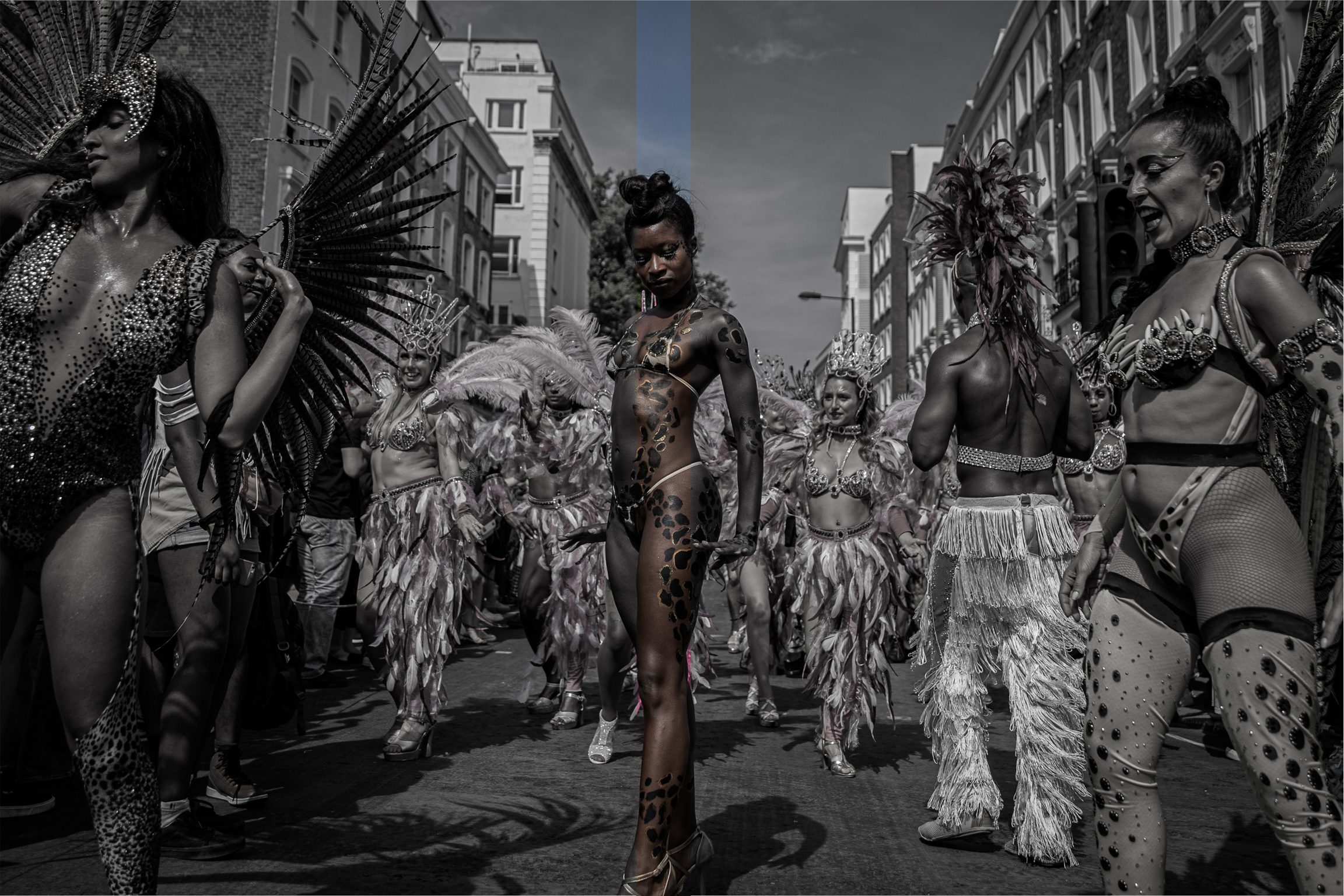
Notting Hill Carnival always evokes sharp visions in the imagination. Intricate floats. The technicolour, feathered outfits of mas bands. Eardrum bursting reggae, dub, jungle and UK garage of the soundsystems. Jerk chicken, curry goat and rice and peas. Huge, pulsing crowds that file through the area’s streets. Or for its critics, it represents disorder, noise, and unpoliceable chaos.
But lesser remembered is its place as a protest. In 1958, severe and violent race riots broke out in the West London neighbourhood, as mobs of white gangs armed with sticks, bottles, bricks and knives attacked homes and businesses of Black people. In response, a year later in 1959, journalist and activist Claudia Jones – who was born in Trinidad and Tobago and moved to the UK after being imprisoned in the US in the ‘Red Scare’ – organised a party at St Pancras Town Hall.
There were steel pan bands, singers and dancers, as the cultural celebration protested violence and racism with music and dancing. The event was an early blueprint for resistance through joy and celebration of culture, which eventually inspired the first official Notting Hill Carnival in 1966. “There was the murder of [Antiguan migrant] Kelso Cochrane that was dividing communities,” explains photographer Wayne Campbell, co-author of a new photobook Carnival of Resistance, which is published as the festival celebrates 60 years of existence.