Choosing the best compact camera for travel is a decision almost as important as deciding where to take your next vacation. And after 20+ years shooting travel photography professionally, I still get asked about this category more than any other – because for a lot of travelers, a compact camera is the sweet spot between “just use your phone” and “carry a full mirrorless kit everywhere.”
A few years ago, due to the increased quality of smartphone cameras, compact point-and-shoots were on shaky ground, with many companies slimming down their selection. However, the market for point-and-shoots has remained strong, no doubt due to their still superior quality, usability, and functionality.
The Fujifilm X100VI became one of the most sought-after cameras of the past two years. Ricoh released the GR IV to enormous excitement. Panasonic released their first new travel zoom in six years. After a stretch where smartphones threatened to make this whole category irrelevant, dedicated compact cameras are back – and the best ones are better than they’ve ever been.
That said, prices have gone up. You’re not going to find a serious compact camera for what you would have paid 10 years ago. So it’s worth knowing exactly what you’re getting at each price point before you spend.
Below I’ve broken down the best compact cameras for travel at every budget, along with what to look for when you’re choosing one and a few tips for getting great shots with whatever you pick.
If you want to go deeper on travel photography, I also wrote Capturing the Soul of a Destination – everything I’ve learned in 20+ years shooting on the road, in one place.
Also worth reading: The Best Travel Cameras | Best Cameras for Hiking & Backpacking | The Ultimate Travel Photographer Packing List

Best Compact Travel Cameras in 2026
Here’s a quick look at my top picks – keep reading for full details on each one.
- Best Overall Compact Camera: Fujifilm X100VI – the best fixed-lens travel camera ever made
- Best Pocketable Compact: Ricoh GR IV – APS-C sensor in a camera that fits in your jeans pocket
- Best Compact with Zoom: Sony RX100 VII – 24-200mm zoom in a pocketable body
- Best Vlogging Compact: Canon G7X Mark III – flip screen, 4K, and a dedicated following among travel creators (this line of cameras has been the go-to vlogging camera since I started blogging over 15 years ago)
- Best Zoom with Flip Screen: Panasonic Lumix ZS99 – Panasonic’s first new travel zoom in six years, 30x zoom with a tiltable touchscreen
Best Compact Cameras for Travel: Side-by-Side Comparison
| Camera | Sensor | Zoom / Lens | Weight | Best For |
|---|---|---|---|---|
| Fujifilm X100VI | APS-C 40MP | Fixed 23mm f/2 | 521g | Best overall travel compact |
| Ricoh GR IV | APS-C 24MP | Fixed 28mm f/2.8 | 262g | Pocketable, street photography |
| Sony RX100 VII | 1-inch 20MP | 24-200mm zoom | 302g | Zoom + portability |
| Canon G7X Mark III | 1-inch 20MP | 24-100mm f/1.8-2.8 | 304g | Vlogging, social media |
| Panasonic Lumix DC-ZS70K | 20MP | 30x zoom | 211g | Maximum zoom, flip screen |
Whether you want the absolute best image quality in a compact body, a pocketable camera that fits in your jeans pocket, or the most versatile zoom range for wildlife and travel, there’s an option here for you. Read through the full reviews below to find the right fit for how you travel and shoot.
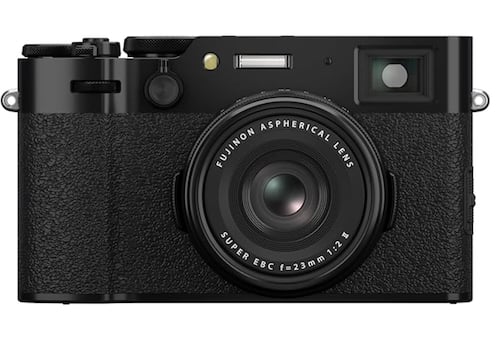
Fujifilm X100VI {#fujifilm-x100vi}
Best Overall Compact Camera for Travel
Fujifilm X100VI – Check Prices Here
Details: 40.2MP APS-C X-Trans sensor, fixed 23mm f/2 lens (35mm equivalent), 5-axis IBIS, optical + electronic viewfinder, 521g
If I were starting over and could only take one camera on every trip, the X100VI is what I’d pick. It has a 40MP APS-C sensor – the same one inside Fujifilm’s top mirrorless cameras – in a body that looks and handles like a classic rangefinder. The 35mm equivalent focal length is one of the most versatile you can get: it works for landscapes, street scenes, portraits, interiors, and everything in between.
What makes Fujifilm special for travel specifically is the film simulations. You can set a look you love – Classic Chrome, Velvia, Acros – and share straight-from-camera JPEGs that look finished without any editing. When you’re moving fast between destinations and don’t want to spend your evenings at a laptop, that is extremely helpful.
The X100VI also added in-body image stabilization, which the previous versions didn’t have. It’s a meaningful improvement for low-light shooting and makes a real difference when you’re handholding in a dimly lit restaurant or a temple.
Fair warning: these cameras have been selling out regularly since launch. If you’re considering one, buy it when you see it in stock.
Pros: Best-in-class 40MP APS-C image quality, beautiful Fujifilm color and film simulations, IBIS, optical viewfinder, excellent build quality.
Cons: Fixed focal length (no zoom); on the pricier side; supply can be inconsistent.
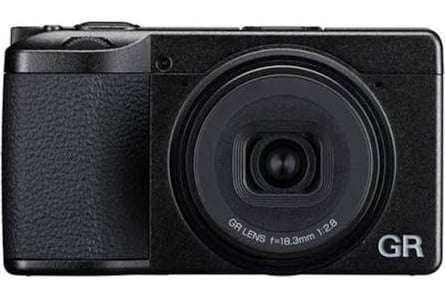
Ricoh GR IV {#ricoh-gr4}
Best Pocketable Compact Camera
Ricoh GR IV – Check Prices Here
Details: 24.2MP APS-C sensor, fixed 28mm f/2.8 lens, built-in ND filter, 262g — genuinely fits in a jeans pocket
The Ricoh GR series has a cult following among travel and street photographers for good reason. At 262g, the GR IV fits in a jacket or jeans pocket – and yet it has an APS-C sensor inside, which is the same size used in most serious mirrorless cameras. The image quality is extraordinary for something this small.
The fixed 28mm lens is slightly wider than the X100VI’s 35mm equivalent, which makes it excellent for tight street scenes, architecture, and travel situations where you’re working in close quarters. Most people find that after a few days with it, they stop missing the zoom entirely. You start thinking in 28mm and your compositions get sharper for it.
The built-in ND filter is a useful addition – you can shoot wide open in bright daylight without overexposing, which opens up creative options most compact cameras can’t offer.
One honest note: the GR IV’s battery life is modest and the camera has no viewfinder. If either of those things would frustrate you, the X100VI is the better fit. But if you want the absolute smallest camera with serious image quality, nothing else comes close.
Pros: Truly pocketable, APS-C sensor, exceptional image quality, discreet for street photography, built-in ND filter.
Cons: Fixed focal length; no viewfinder; modest battery life; not weather-sealed.
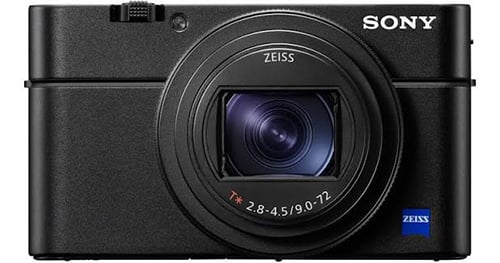
Sony RX100 VII {#sony-rx100-vii}
Best Compact Camera with Zoom
Sony RX100 VII – Check Prices Here
Details: 20.1MP 1-inch stacked CMOS sensor, Zeiss 24-200mm f/2.8-4.5 zoom lens, 4K video, 20fps burst, 302g
If you want zoom range and pocketability in the same camera, the RX100 VII remains the best option available. The 24-200mm Zeiss lens covers an enormous range – from wide-angle for landscapes to 200mm for pulling in distant subjects – in a body that fits in a coat pocket. Sony’s autofocus system is fast and reliable, and the 20fps burst rate means you won’t miss moving subjects.
The 4K video is excellent quality, and the pop-up electronic viewfinder is a nice touch when you’re shooting in bright sunlight and can’t see the screen.
I’ll be honest: the APS-C cameras on this list will give you better image quality at the same or lower price. Where the RX100 VII wins is the combination of zoom + portability – nothing else gives you 200mm of reach in a pocketable camera like this.
Pros: Excellent zoom range, compact body, fast autofocus, good 4K video, pop-up viewfinder.
Cons: Smaller 1-inch sensor vs APS-C options; expensive relative to image-only quality.
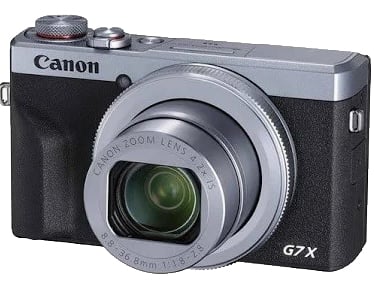
Canon G7X Mark III {#canon-g7x-iii}
Best Compact Camera for Vlogging & Social Media
Canon G7X Mark III – Check Prices Here
Details: 20.1MP 1-inch CMOS sensor, 24-100mm f/1.8-2.8 lens, 4K video, flip-up touchscreen, live streaming capability, 304g
The G7X Mark III has built a dedicated following among travel creators and vloggers, and it earns it. The flip-up touchscreen makes it perfect for filming yourself, the 4K video is sharp and usable, and Canon’s color science means your footage looks great without heavy grading. It’s also one of the few compact cameras that supports live streaming directly – useful if you’re creating content on the road.
For still photography, the 24-100mm f/1.8-2.8 lens is genuinely fast and produces beautiful images, particularly in lower light where the wide aperture gives you a real advantage over cameras with slower lenses.
If your main use is travel vlogging or social media content alongside stills, this is the camera I’d point you toward in this price range.
Pros: Excellent for video and vlogging, flip-up screen, fast lens, good low-light performance, live streaming.
Cons: 1-inch sensor vs APS-C alternatives; no viewfinder; 4K has a slight crop.
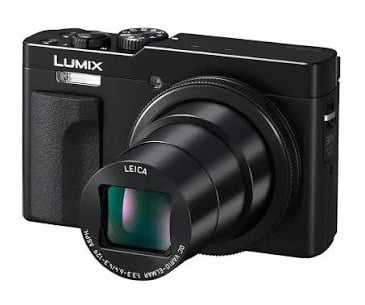
Panasonic Lumix ZS99 {#panasonic-zs99}
Best Zoom Compact with Flip Screen
Panasonic Lumix ZS99 – Check Prices Here
Details: 20.3MP sensor, 30x optical Leica zoom lens (24-720mm equivalent), 4K video, tiltable touchscreen, USB-C charging, 242g
Panasonic’s first new travel zoom in six years, the ZS99 arrives with a useful set of upgrades over the previous generation: USB-C charging, a much improved tiltable touchscreen, and extended 4K recording. The 30x Leica zoom lens covering 24-720mm is the real draw – that’s an extraordinary range in a camera you can slip into a jacket pocket.
I’ll be honest about the sensor: it’s smaller than the 1-inch sensors in the Sony and Canon above, which means low-light performance is limited. But if zoom range and portability are your priorities – for wildlife, concerts, or travel situations where you can’t get close – nothing else at this price offers this much reach in a pocketable body.
Pros: Extraordinary 30x zoom range, genuinely pocketable, tiltable touchscreen, USB-C charging, 4K video.
Cons: Smaller sensor limits low-light and print quality; no electronic viewfinder; image quality below 1-inch alternatives.
What to Look For in a Compact Camera
Sensor Size
This is the single most important spec to understand when buying a compact camera. Sensor size determines how much light the camera can capture, which directly affects image quality – especially in low light.
Here’s a quick hierarchy from smallest to largest:
- Small/standard compact sensor (found in most budget point-and-shoots and older cameras)
- 1-inch sensor (Sony RX100 series, Canon G7X series) – a meaningful step up
- APS-C sensor (Fujifilm X100VI, Ricoh GR IV) – the same size used in most enthusiast mirrorless cameras
In general, the larger the sensor, the better the image quality – especially in low light. If image quality matters to you, prioritize sensor size over zoom range or megapixel count.

Fixed Lens vs. Zoom
Most compact cameras come in one of two forms: fixed-lens cameras (one focal length, no zoom) or zoom cameras. Neither is objectively better – it depends entirely on how you like to shoot.
Fixed-lens cameras like the Fujifilm X100VI and Ricoh GR IV tend to have larger sensors and better image quality, because the manufacturer can optimize one lens for one sensor without the compromises a zoom requires. Many photographers find that shooting with a fixed focal length actually improves their eye – you start moving your feet and composing more deliberately.
Zoom cameras give you more flexibility in the field – useful for wildlife, architecture, or situations where you physically can’t get closer to your subject.
Megapixels
Megapixels matter, but they’re not the whole story. A 40MP APS-C sensor (like the one in the X100VI) will produce far better images than a 40MP compact sensor, because sensor size affects how much light each pixel can capture. Don’t choose a camera based on megapixel count alone – look at sensor size first.
That said, higher megapixels do give you more flexibility to crop into an image without losing quality, which is useful for travel photography when you can’t always get as close as you’d like.
Zoom Range
Compact cameras offer two types of zoom: optical zoom and digital zoom. Optical zoom magnifies the image using the actual lens – this is the number you want to pay attention to. Digital zoom crops and enlarges the image digitally, which reduces quality.
Always prioritize optical zoom specs over digital zoom. A camera with 40x optical zoom and no digital zoom will outperform a camera advertising “80x zoom” that’s half optical, half digital.
Wi-Fi and Bluetooth
Most cameras released in the last few years include built-in Wi-Fi and Bluetooth for transferring photos to your phone or laptop wirelessly. It’s worth confirming this is included if easy sharing is important to you – some older or budget models still lack it.
Video
If you plan to use your compact camera for video – travel vlogging, social media content, or just capturing moments – look for 4K capability. Most cameras in the $500+ range now offer 4K video. Also check whether the camera has a microphone input if audio quality matters to you.
Point-and-Shoot Photography Tips
Read the Manual (Seriously)
I know, I know – nobody reads manuals. But even spending 20 minutes with the quick-start guide will help you find settings you’d never discover otherwise, especially the PASM dial: Program, Aperture Priority, Shutter Priority, and Manual modes. Getting comfortable with Aperture Priority mode alone will dramatically improve your travel photos.
My recommendation: spend the first day or two shooting in auto to get a feel for the camera, then start experimenting with Aperture Priority. You’ll immediately notice a difference in how much control you have.
Understand Your Lighting
Lighting is the single biggest factor in whether a photo looks good or mediocre – more than your camera, your lens, or your editing. A few things to keep in mind:
Use a small travel tripod for low-light situations – it eliminates camera shake and lets you use slower shutter speeds without blur.
Minimize flash whenever possible. Flash in low-light tends to flatten your subject and strip the scene of its atmosphere. Instead, raise your ISO (your camera’s light sensitivity) and let the ambient light do the work. Modern cameras handle high ISO much better than they used to.
The golden hours – the hour after sunrise and before sunset – produce the most beautiful natural light for travel photography. If you can plan your shots around those windows, you’ll be amazed at the difference.
Shoot in RAW When You Can
If your camera has RAW shooting capability (most cameras in the $500+ range do), use it. RAW files capture significantly more image data than JPEGs, which gives you much more flexibility when editing – you can recover highlights, lift shadows, and correct color balance in ways that simply aren’t possible with a JPEG.
If you’re not comfortable editing yet, start with JPEG and switch to RAW when you’re ready. Fujifilm cameras are the exception here – their in-camera JPEGs with film simulations are good enough that many photographers never shoot RAW at all.
Know Your Focal Length
If you’re shooting with a fixed-lens camera like the X100VI or GR IV, take a few days to really get to know your focal length. Shoot everything with it. Notice what works and what doesn’t. Most photographers who make this commitment find that their photography improves significantly – you stop thinking about gear and start thinking about the image.
For a lot more on shooting great travel photos regardless of what camera you’re using, check out my book, Capturing the Soul of a Destination. This book goes beyond technical tips to help you see destinations more deeply, photograph with intention, and create images that evoke emotion and connection.
Best Compact Cameras for Travel FAQ
It depends on your priorities. Flagship smartphones like the iPhone 16 Pro have genuinely closed the gap for most casual photography – especially in good light. Where dedicated compact cameras still win: low-light performance (especially APS-C models like the X100VI or GR IV), the tactile experience of using a real camera, and the creative control you get from physical dials and manual settings. If you care about image quality and enjoy the process of photography, a dedicated compact camera is worth it. If you just want to capture memories quickly and share them, your phone may be all you need.
If image quality is your top priority and you’re comfortable with a fixed focal length, yes – without hesitation. The 40MP APS-C sensor, film simulations, and optical viewfinder are genuinely special, and it’s a camera you’ll want to pick up every day. The main caveats are the price and the fixed lens. If you need zoom, it’s not the right camera for you.
Both are fixed-lens APS-C compact cameras but they’re quite different in practice. The GR IV is genuinely pocketable (jeans-pocket small), has a wider 28mm lens, and is more minimal and discreet. The X100VI is larger, has a 35mm equivalent lens, an optical viewfinder, film simulations, and IBIS. The GR IV is for the photographer who wants the smallest possible serious camera; the X100VI is for someone who wants a more complete shooting experience in a compact body.
As an Amazon Associate I earn from qualifying purchases. I’m also a member of other affiliate programs. For more info please read my Privacy Policy