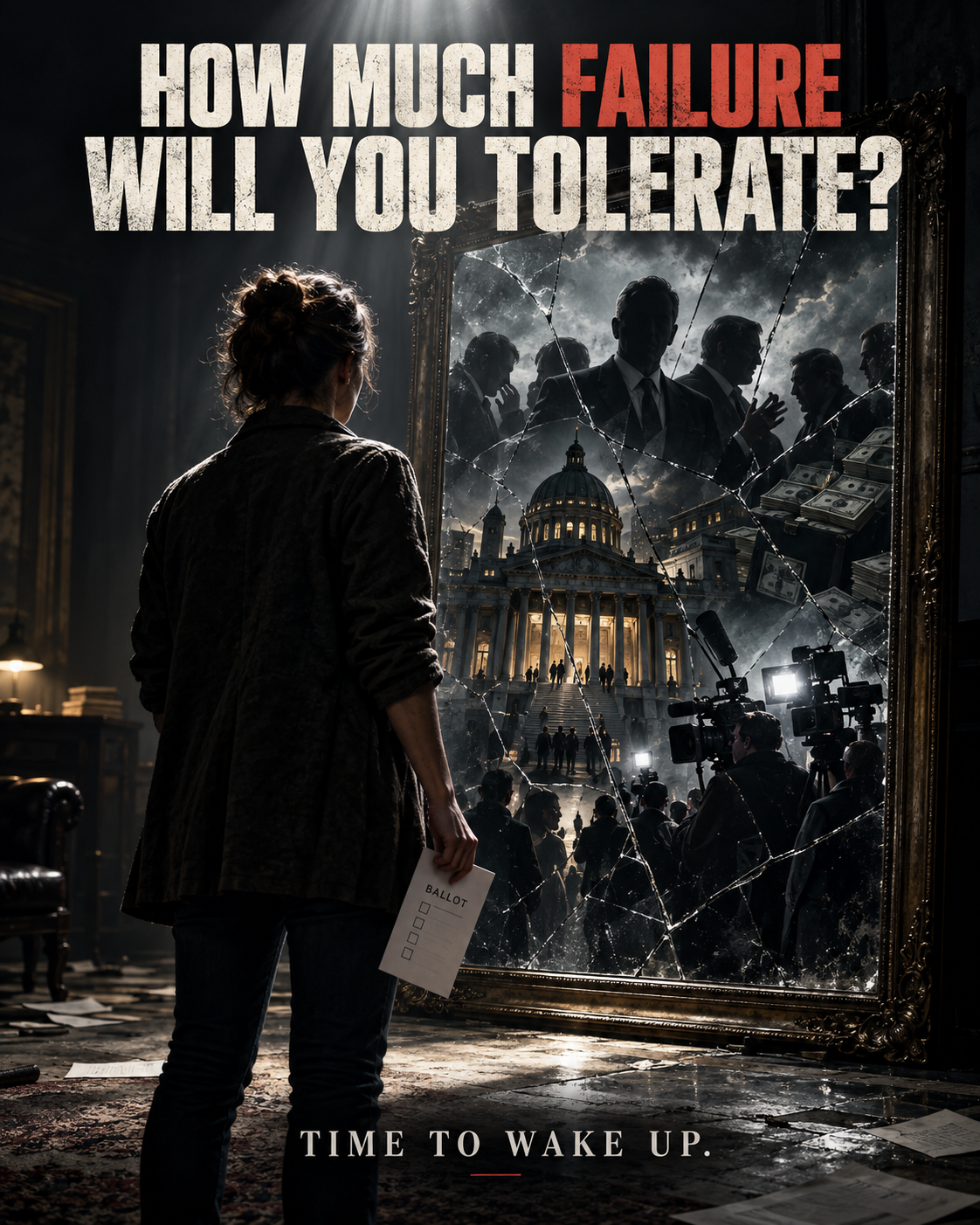

Here is the uncomfortable truth.
A government does not need you to believe it is good.
It does not even need you to trust it.
It only needs you to believe the alternative is worse.
That is enough.
Enough to survive failure.
Enough to survive scandals.
Enough to survive wasted money, broken promises, institutional decay and decisions that seem inexplicable until you ask a different question:
Who benefits?
Look around.
People complain constantly about the people running their countries, in Greece this is constant
They say politicians are incompetent.
They say public money disappears into projects nobody asked for, in Greece we are still looking for them
They watch governments protect powerful interests while ordinary citizens are told to accept higher costs, weaker services and another round of excuses.
A scandal breaks.
Everyone is furious.
Another scandal arrives.
The first one disappears.
An investigation begins.
Years pass.
Responsibility dissolves into bureaucracy.
Nobody remembers who was supposed to answer for what.
Then election season arrives.
The flags come out.
The slogans return.
The old enemies are resurrected.
Fear replaces memory.
The machine resets.
This is not simply a story about bad politicians.
It is a story about incentives.
Politicians study voters far more carefully than voters study politicians.
They know what frightens us.
They know what makes us angry.
They know which words activate identity.
They know which enemies make us close ranks.
They know that once politics becomes tribal, performance becomes secondary.
Your side can fail.
But if the other side frightens you enough, you stay.
Your side can break promises.
But admitting that can feel like admitting you were wrong.
Your side can become everything you once claimed to oppose and still you defend it.
Because somewhere along the way politics stopped being something we judged.
It became something we belonged to.
That is dangerous.
You would never behave this way anywhere else.
If someone managed your company badly for four years, you would not renew their contract because you liked their logo.
If an accountant could not explain where your money went, you would not defend them because your parents had used the same accountant.
If a contractor repeatedly failed, exceeded the budget and blamed everyone else, you would not say:
“At least he isn’t the other contractor.”
If a doctor or a health minister never made your feel safe to live, you would fire him.
Yet when governments fail, citizens are repeatedly encouraged to lower the standard.
Do not compare the promise with the result.
Compare your tribe with their tribe.
Do not ask where the money went.
Argue about personalities.
Do not measure outcomes.
Fight about symbols.
Do not examine who gained from the decision.
Attack anyone who asks.
Eventually something strange happens.
People who trust politicians less than ever become more loyal to them than ever.
That contradiction should terrify us.
Because cynicism does not necessarily threaten power.
Often it protects it.
If you believe every politician lies, why investigate a lie?
If you believe everyone steals, why punish corruption?
If you believe nothing can change, why demand change?
Complete cynicism sounds rebellious.
In practice, it can become surrender.
The citizen complains.
The citizen posts.
The citizen rages.
The citizen shrugs.
Power continues.
So perhaps we need a different relationship with politics.
No heroes.
No saviors.
No political families.
No unconditional loyalty.
Government is not a religion.
A political party is not your bloodline.
A politician is not your football club.
These people are temporary custodians of extraordinary power.
They control public money.
They make laws.
They appoint people.
They negotiate contracts.
They influence institutions.
They make decisions whose consequences can last decades after they leave office.
That deserves scrutiny.
Relentless scrutiny.
Every government should have to answer simple questions.
What did you promise?
What did you actually deliver?
What did it cost?
Who received the money?
Who benefited from the policy?
Who lost?
What evidence justified the decision?
What went wrong?
Who took responsibility?
And when something serious happened:
What happened next?
Not what speech was given.
Not what slogan appeared on television.
Not which opponent was blamed.
What actually happened?
Accountability begins when citizens stop rewarding theatre.
It becomes powerful when we apply the same standard to politicians we like as we do to politicians we despise.
Especially the ones we like.
Because anyone can investigate the opposition.
Democracy becomes stronger when people are willing to investigate their own side.
The most useful citizen to a bad political system is not always the fanatic.
Sometimes it is the exhausted person who has stopped expecting anything better.
The person who says:
“They are all the same.”
“They all steal.”
“Nothing ever changes.”
“What can we do?”
Those sentences sound harmless.
They are not.
They remove the price of failure and once failure carries no price, why should power improve?
The answer is not blind rage.
Rage burns fast.
The answer is memory.
Evidence.
Attention.
Refusal to be distracted.
Remember what was promised.
Remember what disappeared from the headlines.
Remember the investigation that never concluded.
Remember the contract nobody could properly explain.
Remember who voted for what.
Remember who benefited.
Remember who told you something was impossible and quietly did it later for somebody powerful enough.
Do not outsource your judgment.
Not to politicians.
Not to television.
Not to social media.
Not to influencers.
Not even to the newspaper you agree with.
Read.
Compare.
Verify.
Ask who paid.
Ask who profits.
Ask what evidence would prove your own side wrong.
That last question matters most.
Because the easiest person to manipulate is not the ignorant person.
It is the person who has become certain that manipulation only happens to everyone else.
We spend enormous energy asking whether politicians can be trusted.
Perhaps the harder question is whether we have made ourselves too easy to govern badly.
How much failure do we normalize?
How quickly do we forget?
How cheaply can our anger be redirected?
How easily can fear make us accept something we would otherwise reject?
How many times can power disappoint us before we stop calling disappointment normal?
The world does not need another political tribe screaming that everyone else is asleep.
It needs citizens who are awake enough to question their own tribe too.
Look at the state of the world.
Look beyond the slogans.
Look at what power does, not what power says.
Follow the incentives.
Follow the money.
Remember the promises.
Demand the receipts.
Question everyone.
Especially the people you already agree with.
It is time to wake up.
See the state of this world.
Wake up.