Vendors As Censors: The Rap Album Case Studies
First, let’s explain more about what we mean when we say vendors control the conversation. That may sound confusing when we, the agencies, are the ones finding clients, creating creative and picking places to display it.
But vendors still have a great deal of power that often goes unacknowledged. They have the ultimate say on what goes on their billboards, and we think that’s fair — they own the boards, after all, and they make their living off them. This also gives them the power to filter messages that most appeal to them, rejecting sensitive or political content in favor of less controversial messages.
However, that also means that sometimes what we see as the right message, whether from a moral, practical or promotional standpoint, is rejected by a vendor for fear of raising hackles. Here are two cases that illustrate what we mean.
Kendrick Lamar Damn Album
Kendrick Lamar’s fourth studio album, Damn, came out in 2017, and his label came to us with a clear vision of what it wanted on the billboards: an image that matched
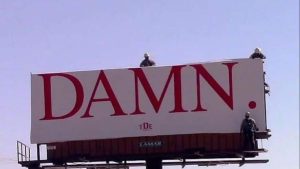
the billboard cover, showing the rapper with the word “damn” in red capital letters.
We loved the idea. It was bold, to the point, attention-grabbing, the epitome of good advertising. The vendors we contacted didn’t feel the same way. They were leery of having a single swear word on the billboard with nothing else, and we went several rounds trying to reach a solution appeasing everyone.
The solution was to add the name of the label or distributor, so it was clear this was the name of an album and not a political statement or protest (the album came out in 2017, when plenty of both were going on).
The label didn’t love but lived with that approach — and Kendrick Lamar certainly had the last laugh. The album with the name that made vendors queasy went on to win a slew of awards, including five Grammys and a Pulitzer Prize for Music, the first rap album ever to earn that recognition.
Eminem Kamikaze Cover
About a year later, Eminem stirred up controversy with Kamikaze, his 2018 album whose cover paid homage to the Beastie Boys’ smash 1986 release License to Ill. Like that album, Eminem’s showed a plane crashing into a wall, though the rapper made subtle changes that branded his imagery.
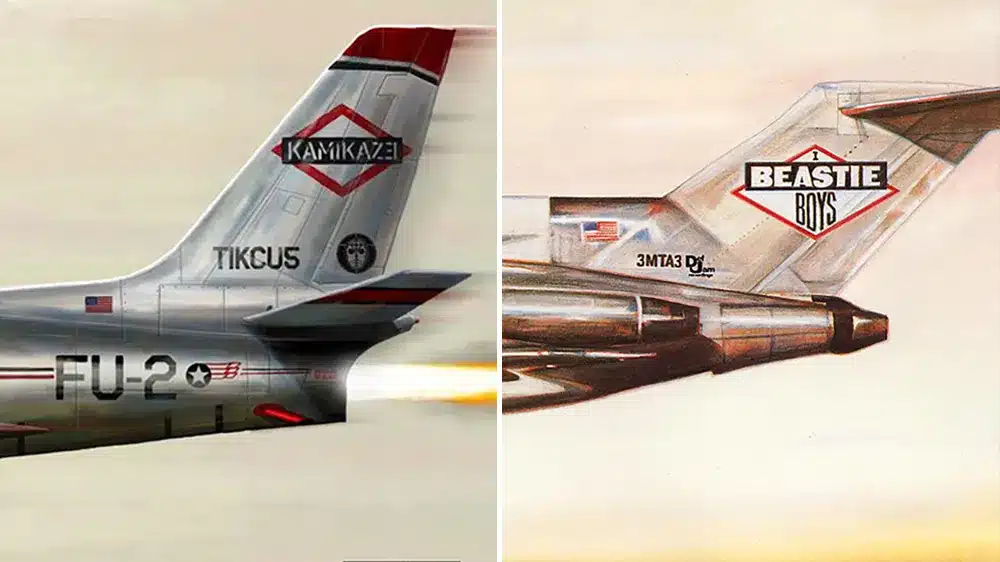
Vendors did not appreciate the visual, homage to an all-time great album or not. They felt the cover was too political and could be seen as insensitive to 9/11 if it was posted on billboards in New York City. By refusing to run the ad as envisioned, they probably felt they were maintaining neutrality on a touchy topic.
But the truth is, the vendor makes a choice in such a case. You could argue they are infringing upon free speech by censoring what is seen. Kamikaze still rocketed to No. 1 on the Billboard charts, but at what cost?