If you’re planning to use rivets, you may want to invest in a rivet header tool. Also known simply as a header tool, it simplifies the otherwise tedious process of installing these permanent fasteners.
Rivets are commonly used in aerospace applications. A typical airplane has thousands or even hundreds of thousands of rivets. Unlike screws and bolts, rivets are permanent fasteners. Once installed, they create strong and secure joints that can withstand external forces like vibrations.
The Basics of a Rivet Header Tool
A rivet header tool is a device that deforms rivets to lock them in place. It’s typically used for solid rivets. As the name suggests, solid rivets feature a solid shank. Unlike blind rivets, they require access to both sides of the fastened parts to install. Assuming you have access to both sides of the parts, you can use a rivet header tool to join them with a solid rivet.
How a Rivet Header Tool Works
How does a rivet header tool work exactly? While there are different types, most use compression to deform the tail.
The first step is to insert the solid rivet through a hole. The hole, of course, should run through the parts that you want to fasten. After positioning the solid rivet in the hole, you can place the rivet header tool over it.
There are manually operated rivet header tools, and there are pneumatic rivet header tools. Manually operated models use a handheld operation, whereas pneumatic rivet guns use pressurized air or gas. Regardless, activating or pulling the tool’s trigger will strike the rivet, causing the shank to compress while subsequently forming a mushroom-shaped tail.
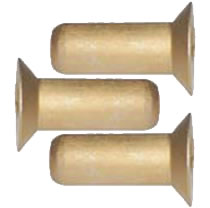
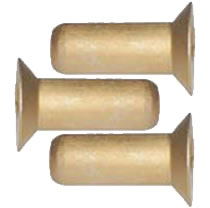
The mushroom-shaped tail will hold the solid rivet in place. Normally, solid rivets have a thin tail that’s the same diameter as the shank, which allows them to slide in and out of precut holes. Deforming the tail with a rivet header tool, though, expands the tail, essentially creating a mushroom-shaped shop head.
Why Use a Rivet Header Tool
A rivet header tool makes installing rivets a breeze. It ensures that consistent force is applied throughout the process. You can always try to deform the rivet manually, but doing so may result in uneven force. This can lead to problems, such as a loose fit.
Rivets are better protected against vibrations when installed. Vibrations can cause fasteners to loosen. When properly installed using the right amount of compression, rivets offer a superior level of protection against vibrations.
Another reason to use a rivet header tool is to reduce the risk of fatigue failure. Rivets are exposed to loads. Over time, these loads can weaken and degrade a rivet’s performance. Using a rivet header tool will reduce the risk of such weakening by ensuring the rivet is properly installed.