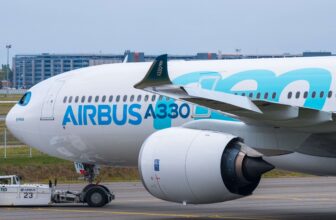

Split winglets have become increasingly common. Also known as split scimitar winglets, they are found on many 737 airliners, including the 737 MAX 8, 737 MAX 9, 737 MAX 10, 737-800 and 737-900ER. Like all winglets, split winglets consist of angled surfaces at the ends of an airplane’s wings. Split winglets, however, feature a unique design that distinguishes them from other types of winglets.
The Basics of Split Winglets
Split winglets are lifting surfaces that extend both upward and downward. Most winglets only point upward, but some point downward. Split winglets, on the other hand, point in both directions.
You can identify split winglets by their dual-pointing fins. Split winglets essentially feature two separate fins, one of which points upward and the other points downward. Together, these two fins influence the flow of air around the airplane’s wingtips. Other types of winglets typically feature a single fin that points either upward or downward.
Weakens Vortices
Split wingtips are highly effective at weakening vortices. During flight, pockets of swirling air will form around an airplane’s wingtips. Known as vortices, they create drag and resistance. Split wingtips weaken these vortices so that airplanes experience less drag and resistance during flight.
Reduces Fuel Consumption
Because of their impact on drag and resistance, split winglets reduce fuel consumption. They make airplanes more fuel efficient by minimizing the drag and resistance to which they are exposed. Split winglets, in fact, can reduce fuel consumption by 2% to 5% compared to airplanes without winglets.
Lowers Operating Costs
Commercial airlines can take advantage of lower operating costs by using airplanes with split winglets. Fuel is one of the biggest expenses for commercial airlines. Research shows that fuel and oil account for 20% to 30% of a typical airline’s operating costs. Split winglets offer lower operating costs in two ways: they reduce fuel consumption, and they allow airplanes to carry less fuel for certain routes, resulting in less weight.
Improved Takeoff Performance
Another reason airplanes use split winglets is for improved takeoff performance. Split winglets allow airplanes to climb better at low speeds, which is essential for takeoffs. At the same time, split winglets reduce noise during takeoffs.
In Conclusion
Split winglets may appear to be a small addition to an airplane, but their impact is significant. They help improve aerodynamic efficiency, lower fuel consumption and enhance takeoff performance. Those benefits translate into lower operating costs for airlines.