
Learn how to start an affiliate program for your online course. Follow these six steps to turn successful students into your best marketing partners.
Building an online course takes a massive amount of energy. You spend weeks recording videos, writing workbooks, and checking every link. Then you launch, and you realize the hardest part is actually getting students to enroll.
I used to rely entirely on paid ads and heavy social media campaigns to sell my courses. It brought in students, but the costs added up fast. I needed a better way to reach people without constantly buying their attention.
That is when I started an affiliate program. Instead of me trying to convince strangers to buy, I got my most successful students and affiliate marketers to do it for me.
Selling a course is fundamentally different from selling physical products or software. Your students are buying an education.
Because of that, your affiliate setup needs a different approach. You are not looking for random marketers to share links. You need partners who actually understand the value of your curriculum.
In this article, I will cover everything from finding the right partners to handling refund periods so you can protect your revenue. Let’s get started.
Why Affiliate Marketing Is Perfect for Course Creators
Selling digital education gives you a massive advantage over physical products.
You build your curriculum once. After that, every new student who enrolls is almost pure profit.
Because your overhead is low, paying affiliate commissions is easy to afford. Giving partners a 30% to 50% cut on a course sale still leaves you highly profitable.
But the reality is that courses are hard to sell.
You are usually asking for a higher price point than a standard online purchase. Potential students need to trust that you can actually deliver the outcome they want. Plus, you are competing against an endless amount of free content online.
This is where affiliates step in to bring built-in trust with their audience. A direct recommendation from someone a buyer already respects carries far more weight than any paid ad you could ever run.
6 Steps to Launch Your Course Affiliate Program with Easy Affiliate
Now that you understand why an affiliate program makes sense for digital education, let’s build one for your course business.
Setting this up does not require a developer or a complicated tech stack.
I use Easy Affiliate because it is a self-hosted affiliate program plugin designed for WordPress websites. It lives right where the rest of my business operates.
This 6-step process will get your program running:
Step 1: Create a Course That Looks the Part
Before you ask anyone to promote your work, your curriculum needs to look professional. If a potential buyer clicks an affiliate link and lands on a confusing page, they will leave. When that happens, your partners lose their commission and quickly stop sending you traffic.
I run my education business using MemberPress because it completely removes the headache of messy tech. It includes a course creator that lets you build and sell directly inside WordPress. You do not have to piece together a separate learning platform – or pay for expensive third-party hosting just to display your videos.
Here is how creating a structured curriculum directly impacts your future affiliate sales:
- Clean layouts build trust: You do not need to know any code to make your lessons look great. The visual builder lets you drag and drop your text, videos, and downloadable workbooks into a professional format.
- Progress tracking keeps students engaged: MemberPress handles the details that motivate people, like visual progress bars. Students always see where they left off, which encourages them to keep going.
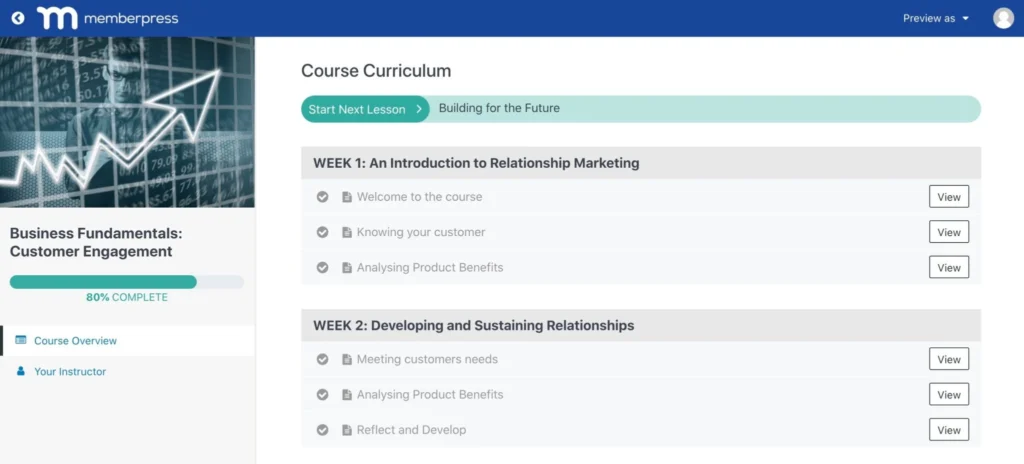
- Milestones create excitement: You can add quizzes to test their knowledge and automatically issue certificates when they finish a module.
When you provide a frustration-free learning environment, your students actually finish the material and get the results they paid for. Those successful buyers then become your very best affiliates.
Step 2: Install Easy Affiliate
Once your course is ready, you need a reliable system to track your partners and their sales. I wanted to protect my profit margins from third-party network fees, so I chose Easy Affiliate.
It is a plugin built specifically for WordPress. You install it just like any other tool, and it gives you everything you need to manage your partners in one place.
Easy Affiliate manages the details of your program with:
Step 3: Structure Your Commission for Courses
Once your learning platform is ready, you need to decide how much you will pay the people who sell it. Because you are selling a digital product, your profit margins are high. You do not have manufacturing or shipping costs eating into your revenue.
That means you can afford to be generous. I always recommend setting a standard commission rate between 30% and 50% for online courses.
That might sound like a lot of money to give away, but it works. Course affiliates usually have smaller, highly engaged audiences. They put their personal reputation on the line to recommend your curriculum, and they expect to be compensated well for that trust.
When you offer a higher payout, you keep your partners motivated to promote your material all year.
Your rate will depend on your specific model:
- Standard courses: A 30% to 50% cut gives partners a strong reason to prioritize your course over competing products.
- Premium courses: If you sell an expensive curriculum, you might drop your rate to 15% or 20%, because the actual dollar amount of the payout is still very appealing.
- Subscription courses: If you run a recurring membership, you can offer a larger payout for the first month and a smaller percentage for every month the student remains active.
You also have to protect your own revenue. Almost every online course offers a refund window. You do not want to pay a partner for a sale on Monday, only to have the student ask for their money back on Friday.
This is where Easy Affiliate makes managing your cash flow simple. You can configure the software to hold commissions until your specific refund period passes. You just set your payout timing to match your policy. Be sure to clearly state how refunds affect commissions in your partner terms so everyone knows when they will get paid.
READ MORE: How to Set Up an Affiliate Marketing Program for Small Businesses
Step 4: Choose the Right Affiliates
Now that your commission rates are set, you need to invite people to join your program.
Not every marketer is a good fit for an online education business. You want partners who understand the value of your curriculum.
You should look out for:
- Your past students: The people who actually finished your material and got results make your best promoters, because they speak from personal experience.
- Other course creators: Look for peers who serve the same audience but teach a different topic. If you sell a copywriting course, partner with someone who teaches graphic design so you share buyers without competing.
- Working professionals: Reach out to people who actively practice what you teach. A working web developer has the right audience to recommend your beginner coding curriculum.
- Niche content creators: Find the bloggers, podcast hosts, and YouTubers who talk about your industry, because their followers are already looking to learn.
You also need to know who to avoid:
- Generic promoters: You do not want people who drop links in generic online forums, hoping for a quick sale.
- Volume marketers: Avoid people who promote every single product they find, because their audience will not trust their recommendations.
- Mismatched audiences: If a partner has a massive following but no connection to your specific course topic, their links will not convert into actual enrollments.
When I launched my first program, I approved everyone who applied. That was a mistake. To protect your brand, you have to review your partners carefully.
Easy Affiliate includes an application screening feature that lets you manually review every single person before they get a link. You get to approve the right people and keep the wrong ones out of your business.
Step 5: Give Affiliates What They Need to Sell
Selling an online course takes more effort than just pasting a link. If you want your partners to bring in students, you have to equip them with the right materials. Do not make them guess how to talk about your curriculum.
When you provide clear resources, your affiliates can focus entirely on selling instead of writing marketing copy from scratch.
This is what you need to give them:
- Clear product positioning: Your partners need to know who your course is for and what specific outcome it delivers. Write down why someone should buy your curriculum instead of searching for free videos online, so your affiliates can easily explain your value.
- Actual student results: Give your promoters the proof they need to build trust with their audience. Share real student testimonials, clear before and after results, and your total enrollment numbers if you already have a large community.
- Ready-to-use content: Provide short social media posts, longer email templates, and standard banner images directly inside your Easy Affiliate campaign dashboard so your partners can grab what they need and start promoting immediately.
- A complete module breakdown: Let your affiliates see what is inside your course. When they know the specific lessons you cover, they can speak directly to the parts that matter most to their followers.
- Full curriculum access: If a partner has not taken your course, consider giving them a free account. When someone experiences your teaching firsthand, their recommendation becomes completely authentic and drives far more sales.
Step 6: Launch and Iterate
When I launched my first affiliate program, I wanted as many people promoting my course as possible. That was a mistake, because I spent weeks fixing broken links and answering the same questions over and over.
Now, I always recommend starting small. When you open your program, keep it contained so you can improve your setup before you bring in a massive group of people.
To manage a smooth rollout,
- Start with a soft launch: Invite just five to ten of your most successful students or closest industry peers. Watch how they use your materials, see what questions they have, and pay attention to the objections their audiences raise.
- Gather honest feedback: After those first few course sales happen, talk directly to your partners. Ask them what is working, what questions potential students are asking, and what would make the curriculum easier to sell.
- Improve your resources: Use that feedback to update your Easy Affiliate dashboard. Add new images if your partners need them, adjust your positioning if a certain angle works better, or raise your commission rate if you need a stronger incentive.
- Scale your recruitment: Once you fix any early issues and your first group is making consistent sales, you can confidently open your applications to a wider audience.
READ MORE: The 15-Minute Affiliate Manager
Launch Your Affiliate Program Today!
Selling an online course does not mean you have to spend all your revenue on paid ads. Because you are teaching a digital curriculum, your profit margins are high.
You are in the perfect position to offer generous commissions to people who already know your material works.
When you partner with successful students and other educators, you do not have to convince cold buyers. They bring their own loyal audience and do the recommending for you.
I rely on Easy Affiliate to run my entire program because it handles the tracking, applications, and payouts right inside WordPress, so I can focus on teaching and you should too.
Ready to get started?
Do you have questions about setting your commission rates or finding your first partners? Let me know in the comment below.
If you liked this article, follow us on Twitter, Facebook, and LinkedIn. And don’t forget to subscribe in the box below!