Mary grew up on her parents’ subsistence farm, where they rotated crops, fertilized with manure, and plowed with draft horses instead of tractors. After graduating from the University of Kentucky in 1981, she began farming full-time herself and over the years raised tobacco, dairy cows, beef cows, pastured poultry, and organic vegetables. In 1990, her husband Steve Smith started the first Community Supported Agriculture (CSA) program in the state.
Like her father, Mary mourns the loss of small-scale agriculture in Kentucky, which declined precipitously after the end of the federal tobacco price support and quota program in 2004. And she believes fervently in the value of rural culture, small farms, regional food economies, and working on solutions from the ground up.
Toward that end, Mary established The Berry Center in 2011. Based in New Castle, Kentucky, the nonprofit puts her father’s writing to work “for the land and the people of Henry County—but with replicable programs that can be used anywhere.”
“The vision that lives in my mind and my heart, that inspires me and keeps me hopeful, existed in much of Kentucky when I was growing up.”
In addition to housing an archive of the writings of her father, uncle, and grandfather, the center offers holistic, human-scale farming classes through its Farm and Forest Institute and runs a cooperative called Our Home Place Meat, which connects small-to-midsize grassfed beef cattle farmers to regional markets.
She has memories of the type of diversified farming and strong rural culture she is working toward, she said. “The vision that lives in my mind and my heart, that inspires me and keeps me hopeful, existed in Henry County, Kentucky, and in much of Kentucky when I was growing up.”
Recently, Mary has been reflecting deeply on the past, present, and future of agriculture. Her father’s seminal 1977 book The Unsettling of America—which lays out the dangers of industrial farming and argues for agrarian culture and deep connection to the land—turns 50 next year. To mark the occasion, Mary has been traveling the country, speaking with food system leaders about how the book impacted them. These will be collected in a video podcast to be released early next year.
To hear her perspective on farming in America 250 years after our country’s founding, Civil Eats spoke with Mary over Zoom—less than a week, it turned out, before her father’s death on Aug. 31.
Despite the challenges she identified, she emphasized that she is not pessimistic about the future of farming. “Hope comes pretty easily to me,” she said. “Work at The Berry Center has helped that, because if you keep the scale right, you can see improvements.”
You have said that a lot of your work comes down to the question of whether rural America is worth saving. Why do you think some people dismiss rural America? And what do you wish they realized or recognized about it?

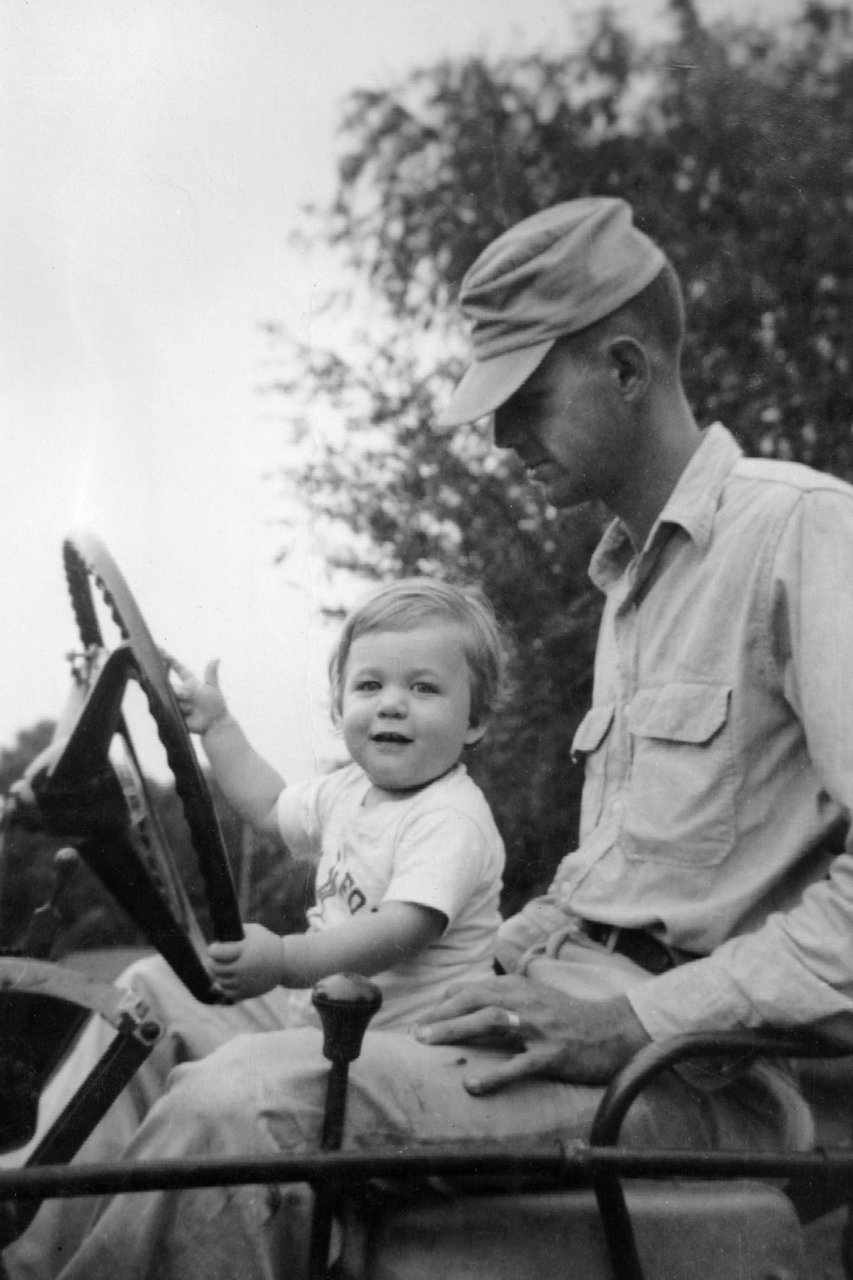
A young Mary Berry with her father, Wendell Berry. (Photo courtesy of the Berry Center.)
We live from the land of rural America, and yet we’ve treated it like a colony or a sacrifice zone. We’ve got to stop.
There is this idea that if a farmer is still farming in Henry County, Kentucky, they must be privileged in some way, or they must be subsidized in some way, or they’re rich. And this is just not who we’re dealing with. We’re dealing with pretty young farmers who have all bought farms, who are all struggling.
We work with a lot of farmers that, politically speaking, are not on the side that I vote on, but I can understand why they feel like they’ve been left behind, taken for granted, or looked down on. In our area, the economy that kept them going was just kind of pulled out from under them.
I have been a successful entrepreneurial farmer—as was my husband—and it is not keeping up with rural decline. It isn’t even getting close. There’s a culture of competition instead of cooperation, and it’s just not enough.
While never would I say that the Henry County I grew up with was perfect by any stretch, I will say that when people are fairly treated for the good work that they do—that the quality matters, and they’re fairly paid, and there’s some stability from year to year to year—I have seen the greatest kindnesses and generosity across the board.
Big Ag argues that industrial, large-scale farming is necessary to increase efficiency and produce affordable food to feed an ever-growing global population. How do you respond to that? How can we feed the masses, many of whom are concentrated in cities, in an effective and ethical way?
I say that it’s completely wrong. It’s wrong-headed, and it has been from the start. You can’t feed people by destroying the world. That’s crazy… I think that industrial agriculture is in its death throes. I think it’s coming apart and deserves it. I think it’s very clear what industrial agriculture has served: It has served an economy that’s destroying the land and the people. So, it’s a system that makes no sense whatsoever by any standard.
The farming that my father grew up taking part in, and that I grew up with and then came home to, was highly diversified. During the lead up to the end of the tobacco program, we worked really hard to try to diversify, to find other markets to encourage farmers to look at vegetable production and so on. What we didn’t do was work out something that farmers could move to that didn’t require them to do everything.
It really breaks my heart to think back to all the meetings that my family and I and others were responsible for holding, inviting farmers to talk about what we were going to do. Those farm meetings were so full you couldn’t find seats in very large rooms, but there was no shape around that for farmers. We just didn’t do enough to put in some infrastructure.