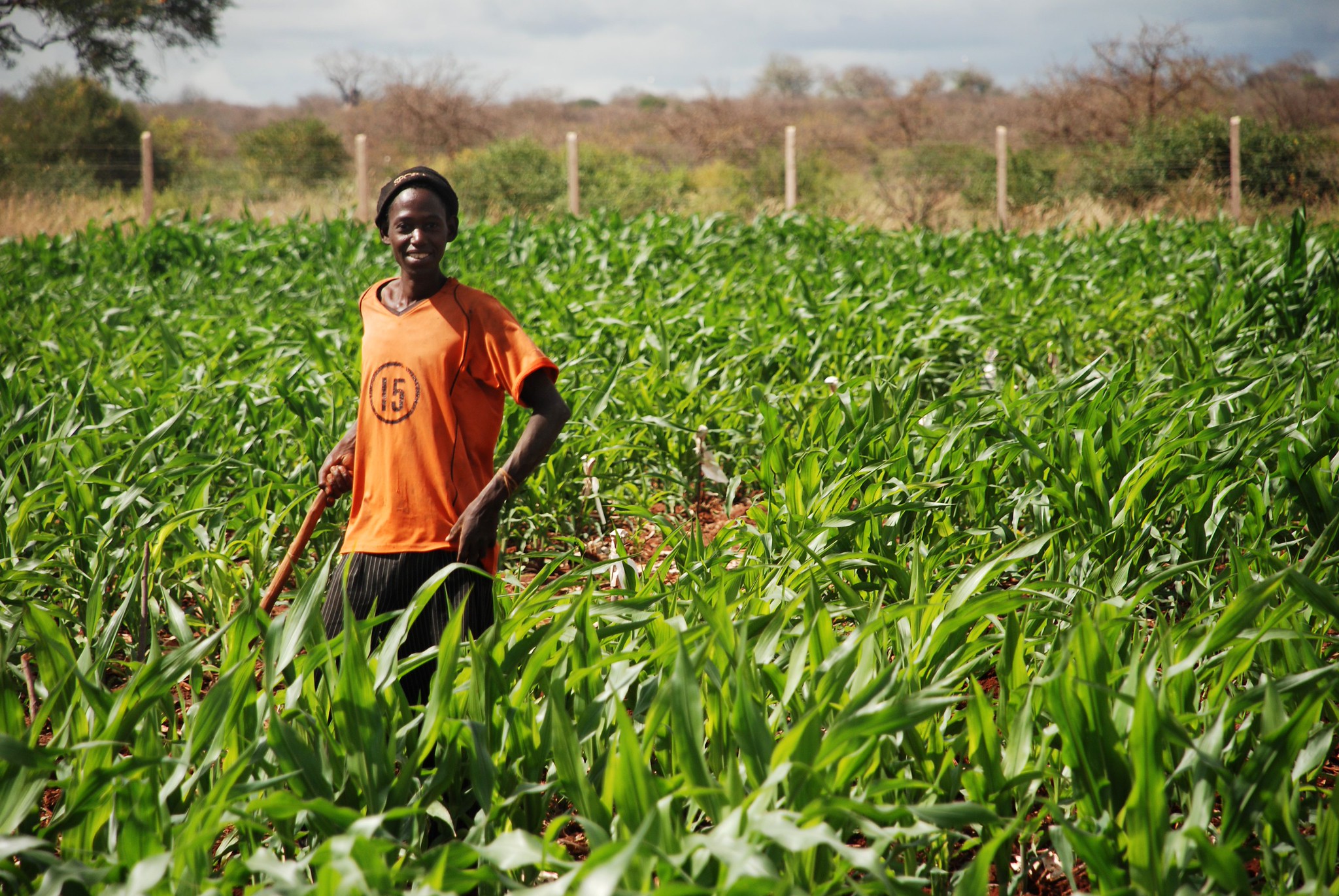
There is a Yoruba song my grandfather used to sing. It speaks of the maize grain (Erire ni T ‘Agbado) that leaves the village as a seed and returns as a full ear with shiny hair (corn silk). As a child growing up in Benin, I did not know that this image would define my scientific career. Today, working at the intersection of two continents, based in Mexico, rooted in West Africa, I still carry that song. And I still ask the question it poses: what happens between the seed and the full ear? And increasingly, I ask a harder question: what happens between the full ear and the plate?
For decades, agricultural science has focused its best minds and largest investments on the first part of that journey: better seeds, improved varieties and optimised agronomic practices. The results are real. Millions of farmers grow more than their parents did. But one piece of this story remains incomplete.
Across sub-Saharan Africa and Latin America, 20-40% of what farmers grow never reaches a consumer. It is lost to pests that invade stored grains, or is contaminated by mycotoxins, invisible fungal toxins that cause liver disease, immune suppression, and child stunting. It is rendered unsellable by poor handling, inadequate storage, and broken market linkages. Efficient postharvest technologies exist, yet making these solutions available, accessible, and usable at scale remains a persistent challenge. This is where many well-intentioned interventions fail, not because the technologies do not work, but because the systems around them do not.
For much of the past half-century, agricultural development has chased efficiency. More output per hectare. More yield per kilogram of fertiliser. More impact per dollar of investment. But efficiency is fragile. An efficient system is optimised for normal conditions. When El Niño disrupts rainfall patterns, when geopolitical tensions or pandemics close trade routes, when fuel prices spike and input supply chains break down, efficient systems fail. What matters, then, is not how efficient a system is under normal conditions but how well it performs under stress.
Our research suggests that the households most resilient to food system shocks are those with productive assets. Without those foundations, nutrition is the first casualty of any shock. Resilient systems absorb shocks. They function when the extension agent does not show up, when the market price collapses, when rain arrives three weeks late. And experience has taught me, working alongside colleagues who have challenged my thinking, that the technologies that truly scale are rarely the most sophisticated. They are the ones that fit into farmers’ practices, local markets and institutional realities; not always optimal, but robust. This is where productivity gains alone fall short.
Building resilience in food systems means addressing this gap deliberately. Consider the two-wheel tractor paired with a pneumatic seeder: a technology that enables smallholder farmers to plant on time even when the planting window is narrow and when labour is scarce. It builds the productive asset base that underlies household resilience. Or consider hermetic storage: no electricity required, no service contract, no complex spare-parts supply chain. When the commercial facility is full, when transport is disrupted, when the harvest arrives all at once, it keeps grain safe from pests, prevents mycotoxin contamination, and gives farmers time to sell strategically. Together, these are not just technologies. They are building blocks of a food system that functions under stress.
My hope for African agriculture is not for more efficiency. It is for food systems deliberately designed to absorb the shocks coming: climate, market and geopolitical. Systems where the distance between the harvest and the plate receives the same scientific rigour and the same investment as the distance between the seed and the harvest.
Africa does not need to copy the efficiency model of industrial food systems. It has the opportunity, and perhaps the necessity, to leapfrog directly to resilience; to build food systems that work in the world as it is, not as we wish it were.
My grandfather’s song was a prayer for good fortune. In the world I am working toward, that good fortune is not left to chance; it is built into the system. The maize grain leaves as a seed, returns as a full ear, and reaches the table. Safe, nutritious, and available, regardless of what the world throws at it.
That is the investment worth making. That is the Africa we are working for.