Your air system piping controls how efficiently compressed air gets from the compressor to your tools — and how well it does that depends on pipe size and fittings, layout design and material choice. Get any one of these wrong, and you’ll see pressure drop before air reaches your equipment, pushing your compressor to work harder and run longer than it should.
If your pipes are undersized or have too many sharp bends, you’ll lose pressure to friction and turbulence before air gets where it needs to go. Poor layout in your system traps moisture and causes localized drops where equipment is used. Corroded or leaking pipe material bleeds volume from your line and contaminates the air.
A well-designed compressed air piping system addresses all three at once.
Pipe Size and Fittings Drive Pressure Drop
Pipe size and fittings drive pressure drop in your system. If your pipes are undersized, air velocity increases and friction builds up. This means less pressure reaches your tools. Too many sharp bends, tees and valves in your line add turbulence and resistance that chips away at downstream pressure.
Getting your pipe diameter right from the start is one of the most cost-effective decisions you can make.
Loop Layout and Drop Legs Keep Pressure Stable
Your loop layout and drop legs maintain stable pressure throughout your facility. A ring main loop lets compressed air reach any demand point from two directions. This eliminates the drops you get with dead-end runs.
Drop legs, placed before each use, collect moisture and debris before they reach your tools. Antivibration hoses and expansion loops protect your joints from the thermal shifts and vibration that crack rigid connections. A well-planned layout keeps your whole system running smoothly.
Pipe Material Matters
Your pipe material affects pressure, purity and how long your system lasts. Traditional black steel and iron pipe corrode internally, creating rough surfaces that add friction and send debris into your tools.
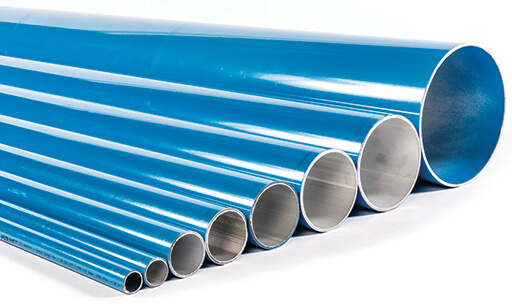
Corrosion-resistant options like aluminum won’t degrade or contaminate your air supply the way black steel can over time. Poorly sealed joints bleed volume from your line and force your compressor to run longer to recover lost air. Compressed air quality depends as much on your piping system as on the machine itself.
Frequently Asked Questions
You may be interested in information about how air system piping affects the performance of an air compressor.
How Can I Improve Air Compressor Performance?
You can improve your air compressor performance by sizing pipes correctly, switching to a loop layout and keeping your filters and drains maintained.
Is It Okay to Use PEX for Air Compressor Lines?
Avoid using standard PEX for compressed air lines unless the specific product is rated and approved for pneumatic use. Some PEX manufacturers state their pipe is not intended for compressed air applications, so always verify the material, pressure rating and code requirements before installation.
Is Aluminum or Copper Piping Better for Air Compressors?
Aluminum is often a practical choice for air compressor piping because it is lightweight, corrosion-resistant and easy to install. Copper also performs well, but it typically costs more up front.
Get Your Compressed Air System Built Right
Whether you’re designing a new system or troubleshooting pressure problems in an existing one, Quincy Compressor’s network of professional and knowledgeable air experts is here to help. Contact us or find a location near you to talk through your setup.