By Bjorn Fehrm • Aerospace Analyst
September 24, 2026
Subscription Required
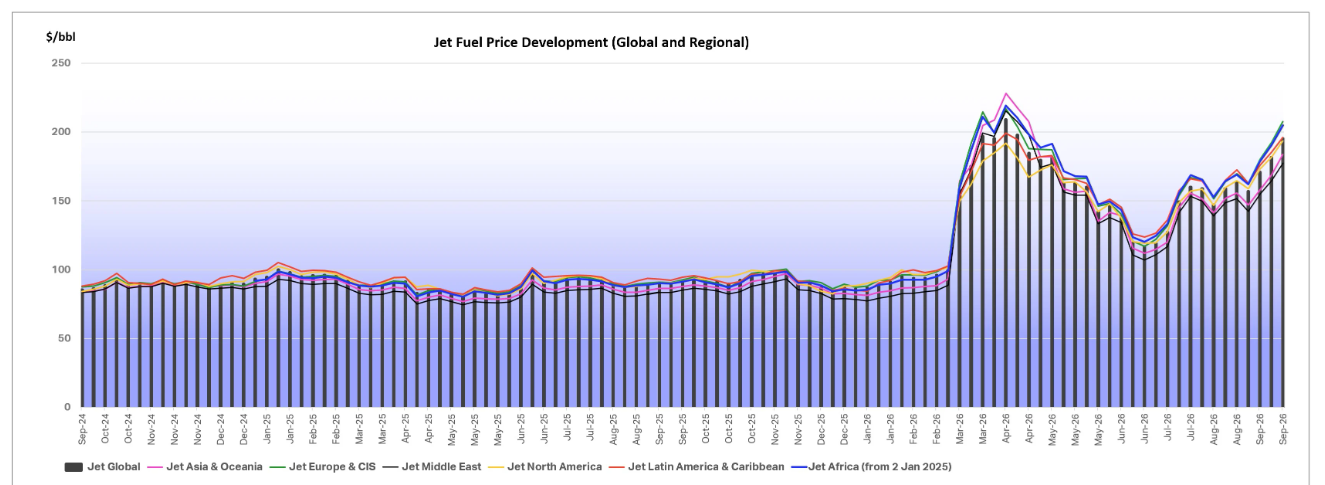
Jet fuel prices have doubled since January, and analysts forecast we might not have seen the peak yet (Figure 1). The initial peak in April was because of the closure of the Strait of Hormuz. The escalation of the Middle East conflict to the entry of the Red Sea is driving the present price hike.
Figure 1 is based on a graph from the IATA jet fuel price monitor, which in turn is based on S&P Global Energy Platts’ market data. Jet fuel has consistently hovered around $90 to $100 per barrel since the last hike in 2022, driven by Russia’s invasion of Ukraine, which pushed prices to a peak of $150 per barrel.

Figure 1. The IATA average and regional jet fuel prices based on S&P Platts’ market data. Photo credit: IATA.
Doubling jet fuel costs changes airlines’ operating costs. How much depends on what portion of operating costs depends on jet fuel. This, in turn, depends on the generation of aircraft. The latest generation of Airbus and Boeing narrowbodies lowered fuel costs by a nominal 15%, but this was largely offset by higher engine maintenance costs, narrowing the operational cost gap between older generations and today’s variants.
To understand the situation, we use the Leeham Aircraft Performance and Cost Model (APCM) to model the cost structure of both older and newer narrow- and widebody fleets. We compare this with typical passenger and cargo yields to understand the effect on ticket and cargo prices if the jet fuel price hike stretches over time.