Akasa Air adds Hanoi as its seventh international destination, starting September 4 – Network Thoughts

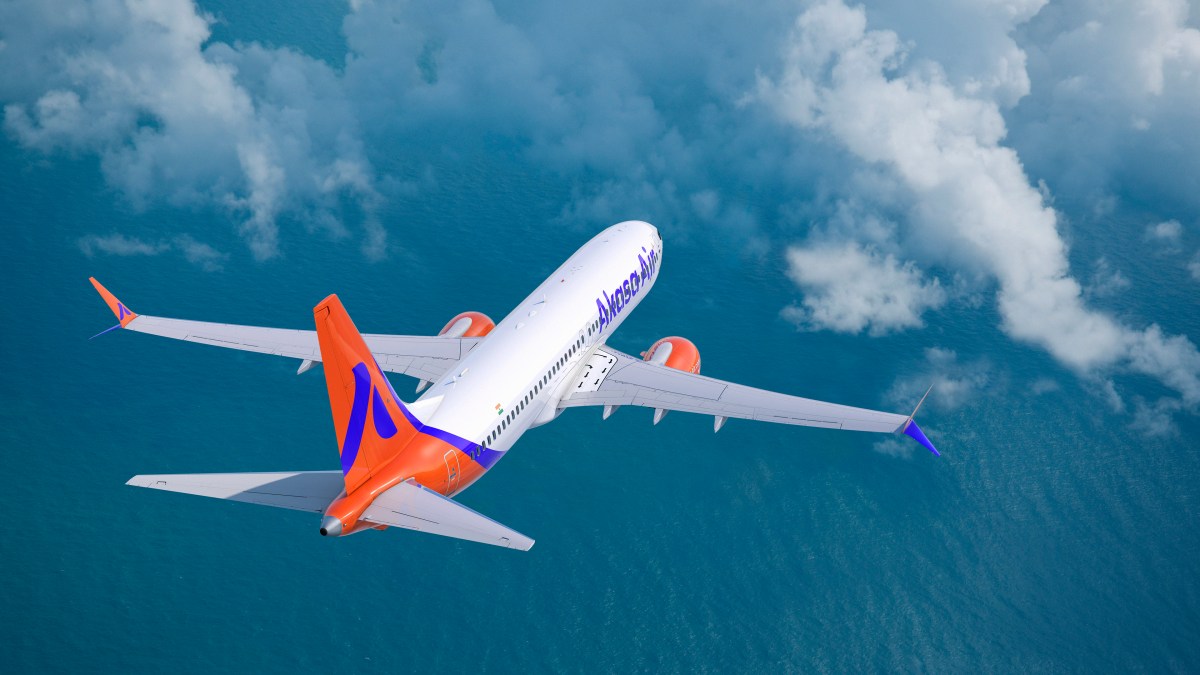
Akasa Air will begin non-stop flights between Mumbai and Hanoi from 4th September 2026, marking the airline’s seventh international destination and its second port of call in Southeast Asia after Phuket. The route will be flown four times a week, Monday, Friday, Saturday and Sunday, QP625 departing Mumbai at 0535hrs to reach Hanoi at 1200hrs, and the return QP626 leaving Hanoi at 1330hrs to land back in Mumbai at 1710hrs. The timings are structured to cater to the tourist traffic with mid-day arrivals and departures timed with hotel check-in and check-out timings, very different than what every carrier on the India – Vietnam route offers. IndiGo and Air India are the other Indian carriers between India and Vietnam, with the market heavily tilted in favor of Vietnamese carriers. IndiGo was the first player in the non-stop market, though it has remained small and made multiple changes to its routes and timings, with focus on feeder traffic, both domestic and international. Air India’s timings mirror other South East Asia flights with the focus on onward connectivity to Europe from Delhi. The Vietnamese carriers largely have traditional timings with arrivals early into Vietnam which helps connect to other destinations in their network.
From Doha to Hanoi: a network built in two acts
Akasa’s international story so far has unfolded in two distinct phases. The first, spanning March to July 2024, was an unmistakably Gulf-first play with Doha, Jeddah, Riyadh and Abu Dhabi being added within a short span, each addressing a known pool of demand: expat labour corridors, VFR traffic and Umrah pilgrims out of Jeddah. Kuwait City followed the same logic soon after, rounding out a five-city Middle East network that leaned entirely on demand patterns Indian carriers have chased for decades along with the availability of rights to these places for a new carrier like Akasa Air.
The second phase began only in September 2025 with Phuket, Akasa’s first foray outside the Gulf and into Southeast Asia. Hanoi’s launch now turns that one-off into the start of a second regional cluster, which subject to bilateral rights could see more flights, beginning with an increase of frequency.
Why Hanoi, and why now
The timing is notable given how the India-Vietnam market has actually been shaped so far. As covered on this website last week, Vietnamese carriers VietJet and Vietnam Airlines have controlled roughly two-thirds of the 86 weekly departures on the corridor despite Indians accounting for the overwhelming share of traffic, nearly thirteen Indian visitors to Vietnam for every Vietnamese visitor to India. IndiGo and Air India have grown their Vietnam presence cautiously, and IndiGo has even paused Ho Chi Minh City this year. Akasa’s entry, at four weekly frequencies, fits that same conservative Indian-carrier pattern rather than breaking from it, a toe in the water rather than a network statement, much as Phuket was before it scaled to daily and multi-city.
What differentiates Hanoi from Akasa’s Gulf launches is the underlying demand driver. Where Doha or Riyadh were built on labour and religious travel, Hanoi is a pure leisure and cultural-tourism bet, riding the same wave that has taken Indian arrivals in Vietnam from roughly 392,000 in 2023 to an estimated 7 lakh in 2025. Mumbai, rather than Delhi, the city with arguably the larger historical India-Vietnam demand pool gets the first mover advantage, consistent with Akasa’s practice of anchoring nearly every new international point through its home base before spreading to other metros, as it eventually did with Abu Dhabi via Bengaluru and Ahmedabad. Avoiding Delhi helps avoid competition from Air India and IndiGo.
Network Thoughts
Three Indian carriers now serve Vietnam against two Vietnamese ones, and yet Indian carriers still control barely a third of total weekly departures. Akasa’s four weekly flights won’t change that ratio meaningfully on their own. Ho Chi Minh City is a larger market in Vietnam than Hanoi, but Indian carriers seem to prefer Hanoi over Ho Chi Minh, with one possibility being unit yields not being higher to cover the additional distance in case of a non ETOPS routing.
What is more interesting is what Hanoi signals about Akasa’s broader international sequencing. A year passed between Phuket and its next Southeast Asian addition, suggesting the airline is building this region out deliberately rather than opportunistically, likely constrained as much by Boeing’s delivery schedule and bilateral rights as by network strategy. At the timings and the four weekly presence, the ticket sales are likely to be India side as a majority, thus not helping with the foreign exchange buffer an international flight could give any airline in current times when the currency has been a major factor for every airline in India.
Will Akasa Air be in a position to grow its presence in Vietnam? A lot depends on the bilateral rights allocation rather than aircraft delivery schedule.
Found this article informative? Think of supporting Network Thoughts with Power of 10

Running this website incurs some cost, along with the data sourced for analytics. If you have liked this article, consider paying INR 10 via UPI. The site will continue to be free. This will help with the maintenance, upkeep and funding the research. You can also pay via Debit or Credit card by clicking on this link.
You can support Network Thoughts by ordering Network Thoughts baggage tags and lapel pins !
Follow NetworkThoughts on X (Formerly Twitter), Bsky, Facebook and YouTube
Related