September 10, 2026. UPDATED.
Five people were killed this past Sunday when a Boeing 767 freighter crashed off the end of a runway in Miami, colliding with several vehicles and catching fire.
As more info comes to light, the more and more egregious things look. My cardinal rule is to avoid early speculation and conjecture, but this is shaping up to be a colossal screw-up on the part of the crew.
The bullet points:
1. The plane touched down at an unusually high speed and roughly halfway down the runway. Pilots are expected to abandon any landing should the targeted speed be exceeded by any significant amount. (Landing speeds vary with weight, flap setting, and weather.)
2. The pilots were still in the process of configuring the jet as it passed over the threshold. The flaps were in the process of extending. This is somewhat shocking. Standard protocol is to have the jet fully configured and stable no lower than a thousand feet above the ground. If it’s not, you break off the landing and go around.
3. Neither the plane’s thrust reversers nor its ground spoilers (panels that lift from the wing to help the jet decelerate), were activated after touchdown. Reverse thrust is controlled by whichever pilot is at the controls, while the spoilers deploy automatically after sensing proper weight-on-wheels and tire spin-up — in other words, when the plane “knows” it’s on the ground. The reason they didn’t deploy is probably because the jet never sensed a proper touchdown. In the videos, the left main landing gear can be seen still aloft as the jet speeds past. It was so fast it wanted to keep flying. The pilots could have manually activated the spoilers, but a last-second decision was made to apply go-around thrust instead.
4. In something of a panic move, the throttles were pushed fully forward. Was there enough runway left to become airborne again? Maybe, but the pilots decided otherwise and, after only a few seconds, power was again cut to idle. At which point they were out of options: there was neither room enough to stop nor to fly again.
What it all looks like, in summary, is a highly unstable approach that, for whatever reasons, the pilots chose to continue rather than abandon.
Video footage shows ominous-looking clouds and rainstorms off the approach end of the runway. Gusts and possible windshear may have been a factor. Yet even if this is the case, it wouldn’t excuse the pilots for attempting to land.
Unless there’s more to it. We know certain facts, but we don’t know the why of them. None of this is conclusive.
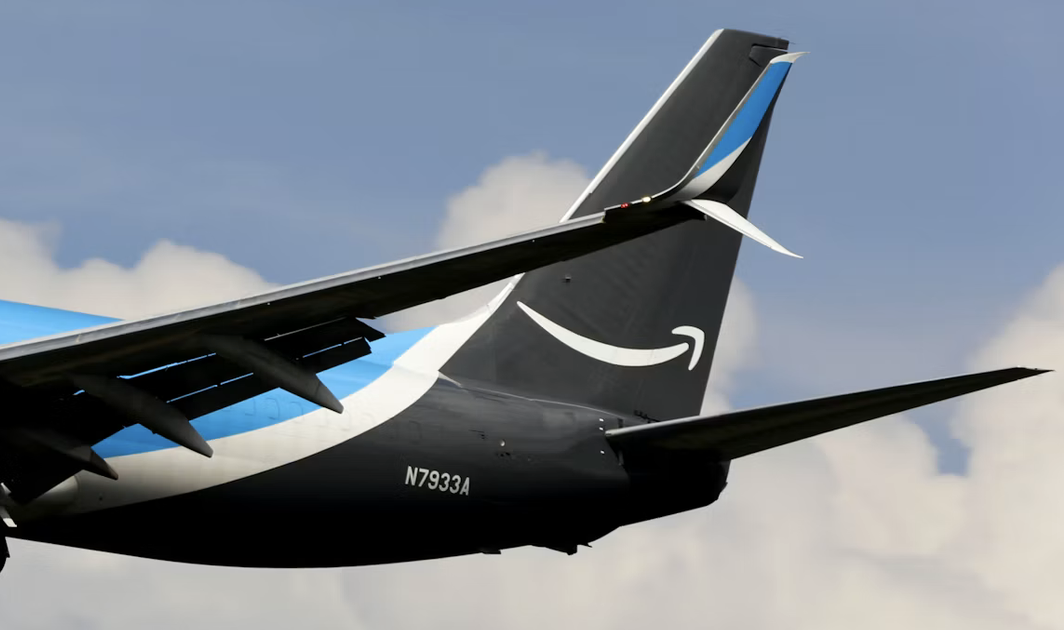
Much of the media, meanwhile, is describing the plane as an “Amazon” or “Prime Air” jet. Which it was and wasn’t.
Amazon does not own an airline or fly its own planes. It uses contractors, some of whom paint their jets in an Amazon “Prime Air” livery. (It’s an arrangement not unlike those between the major passenger carriers and their regional jet “Express” and “Connection” partners.) The 767 that crashed in Miami was flown on Amazon’s behalf by a company called 21 Air, which I’d never heard of until today.
Another company that relies on contractors is DHL, the global shipping giant. You’ll see jetliners in DHL’s distinctive red and yellow colors at airports all over the globe. These belong to a multitude of contractors; none are flown by DHL itself.
FedEx and UPS, on the other hand, own and operate their own airlines.
Related Story:
ODE TO THE 767
Photo courtesy of Unsplash