77
Founded by Sir Richard Branson in the 1980s, Virgin Atlantic Airways has become one of the world’s most recognisable long-haul airlines. Renowned for its stylish branding, customer service and innovative approach to premium travel, the airline has challenged larger competitors on routes across the Atlantic for more than four decades.
Today, Virgin Atlantic operates one of the youngest long-haul fleets in Europe, serving destinations across North America, the Caribbean, Africa, the Middle East and Asia from its London Heathrow hub. Following a multi-billion-dollar fleet renewal programme, it is transitioning to an all next-generation fleet of Airbus A330neos, Airbus A350-1000s and Boeing 787-9 Dreamliners.
Brief History of Virgin Atlantic Airways
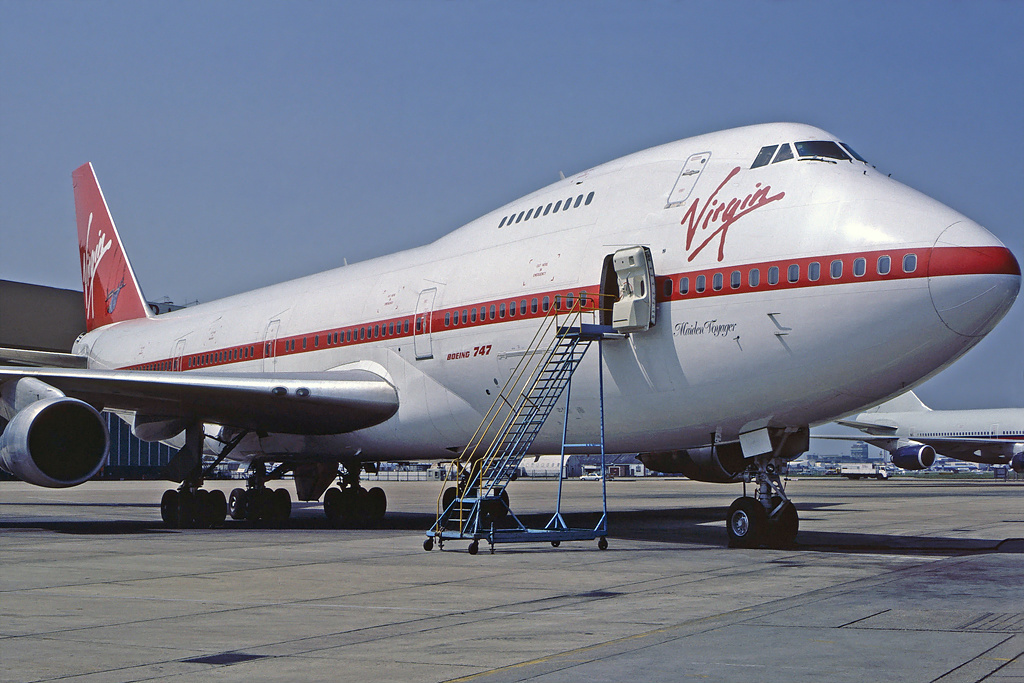
The first Virgin Atlantic service to New York (c) Steve Fitzgerald
Virgin Atlantic was founded by entrepreneur Sir Richard Branson in 1984, with its inaugural flight operating from London Gatwick to Newark on 22 June using a leased Boeing 747-200. The airline was established to challenge the dominance of British Airways and quickly developed a reputation for offering a more fun and customer-focused alternative.

Throughout the late 1980s and 1990s, Virgin Atlantic expanded rapidly across the North Atlantic and to destinations in Asia, Africa and the Caribbean. The iconic Boeing 747 became synonymous with the airline, joined over the years by Airbus A340s, Airbus A330s and Boeing 787 Dreamliners.
The airline introduced numerous innovations, including onboard bars, Premium Economy cabins and stylish Upper Class suites, helping redefine long-haul travel.
Like many international carriers, Virgin Atlantic faced major challenges during the COVID-19 pandemic, undergoing financial restructuring in 2020. However, demand rebounded strongly, allowing the airline to continue its fleet modernisation programme.
In 2023, Virgin Atlantic became a full member of the SkyTeam alliance, strengthening its partnership with Delta Air Lines, Air France and KLM while expanding global connectivity.
Current Bases and Operations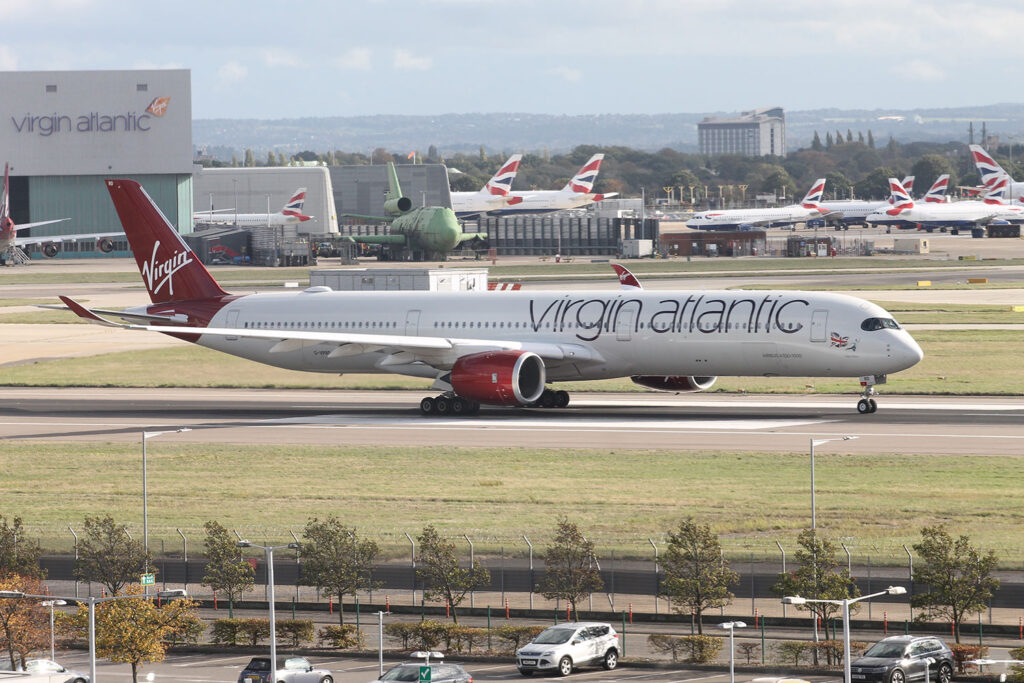
Virgin Atlantic’s principal hub is:
It also maintains an important base at:
Historically, London Gatwick played a major role in the airline’s network, although Heathrow is now firmly established as its primary long-haul gateway.
Virgin Atlantic focuses almost entirely on long-haul services, particularly across the North Atlantic, where it competes with British Airways, American Airlines and United Airlines. Through its joint venture with Delta Air Lines and partnerships with Air France-KLM, the airline offers extensive onward connections throughout North America and Europe.
Its network includes destinations across:
- United States
- Canada
- Caribbean
- India
- Middle East
- Africa
- Maldives
Important and Notable Routes
Virgin Atlantic is best known for its transatlantic network, with several routes regarded as flagship services.
Among its best-known routes are:
- London Heathrow – New York (JFK)
- London Heathrow – Los Angeles
- London Heathrow – Orlando
- London Heathrow – Miami
- London Heathrow – Atlanta
- London Heathrow – Boston
- Manchester – Orlando
The London Heathrow–New York JFK route remains the airline’s signature service and one of the world’s busiest premium long-haul markets.
Virgin Atlantic has also steadily expanded its services to India in recent years, with flights to Delhi, Mumbai and Bengaluru becoming increasingly important parts of its network.
Fleet Overview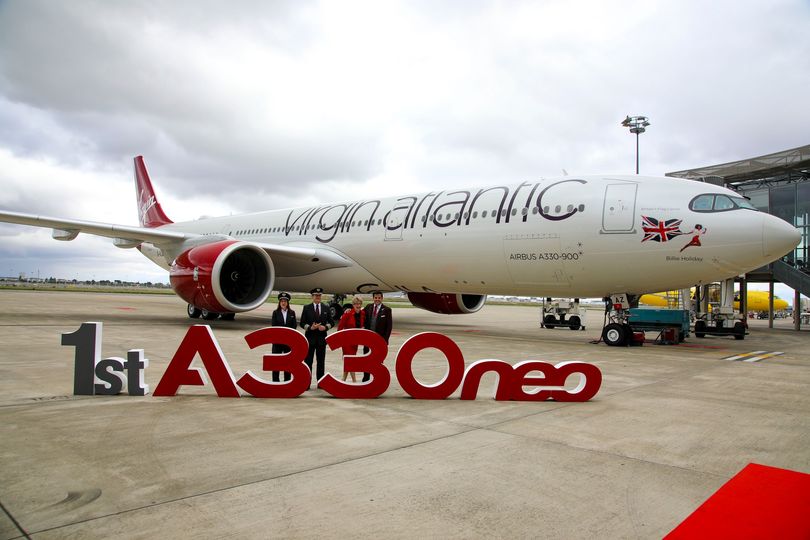
Following the retirement of its Airbus A340s and Boeing 747-400s, Virgin Atlantic now operates an entirely twin-engine widebody fleet and is continuing its transition towards newer-generation aircraft.
Current Fleet
| Aircraft Type | In Service |
|---|---|
| Airbus A330-300 | 6 |
| Airbus A330-900neo | 8 |
| Airbus A350-1000 | 12 |
| Boeing 787-9 Dreamliner | 17 |
Aircraft on Order
| Aircraft Type | On Order |
|---|---|
| Airbus A330-900neo | 11 |
The additional A330neos will complete Virgin Atlantic’s fleet renewal programme, replacing the remaining A330-300s and helping create an all next-generation fleet by 2028.
Airline Livery
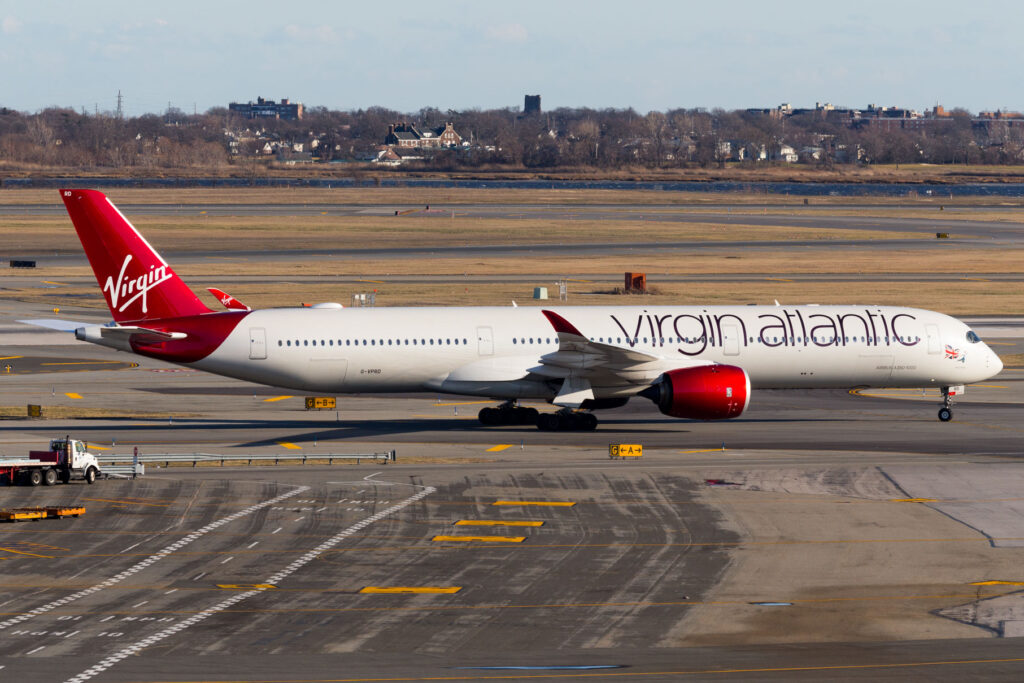
Virgin Atlantic A350 at JFK
Virgin Atlantic has one of the most distinctive liveries in commercial aviation.
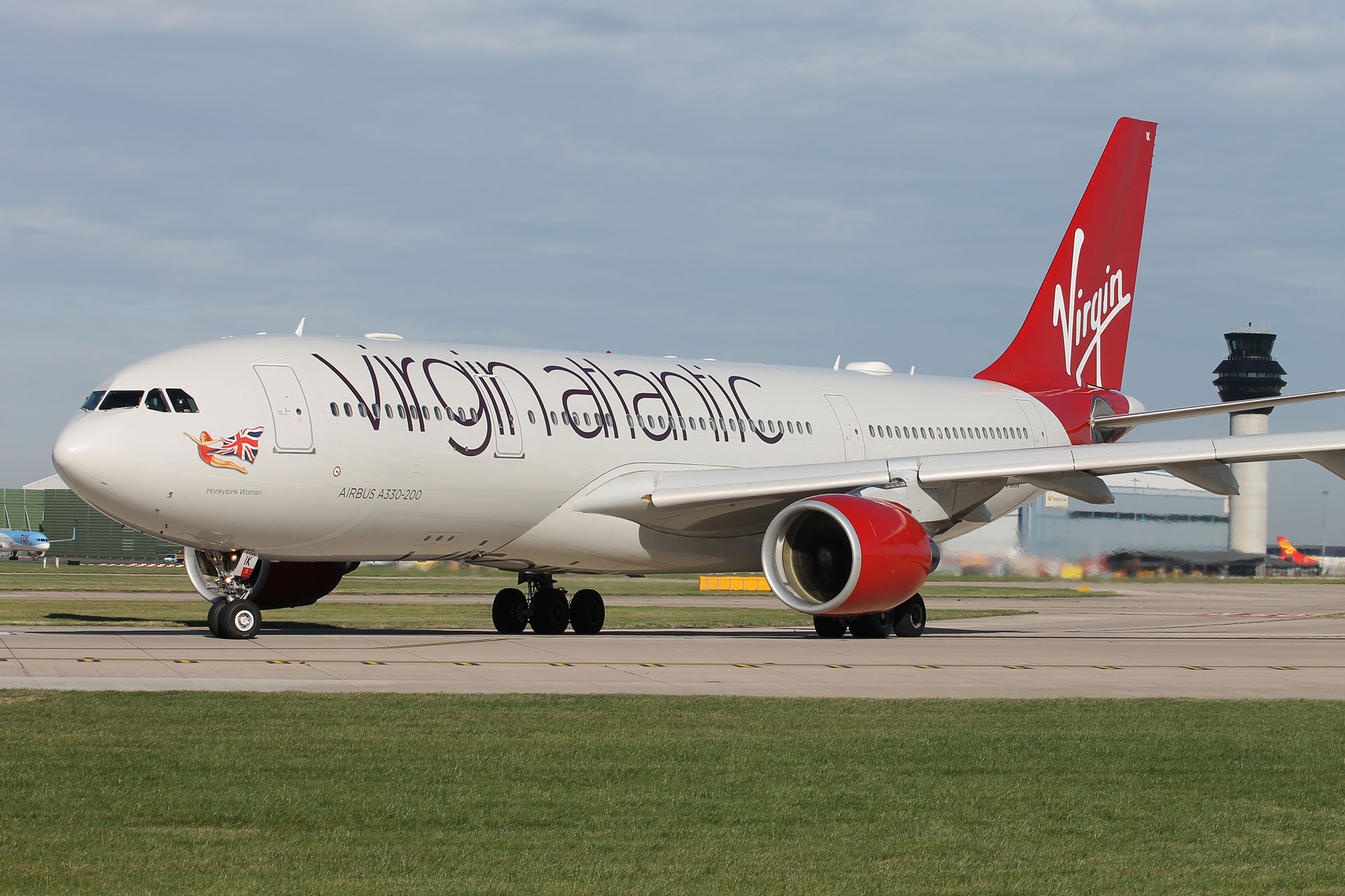
Its aircraft feature a gleaming white fuselage with large metallic Virgin Atlantic titles across the forward fuselage. The tail is painted deep crimson and carries the famous Virgin script logo, while the engines are finished in matching metallic silver.
One of the airline’s most recognisable features is the “Flying Lady” artwork positioned beside the forward passenger door. Inspired by classic pin-up artwork, each aircraft carries this emblem as part of the airline’s branding.
Many aircraft also feature a Union Flag-inspired red swoosh beneath the cockpit windows and the airline’s distinctive burgundy engine nacelles, making Virgin Atlantic aircraft easy to identify even from a distance.
Special Liveries
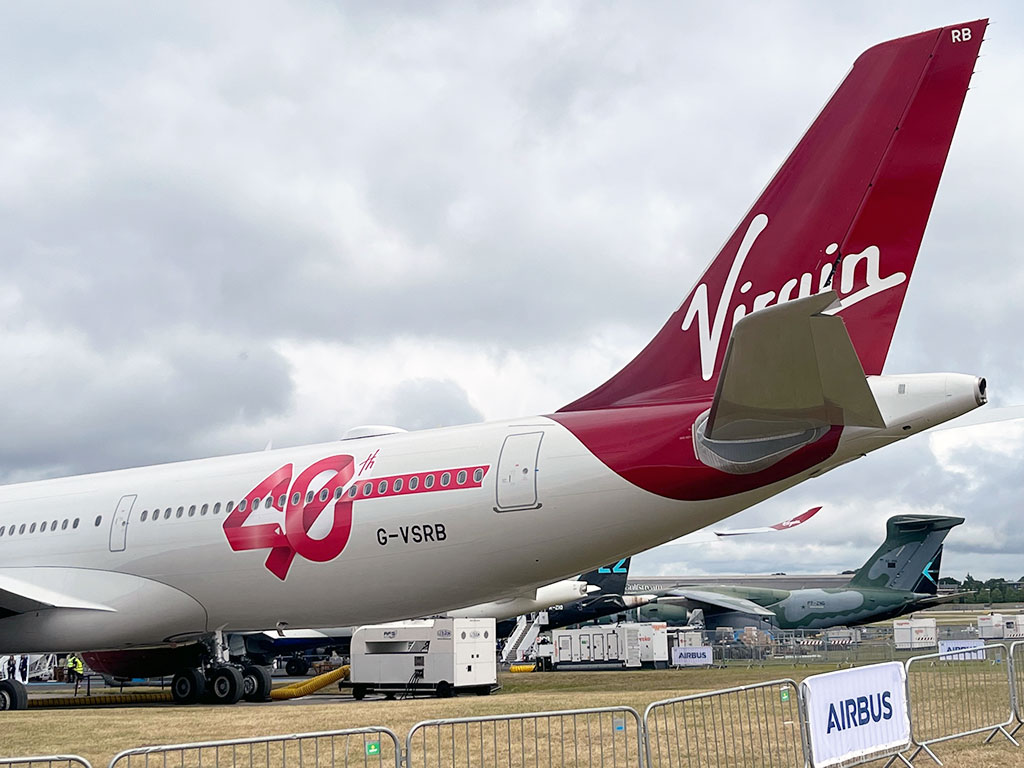
Virgin A330neo G-VSRB previously wore special 40th anniversary markings.
Unlike some airlines, Virgin Atlantic generally maintains a consistent fleet appearance, with no current special liveries.
For enthusiasts, registration differences are often just as interesting. The airline has traditionally given many aircraft registrations beginning G-V* with memorable combinations such as G-VBIG, G-VLIP, G-VWOW and G-VFAB, reflecting Virgin’s playful branding.
As more Airbus A330-900neos enter service, they are introducing Virgin Atlantic’s latest cabin product, featuring the Retreat Suite and redesigned Upper Class cabin, making these aircraft particularly sought after by aviation enthusiasts and frequent flyers alike.