In the early hours of last Saturday morning, thunderstorms and severe weather across parts of the UK and Europe created a very challenging operating environment for aviation.
The impact was felt by passengers, airlines and airports, with delays and cancellations reported across a number of UK and European airports. Understandably, disruption of this kind is frustrating for everyone affected, particularly during a busy summer weekend.
Behind that disruption, our operational teams were managing a complex and fast-moving picture, working closely with our embedded Met Office colleagues.
The airspace network works a bit like a busy road system, but in three dimensions. When severe weather rolls in, aircraft must be safely managed around it. That pushes more traffic into other parts of the network, creates bottlenecks and reduces the number of aircraft that can safely pass through at once.
NATS, airports and airlines plan closely together every day to keep flights moving safely and efficiently. But severe storms can be unpredictable and are not simply something aircraft can fly through as normal. Pilots will avoid dangerous weather where they need to, and passengers would expect nothing less. That is a fundamental part of keeping flights safe.
Pilots ask to be routed around the weather, which means traffic can present itself to the UK in different ways, at different points and in different volumes than originally planned, inevitably causing congestion as a result. Airline schedules and airport operations are also affected, with some flights arriving later than expected as aircraft avoiding severe weather take longer routes; or departing later because of the congestion en route. Our controllers and operational teams are constantly assessing what the airspace can safely handle. When weather hits, the challenge is to keep flights moving as safely and efficiently as possible.
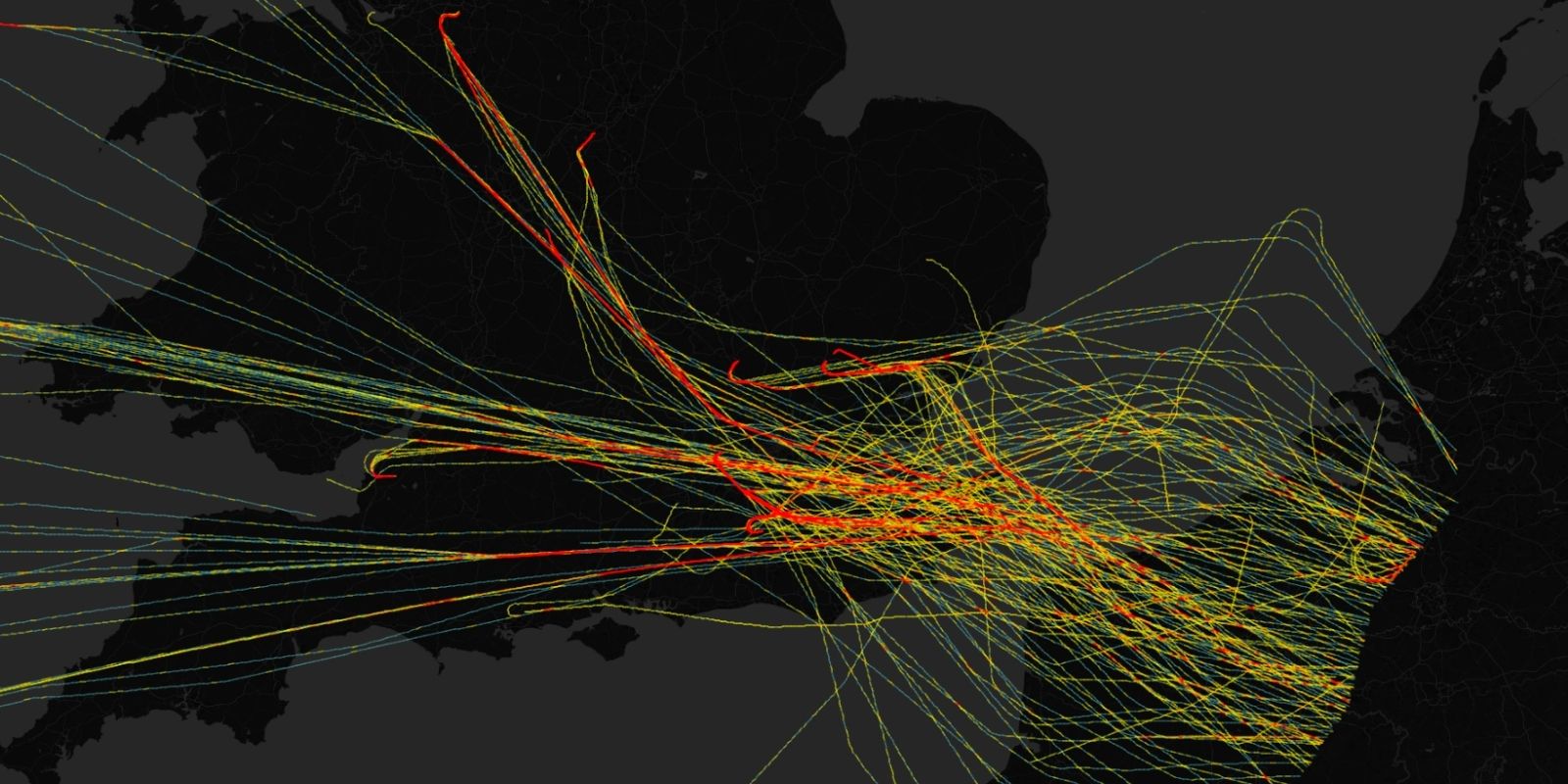
A comparison of aircraft routings on two busy Saturday mornings. The first image, from 20 June, shows a more typical traffic pattern. The second, from 27 June, shows how severe weather changed the way aircraft presented to UK airspace, with flights needing much more controller intervention to navigate around affected areas near Calais to maintain safety.


At times over last weekend, traffic flow restrictions were applied to maintain safe levels of traffic around the affected areas. In practice, that means carefully spacing aircraft, managing flows into busy airports and working closely with airlines and neighbouring air navigation service providers to reduce pressure on the network.
These decisions are never taken lightly. They can create delays, but they are an essential part of keeping the operation safe when weather reduces capacity or makes normal routings unavailable. It is a reminder that aviation is a highly connected system.
The weather doesn’t even have to be in the UK – aviation is international, and flights to and from here have to take account of weather in other countries, which can quickly have knock-on effects to our operations. A storm over a major European route can affect not only flights departing or arriving at a particular airport, but also aircraft crossing UK airspace, aircraft already airborne and flights yet to leave their point of departure.
The UK already manages some of the busiest and most complex airspace in the world, safely moving thousands of aircraft every day. But when severe weather reduces the routes normally available, the whole network has less room to work with. Delays can build quickly, not because the system has stopped, but because aircraft have to be managed safely through a more constrained environment.
That is where airspace modernisation has an important role to play. Redesigning the routes and structures aircraft use can help give the network more flexibility to manage disruption and recover as conditions improve.
The weekend’s weather showed why modernisation matters, and also why resilience is about more than infrastructure, technology or airspace design. It comes from the skill, experience and judgement of the controllers, pilots and operational teams working across the aviation network, making safety-led decisions when aviation faces its most challenging conditions.