


THIS IS about food. Or love. Or love and food. Love, mostly. Or food, mostly.
It’s about food because life, to me, was never about food.
The matter goes back to childhood, as so many things do. I was raised in perhaps the most gastronomically unadventurous family in America, a fact that would haunt me well into adulthood.
Growing up, a “salad,” as I knew it, consisted of a bowl of iceberg lettuce doused with big-brand dressing. We had our pizzas Margherita-style, with sauce and cheese only. The idea of a topping, even pepperoni, was frighteningly exotic.
I don’t necessarily blame my parents. They were known to serve up interesting meals from time to time. The problem was me. I wasn’t just shy of food, I was willfully ignorant and disdaining of it — afraid of it.
In fifth grade, when my little league team won its only game of the season, our coach took everyone for Chinese food. Everyone except me. I cried and hid in my room because I didn’t know what Chinese food was or how to order it.
Later, in the 1980s, my friends would go to Chinatown on Sunday mornings for dim sum. I always made excuses, because I had no idea what dim sum was, and would surely embarrass myself attempting to eat it.
Dining in a group, my menu anxiety was so crippling that I was known to feign illness to avoid ordering, even if I was starving. “Oh I’m not feeling so well. Just some water for me.”
Middle Eastern food? Sushi? Mexican? No chance. I was thirty before I could use chopsticks or knew what a burrito was.
And so the act of dining out, seldom as it happened, was always a mundane, unexciting experience, limited to fast food or this or that suburban steakhouse. Easy menus, nothing to mispronounce.
Once I was into my twenties I began traveling. Yet restaurants were almost never in the experience. Although I’d been to fifty countries by my 35th birthday, the eating part had always been an afterthought. This is heresy to millions, I know, for whom travel and gastronomy are synonymous. I’m the guy who flew to Hong Kong and had dinner at McDonald’s.
There I am, on a layover in Copenhagen, Sao Paulo, Barcelona or Cape Town, walking back to my hotel with secret haul of fast food, the greasy bag hidden in a backpack in case any colleagues see me. And then there’s room service, the ultimate guilty pleasure for the food-phobic. Nobody cares what you order from room service. The dude comes to your door, the shame of your dinner concealed beneath silver domes.
My life is full of ironies, including the fact I once met Anthony Bourdain. I met him on an airplane. And it was on planes, perhaps predictably, that I was known to push my boundaries, if ever so slightly. I found it a form of decadent fun indulging in the gourmet offerings up in first or business class. Lamb kofta with smoked eggplant? Sure, why not. I remember really liking the Indian entree I had once on a flight out of Mumbai, yet I’d have panicked at the thought of going into an Indian restaurant at home.
But fancy as it was, it still was airplane food, and the passenger is a captive audience. You’ve got two or three entrees to choose from; you pick one and they shove it in front of you. It doesn’t take a lot of adventuring to enjoy the seared mahi-mahi with macadamia nut crust.
Food, as I learned it, equals boring, be it at home or abroad or in the air. It had always been that way.
Until it wasn’t.
The change came fairly suddenly, and it’s owed to Elizabeth.
It takes other people — a love interest, more often than not — to nudge you out of your comfort zone. And if your girlfriend is into food, well you’d better be into it as well. Particularly if said girl is, as they say, out of your league. If it’s restaurants she wants, it’s restaurants she’ll get.
Liz, barely five feet tall, makes up for a lack of stature with an outsized intellect and an equally outsized penchant for dining out. And a streak of bossiness that won’t take no for an answer. What was I in for?
For me, “foreign food” would be the biggest challenge. Any cuisine with an ethnicity attached: Korean, Vietnamese, Lebanese. Even Italian. Words like “paneer” or “paella” or “pho” made me scared — highfalutin concepts from some culinary outland. What the hell is focaccia bread?
My great-grandparents came from a town near Naples. I can remember my grandmother speaking Italian. But I couldn’t tell you jack about Italian cuisine. Liz is Indonesian. Her parents came to the U.S. in their 20s. In addition to being an aficionado of Boston’s best-ranked (and priciest) dining spots, she’s versed in the specialties of Indonesian cooking. This gives her an extra layer of exotic-ness and, as I saw it, intimidation. This would be quite a learning curve.
Not counting pizza, the first restaurant I brought us to was a Turkish place in Somerville, up near Teele Square. I knew nothing about Turkish food. I’d have to fake it.
Faking it. The faking game is important. My strategy was simple: whenever I was in another part of the world, I’d take the time to commit one or two food-related details to memory. I’d file these details away for use later on, back at home, should I find myself in a nice restaurant hoping to impress a girl.
Thus I’d memorized “Asada Tampiqueña” after eating out once in Mexico. “Koshary” in Egypt. “Moussaka” in Athens. And so on.
Now, sitting in that Turkish place, as Liz’s coffee-colored eyes smoldered at me suspiciously, no doubt discerning the fraud that I was, I was able to recall two small words from a trip to Turkey some years earlier: “Adana kebab.” I’d been in a restaurant in Cappadocia and ordered Adana kebab, most likely on a waiter’s recommendation — the old, “Oh, what would you suggest?” gimmick employed by know-nothings like me.
And there it was, praise Jesus, on the menu in Somerville. What a boost of confidence. “Oh, the Adana kebab!” I said. “Those are really good.” In truth I had no recollection of what one looked or tasted like. But it didn’t matter; the recognition gave me swagger.
Impressed with myself, I ordered my Adana, unaware at the time that an Adana kebab is about as basic a Turkish dish as exists. It’s like ordering Pad Thai.
It put me at ease, though.
And that was the beginning.
Our first trip abroad was to the Baltics. Strolling the cobblestones of Tallinn, the specter of mealtime loomed before me each afternoon. How could I get out of this? “My feet are tired, could we maybe just settle for a club sandwich from room service?” That wasn’t going to work. “Looks like rain out there.” Nope, that wouldn’t work either. Like it or not we’d be dining out. Nightly. I chose the sightseeing and Liz did the food hunting online. What choice did I have?
And suddenly there I was, in the choicest restaurants in Tallinn and Riga, eating local specialties.
That’s how these things happen: gradually, and then all at once. The Baltics were the jumping-off point. Later it would Slovenia, the Greek Islands, Palawan, New York City. And a hundred spots in between.
The biggest surprise was how rapidly my anxiety eased. I discovered could find my way around a menu just fine. Indeed, somewhere along the way it dawned on me: this isn’t rocket science. It’s food. It’s just food. I’d been living in a self-imposed exile, denying myself one of life’s great pleasures, for no reason.
At home, armed with a “Boston’s 50 Best” list, Liz took charge. I found myself eating Cuban food, tapas in Inman Square, dining with hipsters in the South End. Locally-sourced this, artisanal that. Chef-curated. Farm-to-table. Vegetble-forward. Fusion. The buzzwords were as annoying as ever, but I was getting comfortable.
Once I relaxed, it was easy. So easy that I actually started looking forward to our dinner dates (if not the AmEx bill that came later). I’d skip breakfast to be extra-hungry.
In fact there are millions of people like me — people who make later-in-life discoveries of commonplace delights. Often because someone they care about changed their thinking.
On my birthday one year Liz took me for Beef Wellington at a Gordon Ramsay restaurant in Boston. Prior to that night, I had an insane notion that Beef Wellington, of all things, was some esoteric entree. The reality of it startled me. It was so basic. And so delicious (and, bless her, Liz picked up the tab for that one).
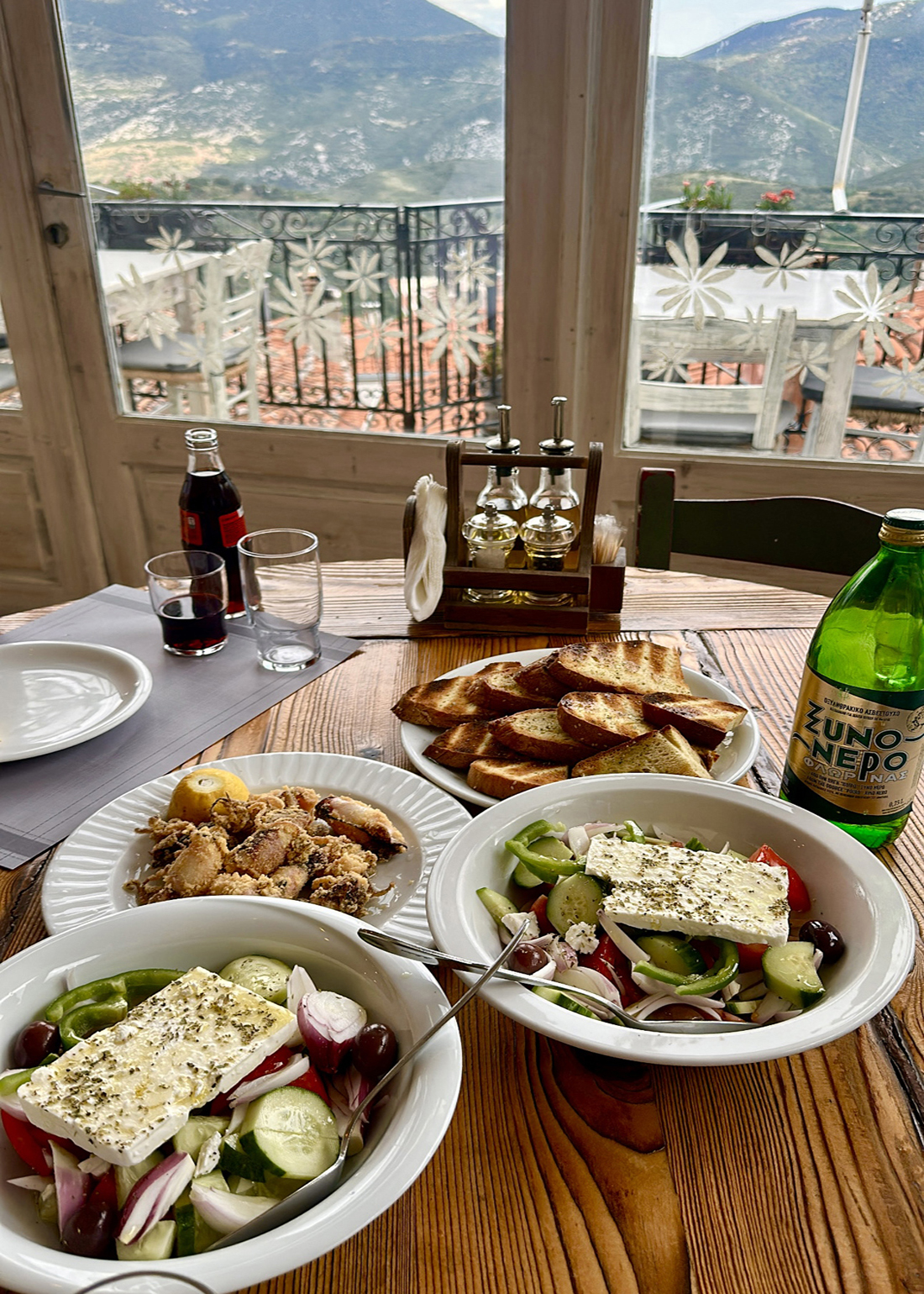
In the town of Delphi, north of Athens, I learned what a Greek salad actually is (and isn’t), triggering a newfound love of feta cheese.
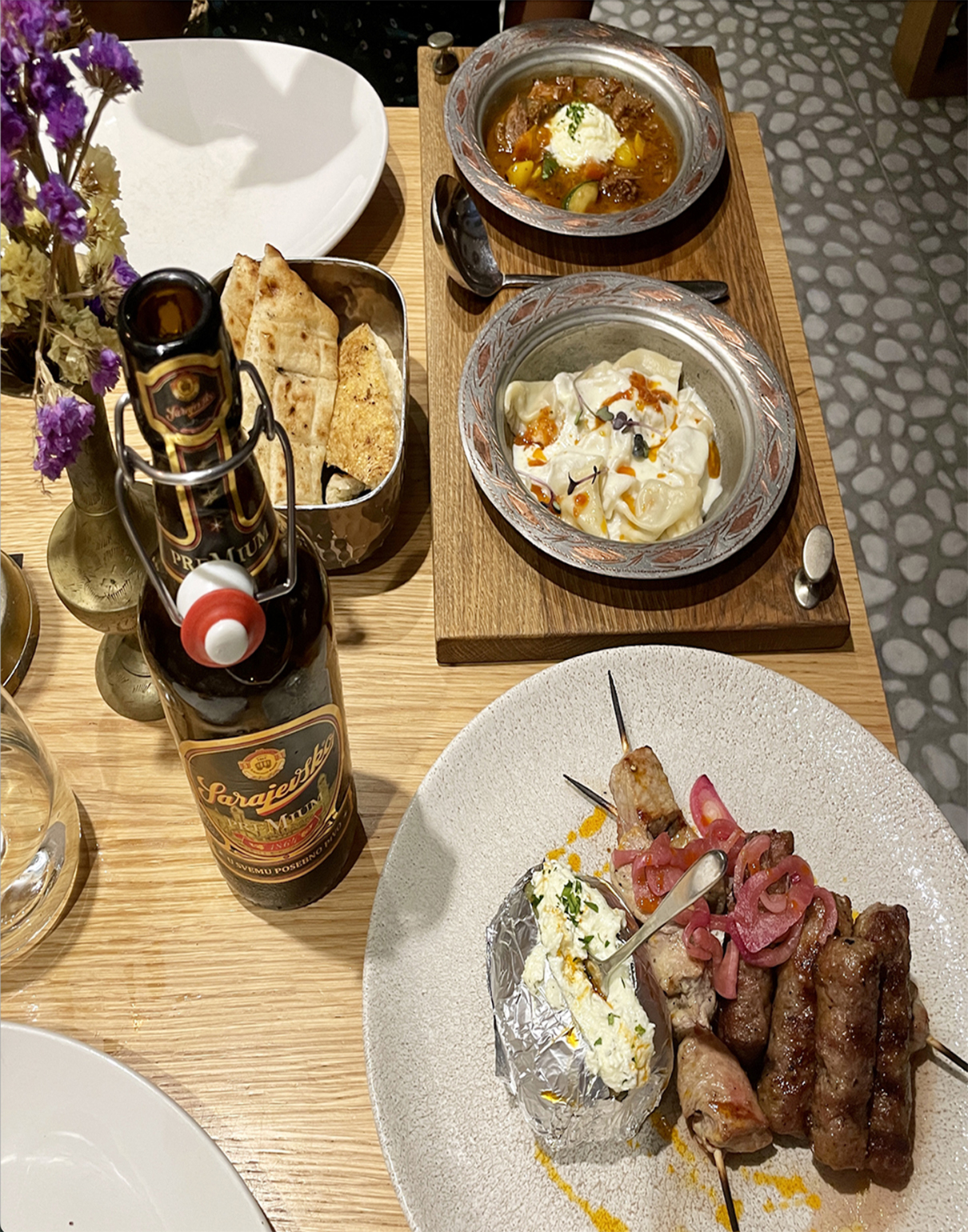
A Bosnian restaurant in Dubrovnik, with a Michelin recommendation to boot? I was making reservations.
I learned, too, that good food doesn’t need to be expensive or concocted from obscure ingredients full of French accent marks. This is hardly breaking news — foodies have long sung the praises of unpretentious neighborhood spots — but for me it was something of a relief. For instance that place in Revere with the incredible sub sandwiches. Or the fish and chips up in Rockport.
When I think of our trip to Utah, it’s the meals that I recall most vividly, none of them elaborate: the Red Iguana in Salt Lake, and that barbecue joint down near Zion. Simple food, but food that would’ve scared me away when I was fifteen (or forty).
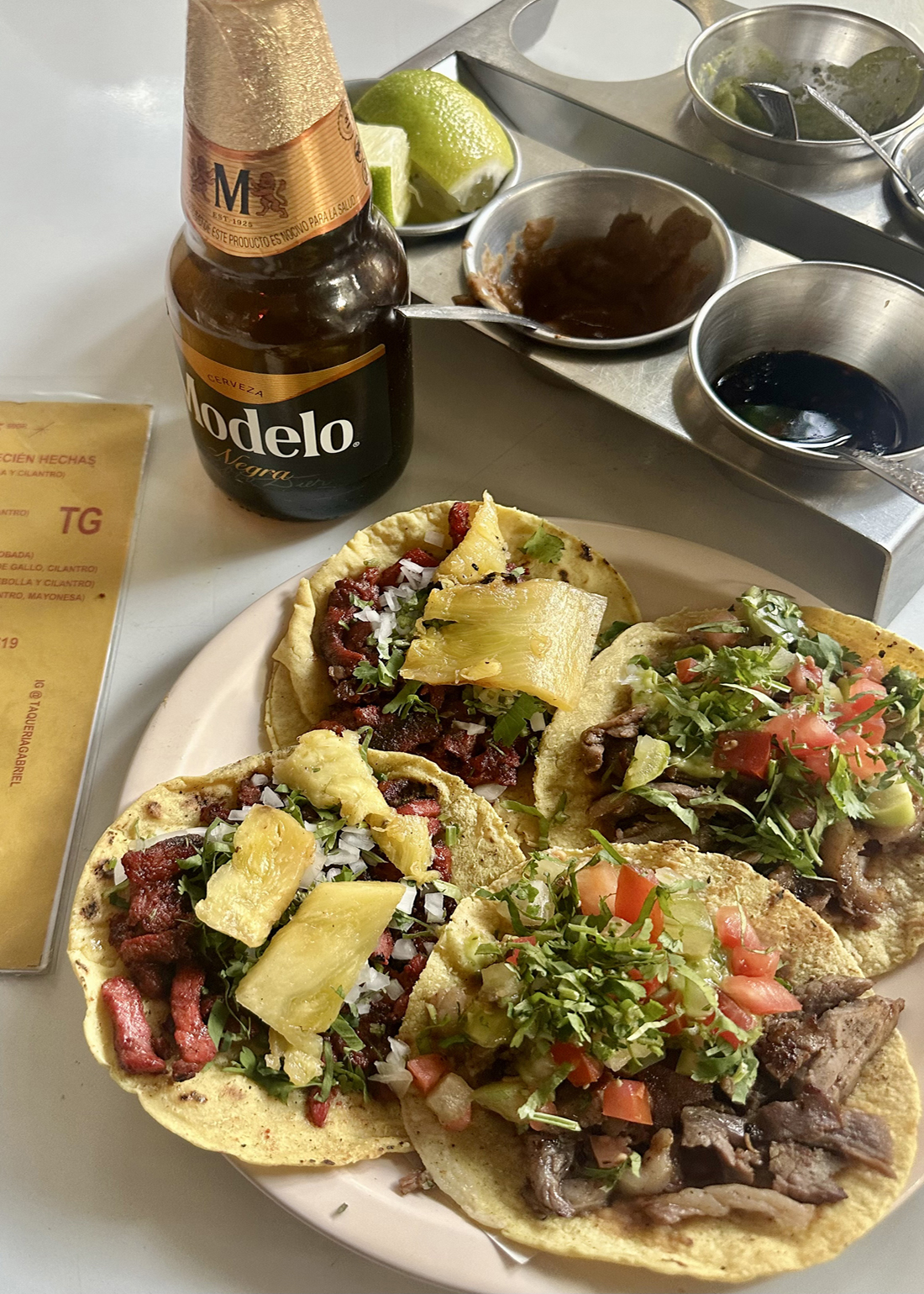
Once upon a time, even a taco would’ve frightened me. Not any more. Now, on a layover in Mexico City, I can drag a colleague out to Taqueria Gabriel, strolling in like I own the place. (It was Liz who found Gabriel. She finds everything.)
Look at me. It took a shamefully long time, but I’m enjoying exciting dishes in exciting locations — with the added bonus of being seen in the company of the sexy Indonesian girl who made it happen.
Somewhere in there I even earned to like olives, which I’d despised — or thought I did — since I was a kid. Today I can’t get enough of them.
I’d been less squeamish on airplanes, but there too were lines I couldn’t cross. Flying in Emirates first class, for example, which I’ve been fortunate to do on several occasions, I was always afraid of sampling the airline’s signature caviar course. I mean, how the heck do I eat caviar? The answer: just like anyone else. And now I’m asking for a second course. (Liz, sitting next to me in row two, eschews the caviar and goes for the mini-burgers. Who’s the gourmet now?)
One of the biggest testaments to my conversion is seen in my photo stream, which has grown messy with food pics. I’ve become one of “those people,” with my phone out the minute the entree arrives, rearranging plates and flatware for the right aesthetic. I do this even (or especially) when Liz isn’t there, excited to send her a shot of that dish I had in Guatemala City or Milan.
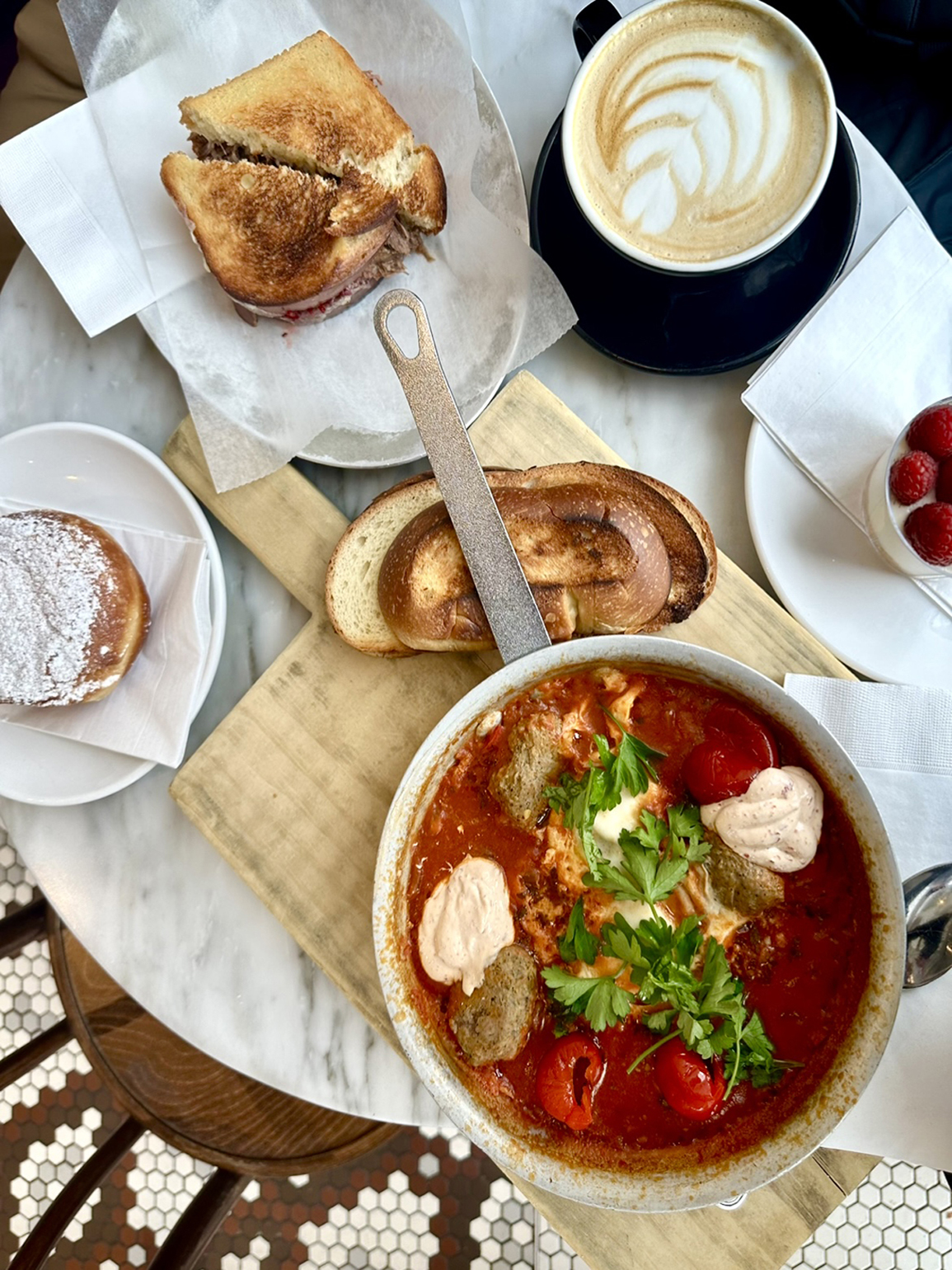
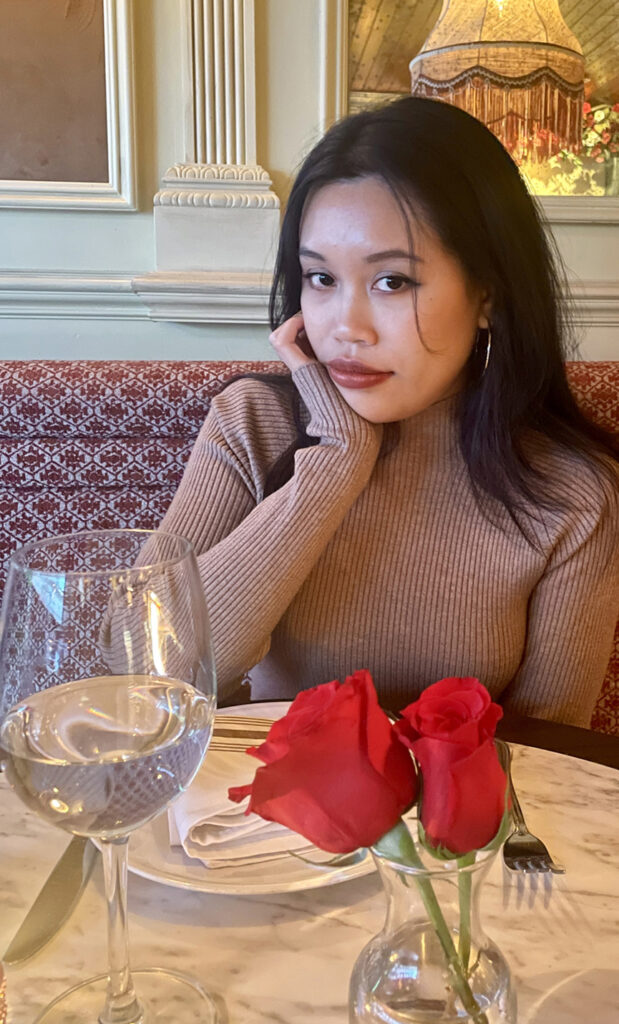
And when she is there, sharing the table with me, the dinner becomes a sort of complete moment: the food in front of me and the girl across from me.
These occasions — a simple dinner together — have become crucial memories. A meal is no longer an inconvenience or a source of intimidation. It’s a time marker, a touchstone.
I’m still a rube, don’t get me wrong. When I scan through the pictures, I can’t tell you half the time what I’m looking at. A soup of some kind from a restaurant in St. Lucia. A pork dish in the Philippines that I forget the name of. A pasta thing in Croatia. Burrata? Is that burrata? What’s burrata, again?
Honestly, I can’t remember the difference between sushi and sashimi. But there I am in a high-end omakase running up a $500 bill on Valentine’s Day.
Onward and upward. Maybe I’ll open a restaurant when I retire. I’m reminded that Greg Norton, the guy from Hüsker Dü, became a chef!
What Liz brings to the table, so to speak, is beauty and elegance and, hopefully, a sense of pride in having turned me around. What I bring to the table, aside from a credit card, is less clear. But the key is I’m enjoying it. Maybe I’m not sure what I’m eating, but I know that I like it. And, most important, I’m no longer afraid of restaurants. Maybe I’m still faking it. But I’m faking it better.
What does it mean when someone “changes your life”? Usually those changes occur in small bites. Literally, in this case. And when a person accepts your weaknesses and foibles, it’s an expression of kindness. Returning that favor means welcoming change and adapting, even when it makes you uneasy. We can maybe view food — the act of dining together — as a shared love language all its own.
It’s been been said a million times, but food is more than a mere comestible needed to survive or satiate a craving. We use it to communicate.
A shame it took so long. All those years, all those countries, all those opportunities. If only I’d met her sooner.
PHOTOS BY THE AUTHOR
Related Story:
A GOURMET DIVERSION. FOOD PHOTOS FROM 30,000 FEET.