
By Wayne Rogers
Say “Birmingham BBQ” and the names come rolling out like smoke from a pit: Full Moon. Jim ‘n Nick’s. Bob Sykes. Carlile’s. Golden Rule. Dreamland. SAW’s in all its glorious forms — Juke Joint, Soul Kitchen, and beyond.
Birmingham barbecue means hickory-smoked pork, low and slow, where the smoke does the talking and the sauce just listens.
But here’s something most people don’t know: one Birmingham barbecue joint didn’t just feed a city — it shaped restaurants across America, and helped determine who got to sit at the table in the first place.
Black and Whites Prohibited from Eating Together
When I was born in 1962, Birmingham was one of the most segregated cities in the world. Local ordinances prohibited Black and white citizens from even eating a meal together in public without fear of arrest.
Local restaurants, including Ollie’s Barbecue, which was then located near what is today the Shell station at 900 University Boulevard, followed the rule of Plessy v. Ferguson, a Supreme Court case from 1896, which required that facilities for citizens of different races be “separate but equal”. Here is how “separate but equal” works at Ollie’s:
Ollie’s Dining Experience
If a white citizen came to Ollie’s to eat barbecue, they were greeted at the door by a host or hostess. They were given a menu and seated at a table. A server came from the back to take their order, but unlike most servers throughout history, the servers at Ollie’s did not bring a notepad to the table.
Owner Ollie McClung required that his servers memorize every order, no matter how extensive rather than writing anything down. (As an aside, about three-fourths of the servers at Ollie’s were Black women, many of whom had worked there for over 20 years.) The server then brought the food and drink to the table, where the white citizens enjoyed their meal while the servers refilled their glasses with as much sweet tea as they could drink.
If a Black citizen came to Ollie’s to eat barbecue, the experience was just a little bit different. No greeting at the door except to let them know that the front entrance was closed to them. No server, with or without a notepad. No sweet tea refills while they sat in comfort at a table.
Instead, the Black customers of Ollie’s had to go around to the back door, go into the kitchen, order their food from the cooks and either stand at the counter to eat in the kitchen, or sit at a picnic table outside the back of the restaurant.
Clearly “separate.” But “equal”?
Supreme Court Finds Popular Barbecue Joint in Birmingham
It is worth noting that Ollie’s was not at all unusual in the Birmingham of the 1960’s. Basically every restaurant in the City followed some form of the procedures described above. So, we all know that the Birmingham of 2026 is different. I had lunch yesterday sitting at a table with friends, one of whom was Black. If the question is why it is different now, the answer is because of what happened at Ollie’s barbecue.
When the Civil Rights Act of 1964 passed, it included, at the insistence of President Lyndon B. Johnson, a provision for equal access and treatment in “public accommodations”, such as hotels and restaurants. President Johnson knew that without such a provision, the Act would be meaningless. He knew this in part because two prior Acts of Congress, passed to ostensibly improve the lives of Black citizens in the country, had very little effect on daily life precisely because they did not include such a provision.
So, when the U.S. Department of Justice went looking for a place to make the Civil Rights Act of 1964 become real, it found a popular barbecue joint in Birmingham, once frequented by Supreme Court Justice Hugo Black and his wife, called Ollie’s Barbecue.
Ollie’s Employees Vote to Reject Civil Rights Act
After the Act had passed, Ollie McClung had gathered his employees together and taken a vote as to whether they thought the restaurant should comply with the provisions requiring equal access. In a shining example of how a business owner can influence the attitudes of the people whose check the owner signs, the employees of Ollie’s had voted unanimously to reject the Civil Rights Act and continue business as usual. Of the thirty-six (36) employees who “voted” to reject the Act, twenty-six (26) were Black.
Ignoring the somewhat suspicious vote of the employees, the Department of Justice, under Attorney General Edward Katzenbach insisted that Ollie’s comply with the dictates of the Civil Rights Act. At trial, Ollie McClung’s lawyers argued that because Ollie’s was not near an Interstate highway (I-65 having not yet been built at that time), and because most of the food sold at Ollie came from Alabama, the restaurant was not engaged in “interstate commerce”. The Civil Rights Act had been passed largely as a means of regulating interstate commerce, as Congress is authorized to do by Article I, Section 8 of the U.S. Constitution. Ollie’s argued that they were engaged solely in “intrastate” commerce, and thus not subject to regulation by Congress.
The Supreme Court Decision that Changed Everything
Fortunately for all Americans, the Supreme Court saw things differently. The Court held (although in much more high-falutin language) roughly as follows: suppose I (Wayne Rogers) wake up one beautiful Saturday morning in Atlanta, Georgia and decide I’m going to drive over to Oxford, Mississippi for the weekend, maybe to go to a football game. As I am passing through Birmingham, I remember that wonderful barbecue place over on the Southside with those famous servers who can’t write down your order. I walk in the front door of Ollie’s and have a wonderful experience eating barbecue and drinking sweet tea to my heart’s content.
On that same beautiful Saturday morning, in a different (segregated) neighborhood in Atlanta another American citizen, also named Wayne Rogers, but with a different skin color, wakes up and decides that he too is going to drive over to Oxford, Mississippi for the weekend. As that Wayne comes through Birmingham, he remembers that wonderful barbecue place over on Southside with those famous servers who can’t write down your order. He walks in the front door, right behind the white Wayne – and is told that he can’t come in that door. He will have to go around back to the kitchen, order from the cooks, and either stand at the counter to eat or sit at a picnic table out back.
And what has Ollie’s Barbecue just done: they have treated one citizen of Georgia differently than another citizen of Georgia on the basis of the race of those citizens, thus violating the Equal Protection Clause of the U.S. Constitution while engaging in interstate commerce.
For over five years, I ate barbecue at Ollie’s without knowing what an important place the restaurant played in the history of the Civil Rights Movement. I imagine some of you reading this ate at Ollie’s many times without ever hearing the story. But those of us who live in Birmingham must never forget.
The lesson of Katzenbach v. McClung, the Supreme Court decision arising out of the way Ollie’s treating its customers, remains today that the rights of all Americans were not written on any stone tablet. Our rights as American citizens, Black and white, male, and female, gay, straight, and otherwise were written in the blood of the people who fought for them. The people who marched in the streets of Birmingham, and Atlanta, and Oxford, and Thomasville, and every place in between. And if we forget this lesson for just one generation, those rights will start disappearing.
We live today in a better Birmingham because of the willingness of folks to fight for those rights.
May our children live in a better tomorrow because of our willingness to do the same.
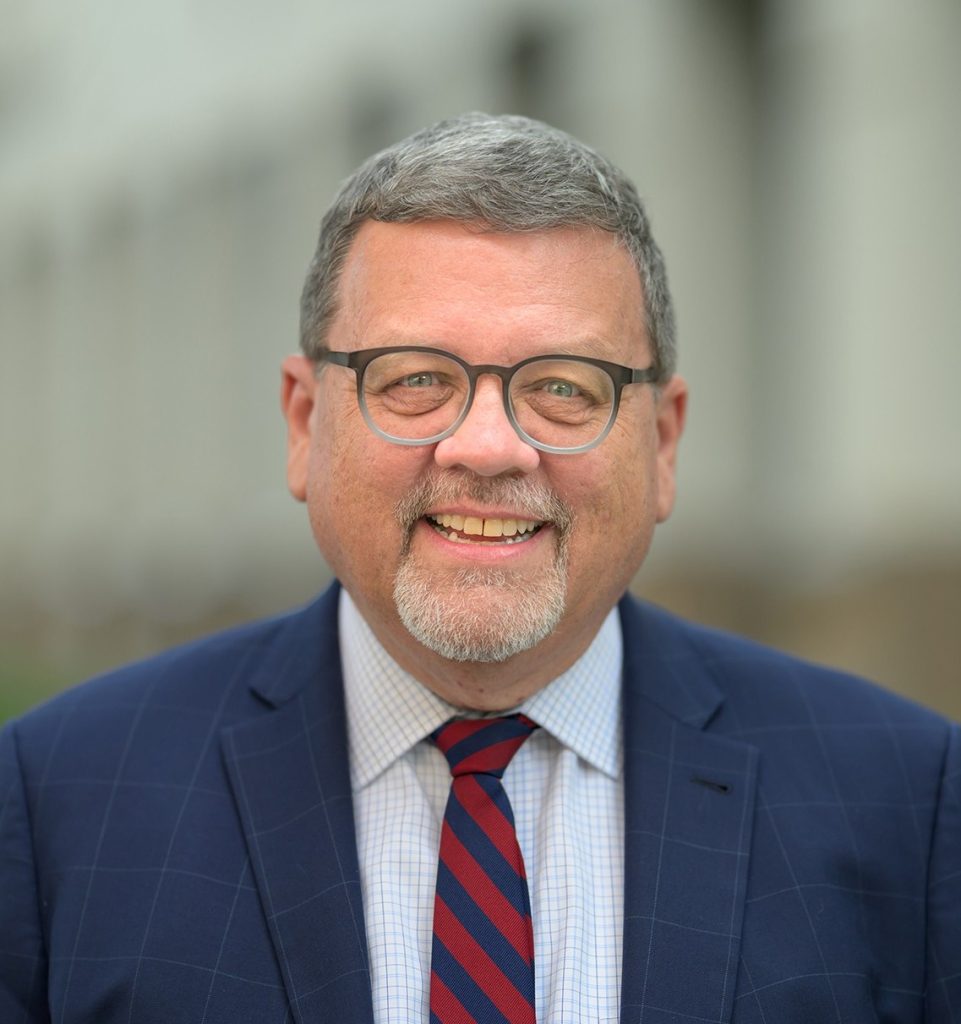
Wayne Rogers has served as Executive Assistant to Jefferson County Sheriff Mark Pettway since 2019. He has practiced law in Alabama since 1988 and has represented Alabama-based small businesses in 66 of Alabama’s 67 counties. He serves on the Boards for JBS Mental Health Authority, the Craig Crisis Care Center, the Addiction Prevention Coalition, and Crisis Intervention Teams International, and serves as the Program Director for YMBC of Birmingham. Wayne is the Democratic nominee for Alabama Secretary of State in 2026.
David Sher is the founder and publisher of ComebackTown. He’s past Chairman of the Birmingham Regional Chamber of Commerce (BBA), Operation New Birmingham (REV Birmingham), and the City Action Partnership (CAP).
Care about Birmingham, sign up for ComebackTown newsletter
Invite David to speak for free to your group about how we can have a more prosperous metro Birmingham. [email protected]
(Visited 3,691 times, 42 visits today)