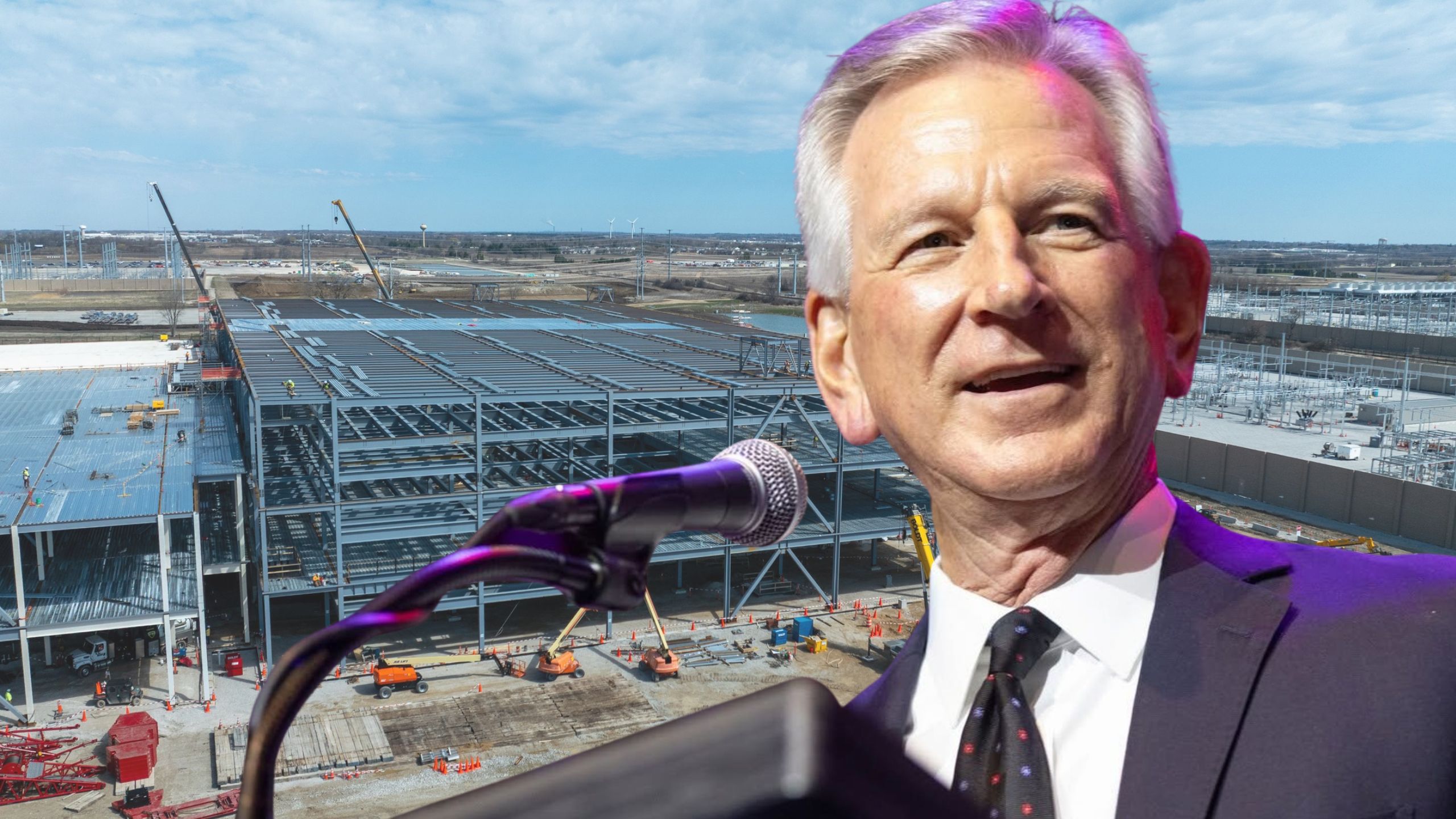
Tommy Tuberville has again waded into the data center debate and provided yet another sound bite that’s certain to become a focal point in the race for governor.
“I am 100 percent for data centers,” Tuberville told the gathered media during a stop at the Birmingham Rotary Club on Wednesday.
By Thursday afternoon, the clip of Tuberville uttering that simple sentence—part of a much longer, much more nuanced and reasoned response—had spread around social media, had been used in a lengthy video by his Democratic opponent, Doug Jones, and a number of media outlets featured the clip on their social media pages and websites.
It could not be helpful to the senior U.S. senator’s gubernatorial campaign. Recent polling found voters across party lines opposed data centers at a rate of nearly 75 percent, and those numbers might be higher in Alabama, where public outrage over secret deals and nondisclosure agreements tied to data center projects has been swift and unceasing.
Tuberville has continued to comment on the data center issue despite taking heavy criticism from all corners for his early comments on them and his position in favor of them. Before he was “100 percent for” data centers, he told a room full of sheriffs in July that Alabama was “going to do data centers” and that certain environmental concerns were “bullcrap.”
He later clarified his position in an op-ed published by APR, in which he laid out a detailed plan for how Alabama could benefit from the construction of data centers while also ensuring environmental protections were in place and that costs weren’t passed along to consumers. His campaign later produced an ad that said he would make sure data center companies didn’t get any big tax breaks.
On the other side of the aisle, Jones has maintained that a one-year moratorium on data centers would be the proper move, giving state and local leaders an opportunity to better understand the various aspects and options of data centers. Jones has argued that such a pause would allow time to ensure the public’s concerns were addressed appropriately and give lawmakers an opportunity to cut the best deals with data center companies to benefit the state and local governments.
Tuberville has criticized that idea, saying that pausing for an arbitrary, predetermined amount of time could harm the state’s bargaining position and Alabama could miss out on some of the best deals. Jones has countered that there has to be a moratorium of some length to implement even Tuberville’s plan or risk deals being pushed through at the local level by unscrupulous local leaders. He also has challenged Tuberville to debate the issue.
A question about that proposed debate was what prompted Tuberville to talk about the issue on Thursday. Tuberville again declined to debate, saying everyone knew his position on data centers—a position that seems to be evolving week to week—and that data centers “get a bad rap from people on social media.”
Tuberville then launched into a lengthy and detailed response, in which he laid out what he felt were a few of the larger misconceptions about data centers and talked about how they could alleviate some of the state’s and local municipalities’ financial woes.
“I am 100 percent for data centers because I’ve studied them for the last three or four years,” Tuberville said. “I was watching TV this morning and the superintendent of Birmingham Schools basically said, ‘We’ve got a data center here that’s going to pay us $30 million a year.’ We need money. We need money in this state.”
He also made statements that will bring sharp disagreement from those who oppose the centers, such as that they don’t make much noise and that no one has complained about the 20 data centers in this state.
But little of that will matter as much in the short term as Tuberville saying out loud again that he’s 100 percent for data centers.