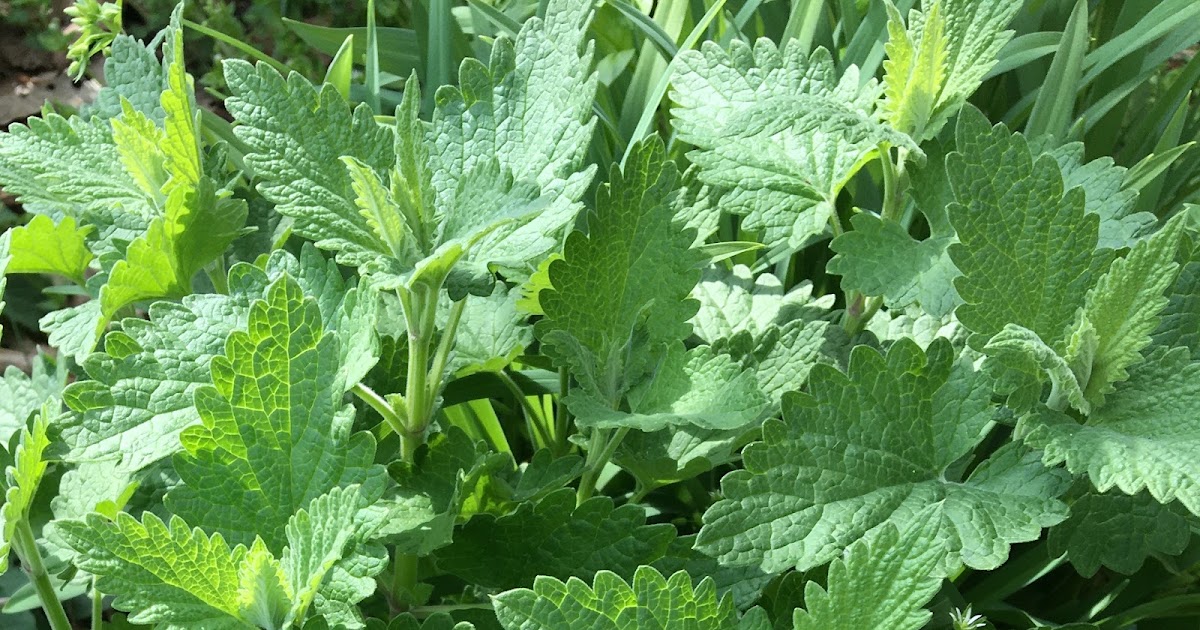
Catnip, Not Just for Cats
By S. Marie Carlson
From The Essential Herbal Magazine, Jul/Aug 2019

I live on the edge of the
Northwoods of Wisconsin, where our winters freeze you to the bone and our
springs flood; the summers are hot & humid with mosquitos bigger than the
birds, and the autumn brings tears to your eyes and a rich fullness to your
heart with gorgeous rainbow colored foliage. It is peak summer right now, so
those of us who make herbal products are in over our heads with the bounteous
harvests waiting to be tinctured, infused, dried, cured and made into fabulous
concoctions to better our health.
The land I inhabit is lush with
allies like nettle, dandelion, cleavers, plantain, burdock, sumac, and
motherwort, to name just a few, and they are all at a climax in their growth
right now before they begin to die back and focus their energy to their roots
for the cold winter ahead.
Today, I would like to share with
you an ally that is often underutilized and perhaps a hidden treasure in your
backyard. This ally is catnip (Nepeta
cataria), she has been a part of my herbal journey for quite some time now,
and I hope you will learn something about her and find her as useful as I have.
Catnip, known for causing a
reaction that drives our feline friends crazy, is a member of the mint family
and has been used for hundreds of years to help calm those with anxious nerves,
ease indigestion, stomach aches, and diarrhea and combat nighttime restlessness
and even hyperactivity. She is safe for
children and is an excellent remedy for colic, sore throats, teething and more.
Matthew Wood, in his book The Earthwise
Herbal, remarks that catnip has been used to treat external skin conditions
such as “hives, measles, fever, acne, and scarlatina; brings rashes to the
surface.” Some consider her to be an emmenagogue (brings on menstruation)
so it is best not to use her during pregnancy if this is worrisome to you. Topical
use shouldn’t be a problem, but ask your health care provider and do your own
research to make the right decision for you.
Native to Europe, catnip is a
perennial that grows pretty much anywhere she feels like setting down roots.
She can grow in a rocky cliff in very little poor soil, along old farm
buildings or in the most enriched compost available. She loves the sun, and can
often be found on the southward side of a hill or building or in any spot that
gets more than six hours of sun. That said, catnip also occasionally can be
found in places with spotty light and damp conditions.

To prepare catnip for tincture,
teas, and oil infusions, I believe that it is best to harvest her fresh when in
full bloom and peak potency for a strong tincture. If you are looking for a
milder tincture, collect only the leaves before blooming. I have tried both
versions of the tincture, and I have noticed better results on severe anxiety
attacks with a fresh bloom tincture. My anxiety settles in my gut and tends to
make me head to the bathroom when I have an acute attack. Catnip calms my
nerves and takes the flight or fight response away. Often, after a dose or two
of tincture sublingually (under the tongue), my bowels will be calmed, and a
rush to the bathroom isn’t as imminent.
Oil infusions require most herbs
including catnip to be dry or very well wilted as any water can increase the
risk of rancidity and spoilage. If you ever find mold, it is best to compost.
Catnip is said to lose much of
its volatile oil content upon drying, especially if dried with heat. Susun Weed
stated on the Susun Weed Show episode
titled “Marvelous Mints: Catnip” that 80% of the volatile oils are
lost when a dehydrator with heat is used to dry catnip. If catnip were air
dried by hanging in bunches this ally would still lose up to 30%. Curing the
herb has not been tested, but I would assume it would be similar to the results
of hang drying, but I could be wrong.

Speaking of that volatile oil, a
combination of catnip and yarrow (Achillea
millefolium) used topically either as a tincture or essential oil blend
sprayed on the body has been tested to be better than DEET when it comes to
insect repellant. (Please note: It takes many pounds to create a single drop of
essential oil, please be mindful of their use.)
Bug repellent is easy to make.
Just fill a jar to the top with equal parts fresh catnip bloom and the aerial
parts of yarrow then fill with either 80 or 100 proof vodka and let sit 4-12
weeks depending on the strength of your vodka. After the herbs have infused,
strain and filter into a spray bottle. It is suggested to spray every 20-30
minutes for the best repellant action, but I only use it as needed.
I hope this gives you a little
enticement to explore the world of catnip and all her uses. If she is not
already growing in your garden, maybe you can find a place for her and if
nothing else provide an additional food source for our essential pollinators.
Honeybees love catnip!
Remember to get out in nature
every day and let this land heal you!