

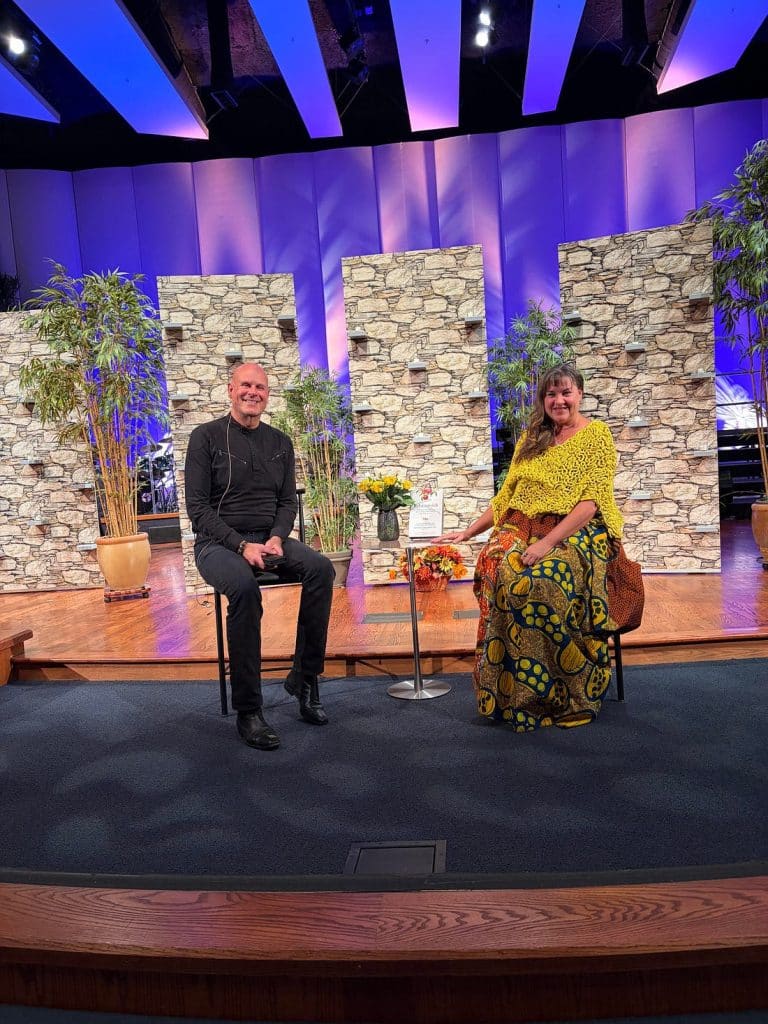

After presenting Friday and Saturday at Mile Hi Church in Denver, Jeff and I are returning home from the first leg of our book tour for RELATIONSICK: Why Putting Yourself Last Is Destroying Your Health-And How To Heal. I was just sitting down at the Denver airport to write about one of the clinical case studies from our book when I laughed out loud while reading the title of Celeste Davis’s latest Substack essay: “Be a bitch or get an autoimmune disease.” Thems the choices ladies. Celeste writes heartbreakingly about the countless ways women twist ourselves in knots to figure out how to get our own needs met without upsetting everyone else. Yet, there can be a physical and psychological toll for women who try that hard to be that nice.
I so appreciate the work of Celeste Davis. Celeste, Terry Real and I were scheduled to do a webinar together right after I wrote the viral essay about Deepak Chopra in the Epstein files. But it got cancelled when Terry got sick and was never rescheduled, which bummed me out, because I was really looking forward to hashing out some of the issues around patriarchy, relationships, and abuses of power with two badasses who both teach about deconstructing patriarchy. Because, from my OB/GYN physician point of view, deconstructing patriarchy is an absolutely essential aspect of women’s health.
While “Be a bitch or get an autoimmune disease” might not be entirely scientifically or psychologically accurate, letting a man walk all over you, pretzeling yourself to please a man, silencing yourself when he’s upset you, suppressing your anger rather than using it to fuel healthy boundary-setting, saying yes when you mean no, forgiving him even when he’s not remorseful or planning to stop, and letting him off the hook in the name of “unconditional love” is very likely to chronically dysregulate your nervous system, interfere with immune function, activate your hypothalamic-pituitary-adrenal (HPA) axis, and lead to chronic inflammation. And when you marry that with other predisposing factors, like genetic susceptibility, environmental factors, nutritional influences, and social determinants of health, relationsickness is a real medical risk.
After listening to a Mormon life coach respond to countless ways women seek advice about how to solve their own problems without upsetting anyone else, Celeste wrote about the kinds of questions she heard these well-intentioned Mormon women asking:
“HOW DO I FIX MY PROBLEM WITHOUT INCONVENIENCING ANYONE?
—> How do I ask my husband to help more without making him mad?
—> How do I deal with my mom hurting my feelings without hurting her feelings?
—> How do I decline going on the family vacation without disappointing everyone?
—> How do I limit my teen’s phone usage without them fuming at me?
—> How do I get the support I desperately need without inconveniencing anyone?
And I get it. Trust me, I get it.
I’ve been these women. I AM these women. They are me and I am them. I so want for there to be a way for me to honor my own desires without anyone being mad at me.
Wouldn’t that be amazing? A world where I can stand up for myself and everyone still likes me and no one judges my decisions or is inconvenienced, disappointed, or upset?
A gal can dream.”
She also quotes an article from Nod Mag.
“Why do women need a medical justification to advocate for themselves in the first place? Why is “set boundaries because you deserve respect” somehow less persuasive than “set boundaries or your immune system will attack your thyroid”? The internet has wrapped a fairly ordinary piece of life advice in the language of disease because, consciously or not, many women still feel more comfortable defending their needs when they come with a doctor’s note.” – Sheya Kurian, The Nod Mag
An Unsolvable Bind
A part of me felt my heart sink reading those questions and Celeste’s take on how the life coach makes millions by telling these women they just need to change their perception of these situations, rather than changing their circumstances. Those questions reminded me of all the questions people have asked me in LOVE SCHOOL and other relationship programs I’ve taught over the years. (You can learn more and join LOVE SCHOOL here.) Now that I’m on a book tour, women continue to ask questions just like this.
We so desperately want to believe that someone has a way to resolve this double bind, that someone’s advice will finally give us the golden ticket so we can have both equality in our relationships with men and also stability, happiness, and love.
Wouldn’t it be nice if every request for equality in domestic or emotional labor, for mental load and the tedium of managing daily life outside of our workplaces didn’t result in a fight? If we could just respectfully ask for what we need and have our requests at least respectfully heard, without a fight, and negotiated if need be. If we didn’t feel like we have to mother our adult partners like they’re entitled, rebellious teenage boys? Wouldn’t it be nice if our partners understood the need for equality as much as we do and actually wanted to do the hard work of figuring out how to create equal relationships where power, labor, and responsibilities are divided fairly? Wouldn’t it be nice if we didn’t think of ourselves as selfish bitches when we do what we need to do in order to heal from the chronic nervous system dysregulation caused by unequal, unbalanced, or narcissistic relationships?
A gal can dream.
The Double Bind Women Face
Yet as Celeste so eloquently (and painfully) point out, women are faced with an impossible bind. Celeste writes:
“The truth is the answer to these daily decisions of ‘when do I accommodate myself and my desires and when do I prioritize those of others?’ are not easy or clear cut. There are no solutions, there are only trade offs. We must proceed with a great deal of self-compassion for the double-bind we are in.”
Ouch. Ouch that so many of us have to choose between marital stability and relational equality. I have refused to give up on my fight for equality in my own romantic relationship, and what that means, in actuality, is a lot of fighting and weekly couples therapy for the past five years. To his credit, it’s also required Jeff to be willing to go to the mat on the regular to hash out what equality actually requires, even though he doesn’t always like it. Thank God for our Terry Real-trained RLT therapist who goes to the mat with us and fights for us, relationally. We wouldn’t have been able to write the book without that weekly battle between stability and equality.
I get why some feminists quit fighting for actual equality. It’s exhausting. The emotional labor it takes to keep fighting for equality takes a toll. But not fighting may take an even more devastating toll. Not fighting for equality could contribute to a cancer diagnosis. Or an autoimmune disease. We could get relationsick.
I’m very familiar with the medical reasons women would relate to the “Be a bitch or get an autoimmune disease” meme, and Jeff and I have written a whole book about how this can actually happen, not just with autoimmune conditions, but with many different kinds of medical illness, including cancer. Still, reading Celeste’s essay felt validating because it points out why nobody, including all the therapists and experts, can solve this dilemma: because it’s a double bind women face—because of patriarchy.
It’s not actually possible to resolve the double bind when patriarchy requires us to choose between self-sacrificing (and therefore making our partners happy) and advocating for our own needs and boundaries (and therefore getting perceived as bitchy, demanding, controlling, entitled, and unduly privileged in their eyes.) Yet, as we wrote about in RELATIONSICK, it’s not possible to stay physically or psychologically healthy if we’re stuck in impossible to resolve double binds, forced to choose between self-protection and being liked.
As we write about in RELATIONSICK, women shouldn’t have to get cancer or an autoimmune disease to justify standing up for themselves. Nobody should need a doctor’s note to feel entitled to self-advocacy, yet there’s a very real risk that if you do stand up for yourself, you’ll be less liked, less popular, and less attractive to men who prefer submissive women. and find women with boundaries bitchy.
Am I A Bitch Because I Fight For Equality In My Romantic Relationships? Would I Be Sick If I Didn’t?
I might write about this stuff professionally, but that doesn’t mean I’ve resolved it at the personal level. As I read Celeste’s essay, I thought about the seven different therapists I’ve dragged my infinitely willing partner Jeff to as a way of trying to figure out how to get my own needs met and my own boundaries respected without triggering Jeff. (For those of you who worry about Jeff, he read this essay and granted his consent to talk about our personal life here. He even said, “I agree with what you’re writing,” which shows the progress we’ve made in couples therapy.)
From my perspective, we carefully negotiate agreements, set boundaries and make relational decisions together. Easy peasy. All good. Then Jeff’s patriarchal lone wolf part unilaterally breaks those agreements and overrides those mutually agreed upon boundaries, thereby stealing my choice and forcing me out of consent. He then gets outraged and massively triggered when I protest the broken agreements and boundary breaches, sometimes with a few choice four-letter words (on my end) and often with a very loud voice after he’s invalidated my right to be upset and blamed me for daring to stand up for myself and my parts.
From Jeff’s perspective (and some of our guy friends would agree), I’m bitchy, controlling, critical, nagging, explosively rageful, condescending, and oozing with contempt. His favorite words to describe me are “entitled” and “privileged.” Which shocks me every time, even though this has been going on for five years. Because yes, I do feel entitled to have boundaries respected and agreements kept. And to have a cis, white, heterosexual, tall, handsome, powerful, educated, wealthy Harvard male doctor label that as “privileged” is eye-rollingly laughable to my social justice parts. So he’s not entirely wrong about my condescension and contempt.
Since the patriarch I love perceives my boundaries as controlling, I even sought out a cult recovery expert, since Jeff was raised in a cult and has endured at least three cult-like coercively controlling abusive dynamics in his lifetime, and I’ve wanted to be empathic and sensitive to his high trauma load. I understand why someone in cult recovery needs to exercise their own agency and practice self-advocacy, and why anyone relating with them needs to be very careful not to be too controlling. I even wrote a book intended to help people in cult recovery, about how to share power, relate intimately, and manage boundaries relationally, called Boundaries Together, which will be published by North Atlantic Books in 2028.
But even the famous male cult expert couldn’t give me any advice about my dilemma. He basically told me to just be patient and to accommodate Jeff even if he relentlessly crosses my boundaries, because he’s learning and boundary work is messy. He instructed me to avoid doing anything that might feel controlling, to grant him his right to personal agency, and to basically sacrifice myself in order to help him heal. Which is what I’ve done my whole life until I started therapy, martyring myself for the sake of pleasing others, starting with my mother.
Patriarchy Hurts Men Too
It’s not my intention to make my partner sound like an asshole. He’s not. He’s a wonderful human being with a massive trauma burden, who I love dearly, who is behaving exactly how patriarchy, fundamentalist Christianity, two wildly abusive parents, and female romantic partners in adult life with internalized patriarchy conditioned him to behave. I wouldn’t be in this relationship if Jeff wasn’t such a beautiful, brave, and badass human. We have a tremendously good time together 95% of the time, living a life together that is full of joy, play, nature, beauty, emotional depth, creative enrichment, and intellectual stimulation.
To Jeff’s immense credit, he’s a huge fan of Terry Real’s work on deconstructing patriarchy, and I’ve never, not once, had a more willing partner interested in couples therapy, relational healing, and learning relational skill-building. He’s truly up for the deep dive of intimate relationship as a spiritual path. He’s also been willing to put up with me, and most guys with as much power and privilege in the world aren’t even remotely attracted to someone as “bitchy” as me! I put him through the wringer when he unilaterally breaks agreements we’ve made together, and, now that I’ve done therapy on my spiritual bypassing parts, I have a Lamborghini switch part that can “whoosh” me from zero to a hundred in 2 seconds.
Jeff could easily kick me to the curb, and the more submissive “trad wife” type women would line up like sharks with blood in the water, fighting to catch a “high value man” bachelor like him. Meanwhile, there wouldn’t be many men waiting for a menopausal woman as outspoken, assertive, boundaried, and empowered as me, unless they were looking for a Sugar Mama who would enable them to stay little boy Peter Pans under Mommy’s skirt, a role I’m not interested in playing.
So I’m sincerely grateful to have met my match, someone who cares as much about relational healing as I do, and who is game to go the distance with me in trying to figure out how to have an equal partnership when both of us were raised with the double whammy of religion and patriarchy.
The Selfish Bitch Project
We just did two events at Mile Hi Church this weekend, and so many women resonated with the story of Sophia from our book, who had breast cancer and decided not to pursue conventional medical treatment. To everyone’s surprise, including her own, Sophia wound up cured, in spite of her lack of treatment. Because he spent 17 years researching people with before and after medical evidence of cure from an “incurable” illness, Jeff interviewed Sophia a while back. When he asked her what she credited her cure to, she said “My Selfish Bitch Project” (which was on the short list as an alternative title for the book. The only reason we didn’t use it is because, while less common, there are men who martyr themselves to the point of illness too).
Sophia described herself as going from meek, mild-mannered, pleasant and accommodating to being feisty, standing up for herself, prioritizing her own needs, setting boundaries, and saying no more often.
And of course, because she is a woman, she labelled herself selfish and thought of herself as bitchy because of her newfound self-advocacy. Even though her cancer went away, she still thought she was being bitchy by getting over her fawning, self-abandoning, self-sacrificing tendencies. Sophia said that every time she was inclined to self-sacrifice and betray herself, she had to remind herself, “Be a selfish bitch or you might die.”
Which is bonkers, right? That it takes cancer or an auto-immune disease for women to feel justified in practicing the same kind of self-advocacy we reward and respect men for practicing?
Healing Relationsickness
When we first met seven and a half years ago at a trauma conference and did the brain dump on the findings of our research on radical remission, Jeff and I both independently found that one of the most common interventions people who are cured from incurable diseases cite as why they believe they wound up cured is some version of:
“I stopped trying to please everyone else and finally focused on caring about my own needs.”
“I started saying no after decades of over-accommodating.”
“I quit pretzeling myself to make someone else happy.”
“I got feisty and channeled my suppressed anger into getting firm with my boundaries.”
Or in more extreme cases, “I ditched my toxic husband, quit my job to get away from my toxic boss, and stopped enabling my toxic adult child. I wound up lonely but at least my disease went away and I’m still alive.”
It’s Not Just Women Who Get Relationsick
Although women struggle with relationsickness much more so than men, it’s not just women who trade in authenticity, self-advocacy, protection, and their own needs and desires to keep their partners happy. As we wrote about in RELATIONSICK, men do it too. While two-thirds of the time, partnered heterosexual men are the ones who are “one up” power-wise in their relationships, as women gain more power in the past fifty years, one third of the time, it’s the woman who expects a man to sacrifice himself in order to please her. Some men, who may consider themselves feminist allies and strongly identify as such, may find themselves disempowered and one-upped in their romantic relationships, even if patriarchy still benefits and privileges them in the world at large.
During our book tour in Denver, one couple came up to us afterwards. He admitted to fawning his wife, sacrificing his own needs, desires, and preferences in order to keep his marriage stable. She confessed to being unduly entitled, demanding, and defensive if he ever tried to stand up for himself. He’d had two life-threatening medical events at far too young an age, and both he and his wife were very motivated to heal their relationship as part of healing his medical conditions.
So it’s not just women. But it is women far more often than men who get relationsick.
Resolving The Double Binds
It may seem like a binary black and white choice- be liked or be healthy. But maybe, like many double binds, we can begin to imagine resolving it by holding paradoxes. Maybe we can’t solve the double binds quickly, because it takes time, activism, political change, and mindset shifts to start liking each other’s boundaries and prioritizing real intimacy over power struggles. But as Terry Real teaches, even in patriarchal relationships where one person is one up and the other is one down, it’s in the one up person’s personal best interest to come down a notch and prioritize relational intimacy. Many seeming double binds can be at least somewhat eased by holding paradoxes.
We can commit, together as a couple, to choose relational stability AND we can commit, even if we don’t always like it, to do the hard work of creating more equal relationships.
Both women and men can be empowered to stand up for ourselves AND we can learn to love each other’s “bitchiness” and boundaries, understanding that cheering each other on will paradoxically protect the stability of the relationship in the long run. And it’s in our personal best interest to do the work needed to prioritize both equality and stability.
Yes, this takes two willing parties, and we can’t force someone to be willing to change. But for many couples, there’s a lot at stake if we can’t find a relational solution. Our families are at stake. Our financial security is at stake. Our happiness is at stake.
It might seem like breaking up is the only way out, but I have to believe there’s another way—if you’re not relating with a sociopath or someone who absolutely doubles down on patriarchal entitlement or a demand for self-abandonment.
Healing Relationsickness
What can we do to prevent or treat relationsickness? We get into our ideas in much more detail in RELATIONSICK, so please read it and leave reviews wherever you buy books. But since we were teaching in person workshops on our book tour, we taught one tool from the Diversity, Equity & Inclusion space- “Ouch, Oops & Whoa.” I’ll share that tool with you in my next essay, so please subscribe if you want to make sure you don’t miss it. I’d love to hear what you think about this, so please leave a comment. And feel free to argue with me!
*You can buy RELATIONSICK anywhere books are sold. Please, pretty please, leave a review if you’ve read the book!