Welcome to PIMpod, the new podcast from Peninsula Integrative Medicine. Through conversations with our physicians and other experts, PIMpod explores the many ways we can better understand our health, address the root causes of illness, and take a more informed and personalized approach to well-being.
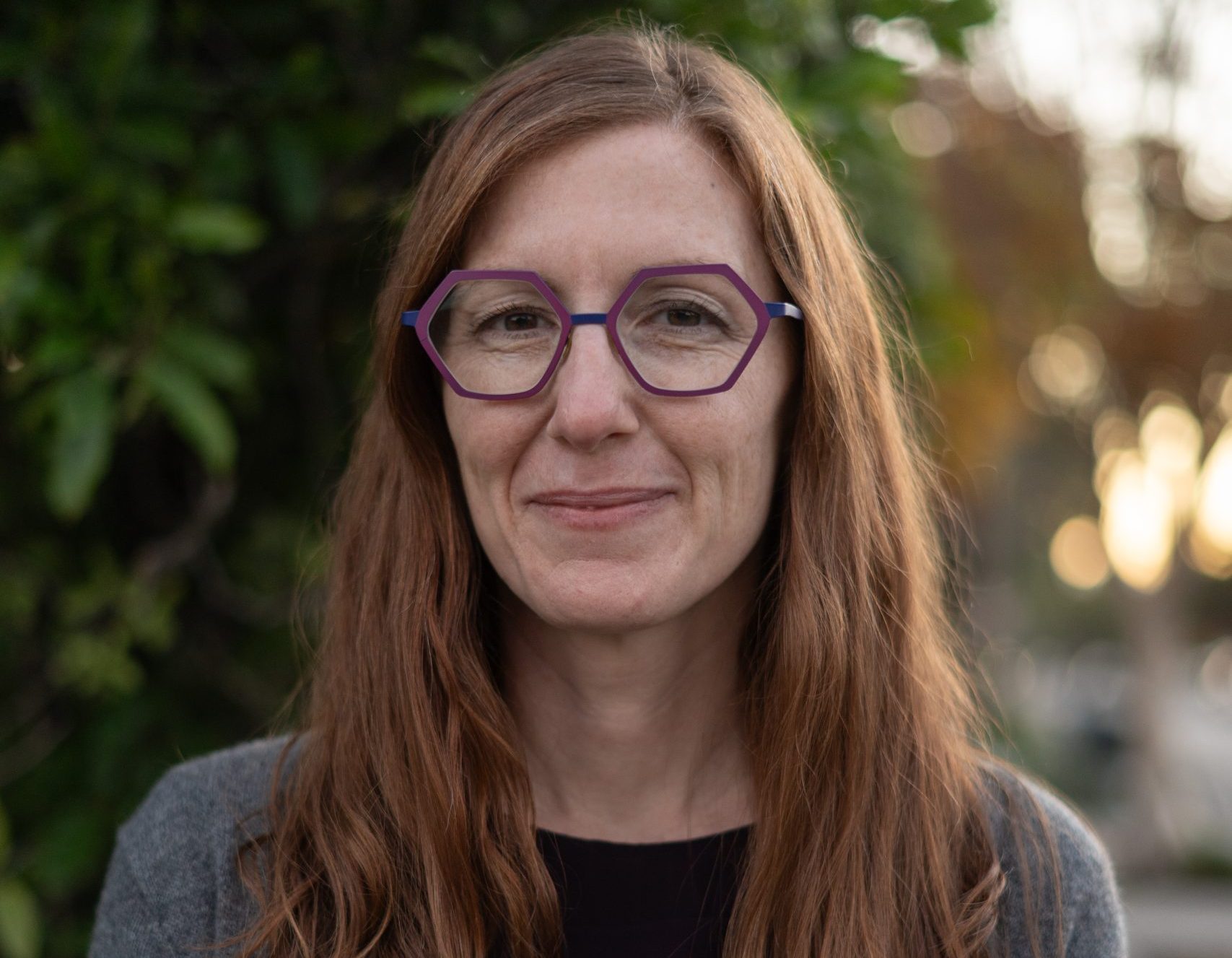
In this inaugural episode, host Maya Mazin sits down with Dr. Rebecca Green, founder and medical director of Peninsula Integrative Medicine. With more than 20 years of experience in naturopathic, functional, and integrative medicine, Dr. Green shares her personal journey into medicine and what led her to develop an approach that brings together conventional medical science, naturopathic medicine, East Asian medicine, advanced diagnostics, nutrition, and lifestyle medicine.
Their conversation explores what it really means to practice integrative medicine, why understanding the why behind symptoms matters, and how a more comprehensive approach can support both immediate health concerns and long-term wellness. Read the full transcript below.
Prefer to listen? Listen to the inaugural episode of PIMpod here.
PIMpod, S1, E1: Meet Dr. Rebecca Green Transcript
Maya Mazin (MM): Welcome to PIMpod. Today I have the honor of interviewing Dr. Rebecca Green, the founder and medical director of Peninsula Integrative Medicine. Dr. Green is a licensed naturopathic doctor and acupuncturist with more than twenty years of experience in integrative and functional medicine. She specializes in hormone health, thyroid disorders, longevity medicine, metabolic health, and complex chronic conditions. Trained in both naturopathic and East Asian medicine, Dr. Green combines conventional medical science with evidence-based, holistic approaches, including advanced diagnostics, personalized nutrition, and lifestyle medicine. Her work focuses on identifying and treating the root causes of disease while helping patients optimize long term health. She is licensed in California and Washington and is recognized for her patient centered approach that emphasizes collaboration, education, and personalized care. Dr. Green, thank you so much for joining me today.
Dr. Rebecca Green (Dr. RG): What a lovely introduction. Thanks for having me.
MM: So first, I would love to learn more about your journey into medicine and specifically what drew you to integrative medicine.
Dr. RG: This is a great question. And I think that it can be a circuitous path for a lot of people, since it’s a route different from the conventional route, which is, as a kid, always something that I wanted to do. I wanted to be a pediatrician or a family practice doctor. I would practice on my dolls. I was really interested in physiology and the way bodies worked and then went to undergrad was pre-med, and that’s where I was introduced to a microbiology professor and ended up doing my undergraduate thesis in microbiology and became fascinated with microorganisms and the way that they fundamentally control our food chain and our physiology.
And from there, I went into gastroenterology research and started to have a slightly different picture around how I might want to treat as a future doctor and started to ask a lot of the why around conditions, and simultaneously was introduced to one of the students who had just started naturopathic medical school. And a little bit of kicking and screaming forced me to go and sit in on a class. And I met a lot of the people going through that education and realized that this was very much aligned with my philosophy around wanting to, address nutrition and address other reasons why someone might be ill instead of more of an algorithm. Here’s a condition. Let’s find the medication or the treatment that specifically addresses that condition from a more conventional medical standpoint. And so I ended up enrolling. And then, because of my background in learning yoga and Ayurveda, eastern medicine also appealed to me. It’s a different lens that you can look at physiology and do some problem solving. So ultimately, it was a way for me to try to amass more tools to understand how the human body works and to give people resources in order to heal themselves.
MM: That’s incredible. And in terms of giving resources, you eventually built your own practice, right? And so I’m wondering what that process was like? And what were some of the biggest challenges maybe you faced in the process of specifically an integrative health practice?
Dr. RG: Ah, well, I, when I graduated, I worked at a clinic locally in Portland, Oregon, and it was such a gift really to work with the providers who are there. I covered two maternity leaves at the same practice, both of the providers had gone out and had twins, so it’s a little bit longer of a maternity leave for each of them. And I learned a lot from that doctor, Doctor Meaghan Dishman, who practices in Bend, about how to manage patient care and how to manage a practice more or less. And, her specialty was in women’s health and fertility, and I learned a lot from her. I went on to move to California and worked for a couple of different practices and learned more about what I appreciated and what I felt might need improvement in terms of, you know, running things.
So eventually I branched out on my own so that I could provide a space where, from start to finish, patients would feel very supported, the staff at the clinic would feel very supported, and there was an ecosystem that was healthy, both in the office environment. And that’s something that we could also use as a way to support our patients. Because what I did learn is that if management isn’t healthy, if it isn’t promoting the same principles and foundational health that we want for our patients, it’s really hard to convey that and to and to have like a relaxing, supportive atmosphere. So that’s what I really envisioned. And I never had the intention of growing the practice as big as it is now. But I’ve told this to countless people that I sort of accidentally meet people that I really enjoy and really love to work with. And we find a way to expand and to work together. So that’s how we accidentally became a bigger practice.
MM: That’s beautiful. And I know your practice offers a couple things that you don’t find at a conventional doctor’s office. And one of those is a long new patient visit. And so I’m wondering, what can a patient expect at their first visit, which is different from a typical fifteen minute doctor’s appointment, for example?
Dr. RG: Well, certainly the amount of time that we spend with our patients tends to be longer, much longer than a standard new patient visit. And I think part of that is our desire to gain an understanding around other aspects of someone’s health that they may not have time to go over in more of an insurance based rapid fire patient after patient model. I would say it’s even more like medicine was practiced in the 40s and 50s, even 60s to some extent, where you had a family doctor, you went in, they understood you both as a person and your health care, your conditions, what you needed to be seen for. So you can’t get that kind of understanding from short visits. So we go from, you know, head to toe someone’s history, their family history, their, you know, medications, what kind of supplements they might be taking. Are there any interactions? It’s just a very detailed history. And I think that’s the only way to really get the foundation to understand someone’s health long term and also to be able to track it.
MM: And I know you also have patients who come in with normal labs, but still have very severe symptoms sometimes. Right? And so I’m wondering, how do you handle those patients whose labs come back normal but still are experiencing pain and need help?
Dr. RG: I think that’s a lot of where conventional healthcare may not support the majority, is where, you know, I would say there are a lot of people that have, say, burnout and they’re tired or they’re having sleep issues. And yeah, fundamentally their labs are normal. But we have a lot of other tools first, aside from looking at labs to try and help someone feel better, so whether that’s, you know, acupuncture suggestions or lifestyle suggestions, you know, adjusting the time to bed, giving different exercise routines someone can do or different nutrition advice. And usually, someone’s primary care doctor may not order the full complement of labs that would help to elucidate the real issue behind why someone’s not feeling well. So we look for areas where information might be missing and can order labs that are slightly different, or look at the problem differently. And then with the Chinese medicine side of my background, sometimes it’s about just using a different lens and trying to understand physiology that way, that could be helpful. So it might be a herbal formula. But yeah, we can treat based on data. We could also just treat people, you know, based on their symptoms, treat empirically. And if people feel better and are armed with the information they need to, then that’s, that’s real. That’s the real goal, right?
Related Reading: What “Normal” Lab Results Might Be Missing by Dr. Rebecca Green.
MM: Of course, that sounds amazing. And of course, you are both, you know, licensed as a naturopathic doctor, and also you mentioned East Asian medicine. So I’m wondering, how do you balance between knowing pharmaceuticals, lifestyle and herbal intervention? How do you kind of find how to balance those three things?
Dr. RG: I would say over the last two decades, it’s been, you know, partially just that clinical experience. At the end of the day, I’m a very pragmatic provider and I want to use the most efficient way to get someone from feeling unwell to feeling well. And so, you know, sometimes that means using a medication temporarily and then weaning off that medication and just using herbs or supplements or lifestyle. And sometimes it’s, you know, the reverse where we try, you know, herbs, lifestyle, etc. and then maybe if that doesn’t work, then try a medication. But, all of it is trial and error ultimately. I mean, we could be armed with information, but everyone’s body responds differently. But I try to give very, very practical approaches. So that way people feel better as quickly as possible without depleting their bodies in other ways. So, what is the least invasive, most effective way we can do things? And I think that’s what it takes, you know, education and clinical experience to figure that out. And so I always hope for the best. And luckily for me, my patients generally feel better. But it’s a team effort. And I always hope to empower people so that they don’t need me.
MM: That’s amazing. And now transitioning to some of your clinical interests and specialties, I’m wondering what does healthy aging or anti-aging even look like for your practice? And what does a realistic protocol or timeline look like?
Dr. RG: So I would say it depends on the person and what they’re coming in for. Typically, people are more concerned with aging the older that they get. And if they have symptoms that start to come up. So I’d say that’s most common in someone’s 40s or 50s, maybe earlier if they’re very proactive. But what that means to me is just setting the stage so that the habits people have and the supplements people are taking based on their labs, based on their genetics, are contributing to their health in the long run, because most people don’t necessarily want to live longer. It’s that they want to live well for as long as possible. And I think the amalgam of things that we offer people tends to contribute well to that. Since naturopathic medicine in general is lifestyle medicine. And a lot of it is data driven around, you know, someone has a vitamin deficiency if someone needs thyroid support. If someone has high cholesterol and they need to bring that down. So all of that in my book is healthy aging.
Related Reading: Men Over 40: What to Watch, What to Test, and How to Stay Strong for Life by Dr. Rebecca Green
MM: That’s great. And I know another option you offer, not necessarily for aging, but in general is bioidentical hormone therapy or HRT. And for patients who maybe have never heard of it, what is it and who does it maybe tend to benefit and how?
Dr. RG: So hormone therapy in general is now so much more popularized and accessible, which is great. Over the last ten years, I’ve seen hormone therapy go from something that was a bit more controversial conventionally to offer women, both through perimenopause and the menopausal transition. It was usually only used for women who had extreme symptoms. And now we’re understanding there’s a lot more benefits in terms of healthy aging again. So I tend to look at, you know, someone’s symptoms, certainly, but also labs to see whether or not, there’s a need for using hormones that are identical to the ones that our bodies make. So that could be testosterone, estrogen, progesterone.
There are both conventional prescriptions one can use like a hormone patch, and then there’s also other custom compounded options. People can use two, especially for women with testosterone. We use a much lower dose. So that tends to be compounded from a specialty pharmacy. but the goal is to preserve health, so be preserving bone, preserving muscle mass, preserving mental health, preserving, you know, sleep in a more symptom free lifestyle. So it can be extremely beneficial just to help women, especially through that transition, but also men, because men do have a decline in their testosterone levels as they get older. So whether or not that’s augmented, naturally through weightlifting or through supplements, there are some that actually help men to produce testosterone or if they need some amount of testosterone replacement or medications that help the body produce more testosterone. It, you know, it’s an area of focus of mine because it does fall within that healthy aging sphere. And just having people feel as good as possible for as long as possible.
Related Reading: Perimenopause Isn’t Just Hot Flashes: Early Signs You Shouldn’t Ignore by Dr. Rebecca Green
MM: That’s incredible. Thank you so much for sharing about that. And I’m curious, there’s also a lot of talk about GLP-1s and I know you use GLP-1 or GLP-1 therapies, maybe alongside more lifestyle medicine for metabolic health. And I’m wondering, how do you decide when to use that medicine versus as you were talking earlier, when diet and exercise changes are enough?
Dr. RG: Yeah, I think part of that is, it is someone’s choice. I think that the incorporation of a healthy diet and, you know, the right kind of exercise for someone’s body type is essential because without that, of course, we see a loss of muscle mass or we see other negative side effects of using GLP-1. So, you know, it could be a conversation where a patient decides that, you know, for the next six months, they really want to focus on diet, lifestyle changes and taking the right supplements for their body, focusing on their thyroid health, taking bioidentical hormones. And then maybe after that, if they don’t have enough traction, at least they’ve covered all their bases and now they know, separately what GLP-1s are going to do.
And then sometimes someone is, you know, planning for a family event like a wedding. And they just want to get down to a certain weight and they’re going to do all those diet and lifestyle changes simultaneously, but maybe they have a different health goal in mind. So I think it’s always important for me to understand what someone’s goals are, because ultimately, we’re not just looking at weight management with GLP-1, we’re looking at, you know, preservation of someone’s health span. We’re looking at decreases in levels of inflammation in someone’s body, preventing the recurrence of cancer for some people, reducing someone’s autoimmune symptoms, and joint pain goes away. So there’s a lot of other use cases for GLP-1s that I both see in practice. And now we’re seeing out in the news. And I think it’s an important tool, just like so many other tools we have, that we can offer people.
MM: That’s amazing. And then I know GI issues are also one of your focus areas. And so I’m wondering, what do you find is most often maybe missed or misdiagnosed in patients dealing with these chronic digestive symptoms.
Dr. RG: Yeah, I would say that IBS certainly comes up often in my practice because it can be a diagnosis just based on symptoms. And sometimes there hasn’t been enough understanding of whether or not there’s some kind of carbohydrate malabsorption or Sibo, which is bacterial overgrowth in the small intestine or a food sensitivity, you know, just something else that might be, that might be missed. And chronic constipation is another one that can have a lot of different causes. But typically a patient will just be relying on some kind of laxative. So, you know, with my background from microbiology and then GI research, it’s always been interesting to me also because the composition of our microbiome and how our digestion works ultimately affects the rest of our health. It affects our immune function, it affects our skin health. It affects so many different things. So I definitely like to look at the gut whenever possible to try and address someone’s overall well-being, too. Yeah.
MM: That’s incredible. And it sounds like you offer so many different options and so many different areas where you can help. But for patients worried about the financial aspect of choosing integrative care, is there anything you would want them to know?
Dr. RG: I would want people to feel like the investment that they made in coming to the clinic was an investment they were making in their long term health. And as naturopathic doctors, one of our basic tenets is Docere, which is doctor as teacher. And I feel like it’s our role to convey information that’s going to benefit someone not only in the visit, but also to give them tools to understand how they can incorporate practices that improve their life in the long run. And, similar to what I said before, I want to work myself out of a job. I want people to get to the point where they don’t need me other than routine, you know, follow up once a year for their labs, or twice a year for the labs, whatever that ends up being. So any of that energy people put into establishing care and understanding their bodies, that hopefully is, is paid forward and good health for, you know, years or decades to come.
And the other piece is that insurance, especially if someone has a PPO plan, typically reimburses for some of the care. So we always try to give codes to insurance that are going to optimize that for our patients as well. Or if they have a HSA, FSA, it could be paid for there. But yeah, I think of it as, you know, the same way that I’ll buy organic food. It’s more expensive, but I want to invest in my health so that I get to appreciate my body longer term because there are only so many years I’ll have it. So I want it to at least be as healthy as possible, so that I can do the activities I can, I enjoy, and hopefully can provide that opportunity for my patients for sure.
MM: Thank you so much for sharing about those options. And now lastly, I’m wondering, looking ahead, what’s changing fastest in integrative medicine right now? And where do you want the practice to be in five or, you know, ten years even?
Dr. RG: I think what we’re seeing so much of is first, you know, proliferation of different novel therapies like GLP-1s have come on the market. And I think we’re at the precipice of understanding more of what peptide therapies can do for us and, and in using data to drive our decision making. I think what’s hard about collecting so much data from so many different labs is to try and synthesize all of it. And so I think we’ll see more tools used in practice that help to synthesize all the data into usable information that tracks things over time, especially in the functional lab realm where there’s a lot of different labs and there are a lot of different markers that we look at.
So, as much as I really hope that AI becomes a very sustainable technology for our planet and, you know, for use across all the different data centers where we’re using our ChatGPT cloud, etc. I do think over time, hopefully we’ll manage that piece and then we’ll leverage it to make more informed treatment plans, to share information more quickly and to get more precise and efficient about, you know, each visit with patients and to leave them with information that’s even more valuable between visits. So I think efficiency and peptides and different hands on modalities too, like people coming in for visits and enjoying that experience, you know, as an alternative to all of the technology out there and less personal things that people can find in healthcare. Yeah.
MM: That’s amazing. Thank you so much for all the work that you do and for coming to speak with me today.
Dr. RG: Of course Maya. So thanks for having me and, and look forward to all the different episodes and all the different doctors and what they share on PIMpod.