At the heart of the Johnson County Museum sits something extraordinary: a real 1954 suburban ranch house, fully furnished and frozen in time. For many visitors, the All-Electric House is more than an exhibit — it’s a trip back to childhood and a window into how Johnson County became the community we know today.
Step inside and you’ll discover colorful kitchens, futuristic appliances, and the optimism of postwar suburbia. But beneath the surface are stories many visitors never realize are there: the house’s role as a model home, the dreams it represented for young families, and the surprising journey that brought it into the Museum. Hidden throughout are remarkable details you might otherwise miss — push-button lighting controls, built-in conveniences, and even a disappearing television.
Now, a new special exhibit inside the All-Electric House uncovers those hidden stories like never before. Through photographs, artifacts, original blueprints, and behind-the-scenes details, visitors can explore how the house was built, marketed, moved, preserved, and transformed into one of the Museum’s most beloved experiences.
More than 60,000 people toured the house in just six months when it opened in 1954. This summer, you can experience it for yourself.
Whether you remember homes like this firsthand or are seeing one for the very first time, there’s something new waiting to discover on your next visit to the Johnson County Museum.

Built for American Dreams
After World War II, the suburbs didn’t just grow – they surged.
Developers like the J.C. Nichols Company built homes at a remarkable pace. In Prairie Village, construction averaged nearly one house per day by 1949. Families arrived by the thousands, and a new kind of community took shape almost overnight. Growth here was dramatic, from about 5,400 residents in 1951 to 28,000 just six years later.

This is the moment the All-Electric House was built for – a future people could experience, room by room. More than 60,000 visitors toured this house in just six months, imagining their own lives in such a house. For many, it represented comfort, convenience, and a fresh start.
But that future wasn’t open to everyone.
Racially restrictive covenants and federal redlining policies excluded Americans of color from suburban neighborhoods and homeownership, preventing them from sharing in the very future this house was designed to represent. To learn more, visit JCPRD.com/redlined.
A Model Home – Built to Be Seen
The All-Electric House wasn’t just a house – it was a sales tool.
In the years after WWII, builders didn’t just construct homes – they staged them. Model homes like the All-Electric House were fully furnished, carefully designed experiences meant to draw crowds and sell a vision of modern suburban life.
In 1948, the National Association of Homebuilders launched “National Home Week,” known locally as the “Parade of Homes.” The event turned entire neighborhoods into showrooms. In 1954, thousands of visitors came to compare the latest designs, technologies, and lifestyles, all competing for attention.

The All-Electric House wasn’t alone in 1954. Just across the street stood the Better Homes and Gardens “Home for All America,” which promoted a flexible floorplan to “serve the family through its growth cycle.”
Five minutes away in Fairway, the Servel natural gas company promoted their “Flame of Freedom” house. It promoted gas heating and cooling as the future of comfort and efficiency.
In Prairie Village, the J.C. Nichols Company opened the Nichols “R” Type House, designed by Edward Tanner and furnished in “MODERN,” while in Prairie Fields a Nichols and Tanner design highlighted electric appliances.
Each home claimed to represent the future of convenience, style, and American living.
Push a Button, Change Everything
Built by Kansas City Power & Light Company, the All-Electric House showed how electricity could power – and simplify – daily life. Visitors didn’t just tour the home. They watched the house respond.
At the push of a button, lighting shifted for different activities, what advertisers called “light conditioning.” A single control could turn on a reading lamp and overhead light for sewing, brighten kitchen workspaces, or illuminate the patio and driveway at night.
Four master control panels – at the front door, main bedroom, patio door, and garage – let residents manage lighting throughout the house. Even small details reinforced modern convenience: outlets placed every few feet, built-in “moon glow” nightlights, and appliances ready at the flip of a switch.
New systems promised comfort, too. An early residential heat pump – still a novelty in the 1950s – claimed to heat without fuel and cool without water, keeping the house at a steady 75 degrees year-round.
“Control,” one ad declared, “is the keyword.” And in this house, control was electric.

The Ranch-style Home – Designed for Modern Life
The All-Electric House was built in one of the most popular home styles of the postwar era: the ranch house.
Across Johnson County and the U.S., ranch-style homes reshaped daily life. Instead of formal rooms and rigid separation, they introduced “zoned living” – a layout organized around how people actually moved through their day, such as utility rooms, public zones, and private spaces.
Other key features of ranch living included:
- Attached garage – the car had moved inside
- Front-facing kitchen – moved from the back of the house, allowing women to cook, manage the home, and watch children playing outside
- Open living spaces – multi-purpose living spaces for cooking, dining, and entertaining
- Indoor/outdoor living – the patio door and large picture window extended living space into the backyard
This design felt modern – even futuristic – in the 1950s. It promised a new kind of everyday life built around ease, flexibility, and family connection.

But it also reflected a broader postwar ideal: more space, more comfort, more convenience, and more consumption. Popular first in California, ranch homes spread rapidly through suburban developments nationwide, symbolizing optimism after the hardships of the Great Depression and World War II – and the rise of a new suburban way of life.
Don’t Miss Your Chance to Tour This All-Electric Home!
When this house opened, people lined up to see it. More than 60,000 visitors toured the All-Electric House in just six months, drawn by the promise of a new kind of modern life powered entirely by electricity.
Inside, they encountered a carefully staged vision of the future: automatic curtains, built-in nightlights, a disappearing television (yes, really!), and lighting system and appliances designed to make everyday life easier, faster, and more controlled.
Advertisers called it the “Lazy-Man’s Paradise.”

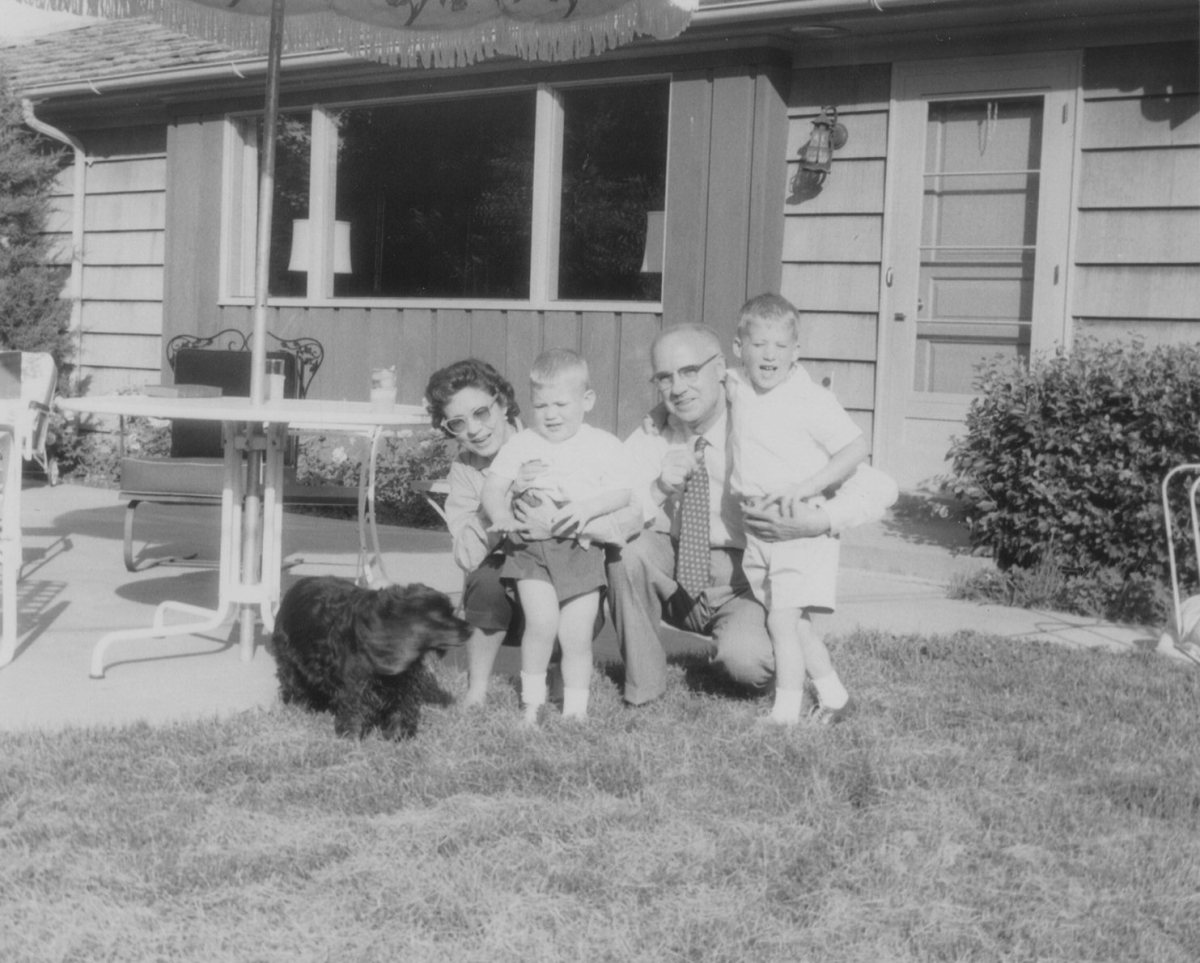
Over time, it became a real home for five families. Today, it is both a preserved model of the future and a record of everyday life in the past.
Visit the Museum this summer to explore inside and out of the All-Electric House and discover how this “house of tomorrow” worked and why it still matters today. The exhibit is included in regular Museum admission, and is open for viewing Monday through Saturday, 9am to 4:30pm.
Visit the new exhibit – and the rest of the Museum – on our upcoming Quarterly Free Day on Saturday, June 6. Thank you to our sponsor, Panasonic Energy, for making the Free Day possible.
Visit JCPRD.com/Museum to plan your visit today!