The town of Wolverton, England, is famous for its claim to be the first purpose-built railway town in England, if not the world. A few railway settlements — Shildon, for example — existed as early as 1825, but they were not purpose-built specifically for the arrival of the railway industry. The distinction is subtle, but a real one. At one time Wolverton was a leading, modern, and progressive town. It lies in the north of the new City of Milton Keynes, close to the historic towns of Stony Stratford and Newport Pagnell (famous for the Aston Martin factories).
Wolverton and the pre-railway era
Wolverton only rose to prominence in the first half of the nineteenth century. Before this, the town was a little-known medieval village that had long since vanished, its only mention being in the Domesday Book of 1086. The remains of that settlement are barely discernible today, save for a few impressions in a meadow where it once stood. By the 1700s Wolverton had been lost to history, and it remained so until its fortunes changed in the early 1800s.
Acts of Parliament and modernisation
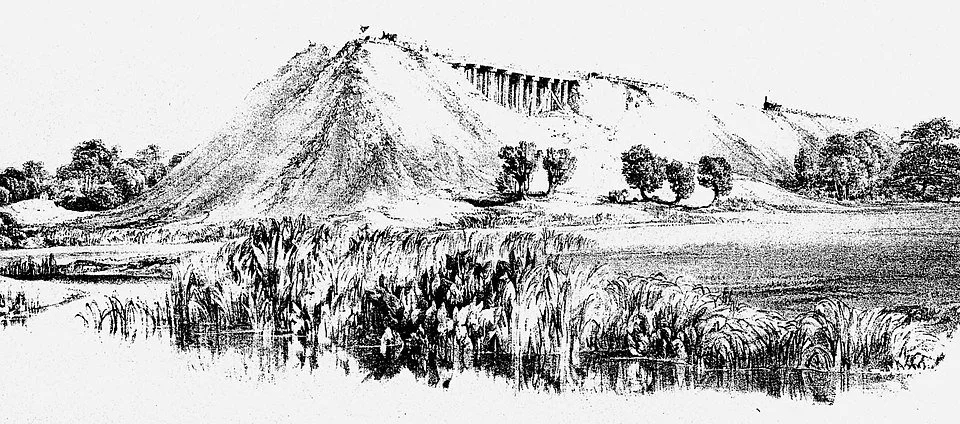
It was the passing of the London and Birmingham Railway Act in 1833 that brought the town back to life, and its fortunes changed considerably for the better. The Act required the establishment of a repair and maintenance depot for the new line, then the longest railway line in the country. The site needed to be roughly halfway along the route, so that train carriages could be managed and repaired efficiently, and Wolverton fit the requirement. The town’s position on the Grand Union Canal was also an advantage, allowing raw materials for the construction of the site to be transported easily.
The London and Birmingham line was one of the first of its kind, notable for its length and its importance in connecting two major cities. It took over twenty thousand workers and five years to build. For the remainder of the nineteenth century, the arrival of the railway works transformed and modernised Wolverton.
Examples of this transformation included the creation of the Bath House in 1890, which provided washing facilities, the Reading Room, and the arrival of new industries — notably McCorquodale Printers (founded in 1841), which established itself in Wolverton printing official stationery.
The story of McCorquodale is particularly interesting: its owner, George McCorquodale, would probably never have considered Wolverton as a location for a printing works had he not been approached by his friend Sir Richard Moon, Chairman of the London & North Western Railway. Moon suggested that McCorquodale establish a works in the town, with the aim of providing employment for the daughters of the railway workers, who otherwise had no work in Wolverton. McCorquodale already ran successful stationery ventures in Glasgow, London, and Leeds, and by 1878 he had added Wolverton to the list, helping the town prosper through full employment. The company also offered its employees benefits that were rare for the time – reading, recreation and dining rooms — although staff still had to work a fifty-four-hour week.
The Reading Room was unique, being the first of its kind on the railway. It was built alongside the works buildings to give railway workers the means to further their learning and education, though it was also accessible to others of a higher social standing. In its day it was frequently visited by Queen Victoria and other passengers during stops on their travels.
The Reading Room was progressive for its time, at a period when employers rarely gave much thought to staff wellbeing. However, the industry did need to maintain and encourage an educated workforce, given the technical expertise the work required. Over time, the Reading Room had fallen out of its original use and instead served a variety of functions, including a Wesleyan chapel and a sewing room, among others. It was abandoned completely in 1964, before later being brought back into use to accommodate a number of different businesses over the years. The building can still be seen today, though only an unassuming plaque marks its past, and it is now home to a marketing agency — its history almost lost to the modern world.
Wolverton Works and the War
The works also served the country’s war effort: existing carriages were converted into ambulance trains during the First World War, and the workers’ expertise was called upon again in the Second World War — this time not to build trains, but to produce Horsa gliders for the D-Day landings, repair Whitley bombers, manufacture Hawker Typhoon wings, and convert some seven hundred vans into much-needed armoured cars.
In 1962 its fortunes began to change, and the site contracted. The workforce today is a shadow of its former self, but the works remain an important part of Wolverton and a significant local employer.
Wolverton has a claim to many “firsts.” It was the first works to maintain and manufacture the Royal Train, a role it has held since 1842 and retains today. It also became the first railway works to use electricity, in 1901, for both utility purposes and to power machinery.
Wolverton Works Today
The works itself has diminished in size, with only repair and refurbishment duties remaining; the site is now mostly occupied by a Tesco supermarket and new housing estates along the canal. Some derelict buildings remain, awaiting development and further modern-day change.
The Reading Room is not the only feature to have been lost or to become a casualty of modern times — the Bath House remains in name only, now serving as a community centre.
McCorquodale Printers has since closed, and the ground now houses modern flats built in 2010. The company still operates today, based in Derby and embracing the digital age.
Wolverton’s growth allowed nearby towns such as Bradwell and Newport Pagnell to grow and flourish alongside it. On the back of all this, a new city was eventually designed.
History is still with us, but we need to look a little closer to make sure we do not lose it, or forget how it once transformed our lives and the places around us. It is not only battles, prime ministers and monarchs that shape our lives; small, everyday things do too. There are many more historical stories in Milton Keynes lying forgotten or simply unnoticed.
What lies on your doorstep? Let us know below.
Now read about how the world’s longest railway was built here.