When I visited Istanbul about a decade ago, I remember seeing the word ocakbaşı everywhere – slowly understanding that it referred to casual restaurants centred around an open charcoal grill. I loved everything about Istanbul: the colourful mezze, the even more colourful markets, the coffee with its strong, silty finish, the sesame-studded simit bread, and especially the waft of grilled meat that came from those ocakbaşı restaurants.
I was only in Istanbul for a few days, but the city left me wanting more. So I was happy to know that back in Amsterdam we had our very own ocakbaşı restaurant, too: Ali Ocakbaşı, on the corner of Utrechtsestraat and Herengracht. I visited when it opened in 2015, and several more times over the years, but hadn’t eaten there in a while until a recent invitation. I was glad to see that little had changed: the mezze is still presented in a giant wood-rimmed basket for guests to choose from; the kebabs are still cooked downstairs over open fire; the desserts are still drenched in honey and pistachio nuts. What had perhaps changed was the wine list, which now features several Turkish wines and is all the better for it.
Ali Ocakbaşı: mezze and more
If the kebabs weren’t so good, I could’ve happily filled up on mezze alone. Ali Ocakbaşı’s speciality has to be the çiğ köfte: hand-kneaded little flavour bombs of bulghur wheat, tomato, parsley and spices, eaten in lettuce wrap form with a squeeze of lemon. These are my favourite every time, but I’m also a fan of the kopoglu (fried aubergine, potato and green peppers in a rich tomato sauce) and the Ali tarator (a heady combination of black garlic, labneh, caramelised onion and carrot) – both piled on top of puffed-up pide.

Next, of course, the kebabs. We tried a trio chosen by the chef: the Ali kebap (minced lamb and beef), the saslik (veal and onion) and the pilic sis (chicken) – all perfectly marinated, fork tender and just-charred. The chefs mince the meat by hand, using a zırh knife (with a curved blade, rather like a mezzaluna), according to Turkish tradition.
That minced meat is also the star in the Beyti: a grilled lamb kebab wrapped in lavash bread before being sliced and served. Named after the Istanbul restaurateur who invented it, the Beyti is then presented with a yoghurt and garlic sauce, drizzled with tomato and parsley – the perfect balance of hot meets cool. Given the quality of their kebabs, it’s perhaps no surprise that Ali Ocakbaşı’s Karaköy branch in Istanbul has received a coveted Bib Gourmand award from the Michelin Guide.

For dessert, if you have room, order the kunefe: angel’s hair pastry, melted cheese (yes, really!), pistachios and a honied syrup. One to share between two will be plenty, unless you have a very sweet tooth.
I tried several Turkish wines during the course of the evening, my favourite being the Villa Doluca “Legend”: a red blend of Anatolian native grape Öküzgözü with international varietals Shiraz and Merlot. Fruity and peppery, it went well with the meaty kebabs but was light enough for a mezze-only dinner.
Snob: Turkish breakfast
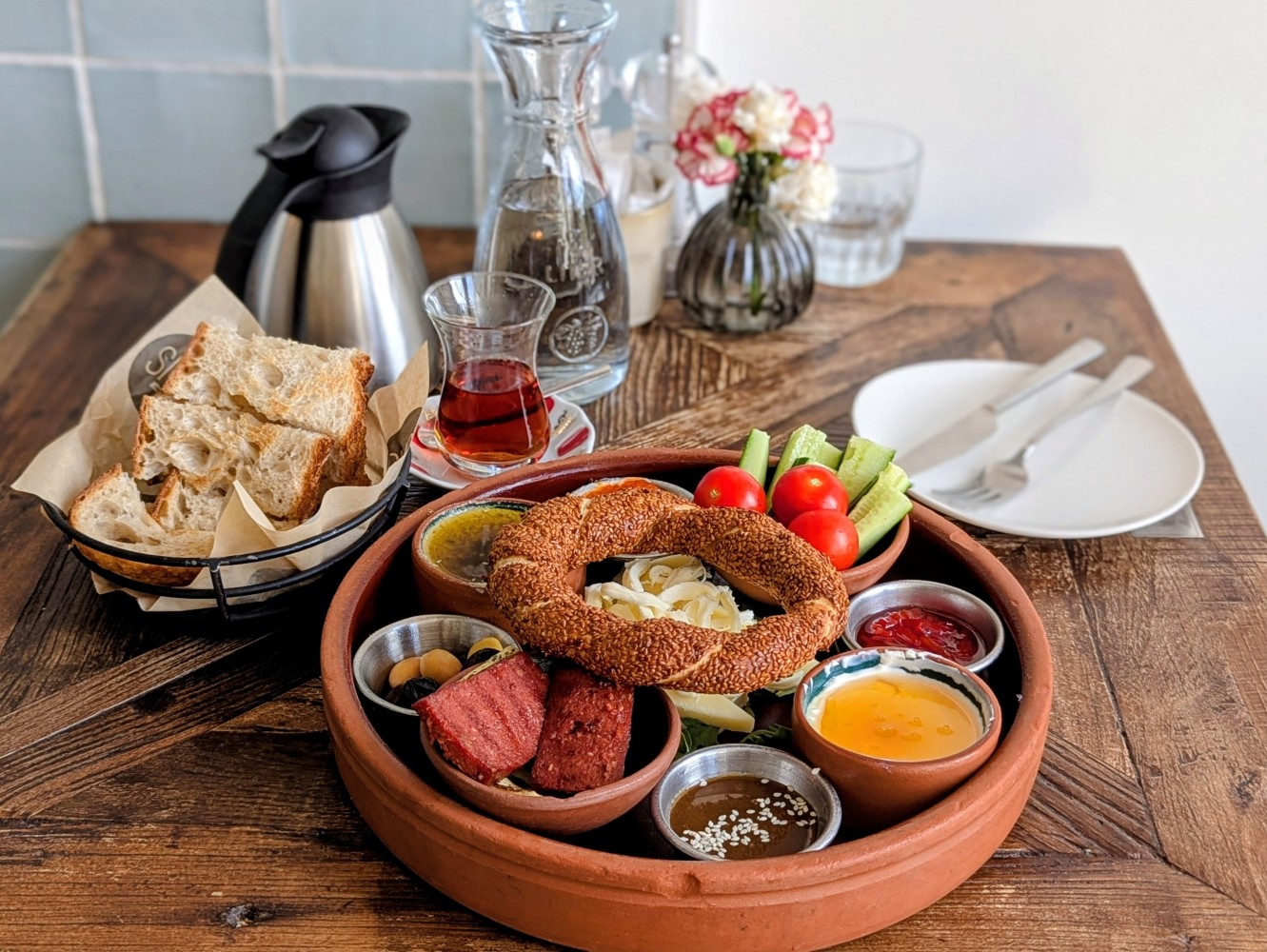
As much as I loved Istanbul’s grilling culture, I couldn’t wait for the morning after: breakfast time. I’ve never been keen on the cereal-and-toast breakfast of my English roots, but Turkish breakfast is a different meal entirely. The Turkish word for breakfast, kahvaltı, literally translates as “before coffee” – a substantial meal to line the stomach before drinking the so-strong-you-can-stand-a-spoon-up-in-it Turkish coffee. Breakfasts range from cheese and olives to eggs and tomatoes to yoghurt and honey – with a lot more in between, including the ubiquitous simit: a ring-shaped piece of dough that’s been dipped in molasses and sesame seeds and baked.

In Amsterdam, I hadn’t encountered much in the way of Turkish breakfast – so Snob, centrally located on the Thorbeckeplein, was a welcome addition. It’s an airy canal house space, with vibrant décor and an all-day dining concept. But I was here for the Bosphorus Sharing Rhapsody: a two-person platter featuring homemade sucuk (sausage), four types of Turkish cheese, tahini molasses, hummus with za’atar, chilli jam, and of course that inimitable simit bread – all washed down with a pot of tea. It’ll transport you straight to Istanbul, before you’ve even followed up with a genuine Turkish coffee.
Istanbul, Amsterdam, Barcelona
Ali Ocakbaşı and Snob are part of the AKKOMARKA restaurant community, which represents 17 brands and operates more than 60 branches. Ali Ocakbaşı has five locations in total – three in Turkey, one in Amsterdam, and one in Barcelona – while Snob started in Amsterdam and subsequently expanded to Barcelona. “Different city, same philosophy: fresh food, bold flavours, and tables made for sharing,” says their brand representative.
This feature is brought to you in partnership with AKKOMARKA, and is a paid collaboration. That said, I have visited – and thoroughly enjoyed! – Ali Ocakbaşı on my own dime before, so it’s a brand I’m very happy to endorse. For more in the same vein, read my guide to Turkish restaurants in Amsterdam, and my pick of the best brunches in the city.