As an Amsterdammer, it can be easy to forget that life exists outside the A10. And yet as the city gets busier and busier, I find myself increasingly drawn outwards – to where the pace of life feels a little slower and the air a little cleaner. I’d not expected to find authentic Indian and Nepalese food in Zaanse Schans (of all the most Dutch places imaginable!) but there it was: Kathmandu Kitchen – or as they say on their website, “better known among the locals of the Zaanstreek as the ‘Zaanse Kathmandu Kitchen’.”
For this is a local find as much as an international one. Co-owner and front-of-house Nishan Sapkota told me that 80% of Kathmandu Kitchen’s guests come from the local region – testament to the quality of the cooking that keeps them coming back. But with the famous Zaanse Schans windmills just a stone’s throw away, and Amsterdam only a 20-minute train journey from the closest station, it’s a wonder that more tourists haven’t discovered this rather unique restaurant.
The storied, 400-year history of De Waakzaamheid
Kathmandu Kitchen has lived in the historic green wooden building known as “De Waakzaamheid” since 2017 – having expanded from its first location in Amsterdam. Nishan’s father was (and still is) the head chef of this proud family business, bringing his culinary heritage with him from the Himalayas.

But before it became a restaurant, the building had seen many different lives. Built in 1626, De Waakzaamheid is looking good for 400 years old. It’s the oldest wooden hospitality building in the Netherlands, located next to the Koogersluis to serve travellers – a rare surviving example of 17th-century Zaanse timber architecture. During World War Two, it served as a hub for the resistance, used to shelter Jews in hiding. From the 1950s onwards, it became better known for its musical performances – first as a jazz café, later as a discotheque. And in 2010, it was voted the second most beautiful building in the Netherlands – finally gaining official Rijksmonument (national heritage) status in 2026.
Distinctive dishes: Indian and Nepalese cuisine brought to the Zaanstreek
It’s perhaps fitting that a building that’s seen so many incarnations is now back to its roots in hospitality: serving guests from its extensive menu of Indian, Nepalese and halal-friendly dishes.
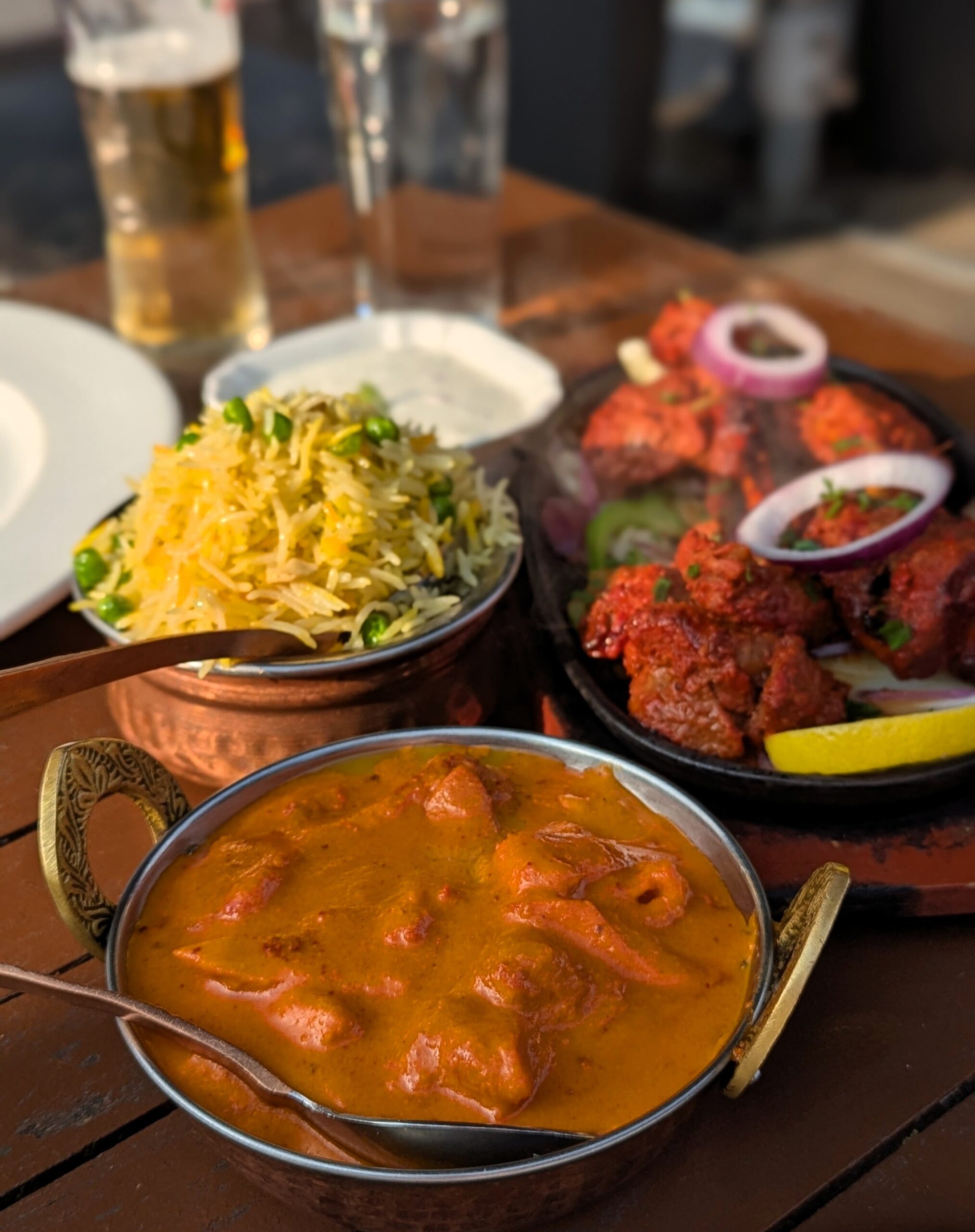
We started with chicken momos: distinctive Nepalese dumplings, made in-house and served with two sauces – a mild, tomato-based sauce and a hot, chilli-based one. Juicy, spicy and moreish. But my favourite dish of the evening was a new one on me: sekuwa, traditionally made with goat but here with lamb, the meat had been marinated in Nepalese spices and cooked in a dry clay oven, then served with a mix of caramelised onion and fresh coriander. The spices were fragrant, the heat levels perfect, and the meat moist. I could’ve eaten it twice over.

When the mains came out, we were in more familiar territory: butter chicken was rich and comforting, and (crucially) not too sweet. It came with a separate pot of the chilli sauce we’d seen with the momos earlier, so we could spice it up if we wanted to. Worth noting: Kathmandu Kitchen uses chicken thigh rather than chicken breast in its curries – a switch that makes perfect textural sense in the dish. Tandoori lamb chops were equally toothsome and tender, arriving at the table sizzling with peppers and onions. And the rice pilau was a meal in itself: studded with green peas, cashew nuts and sultanas. See also: fluffy, buttery, garlic naan – you can’t beat it.
After all that, we probably didn’t need dessert, but we finished with the gulab jamun: perhaps best described as India’s answer to oliebollen, but served swimming in syrup with coconut and vanilla ice cream.
Smells like community spirit
While the food is fantastic, it’s clear that Kathmandu Kitchen is more than just a restaurant. Nishan is adamant that it needs to form part of the community, and – fittingly – for the building’s 400th birthday they’re organising all sorts of community-based events. “We host cooking workshops on the last Wednesday of every month,” he told me; “the next one on 26 August will focus on making traditional Nepalese dumplings (momos).”

Kathmandu Kitchen is also participating in “De Langste Tafel Zaanstad” (The Longest Table in Zaanstad) on 23 September. It’s a long, communal table that will start on the terrace and then reach towards the water, where refugees, statushouders (people with residency status) and other Zaanstad residents will eat together – targeted to reach 250 guests. It’s part of the wider Zaanstad “Langste Tafel” initiative (also seen in Amsterdam and elsewhere), which is all about inclusion and bringing communities together.
Kathmandu Kitchen may be young compared with De Waakzaamheid’s 400 years, but I predict that both will be bringing enjoyment to the Zaanstreek, Amsterdam and further afield for decades to come. And if you happen to be staying (or living) further west, the Sapkota family has branches of Kathmandu Kitchen in Beverwijk and Leiden, too.
This feature is brought to you in partnership with Kathmandu Kitchen, and is a paid collaboration. For more Indian and Nepalese food, read my guide to Indian restaurants in Amsterdam (now including Zaanse Schans and Amstelveen!).