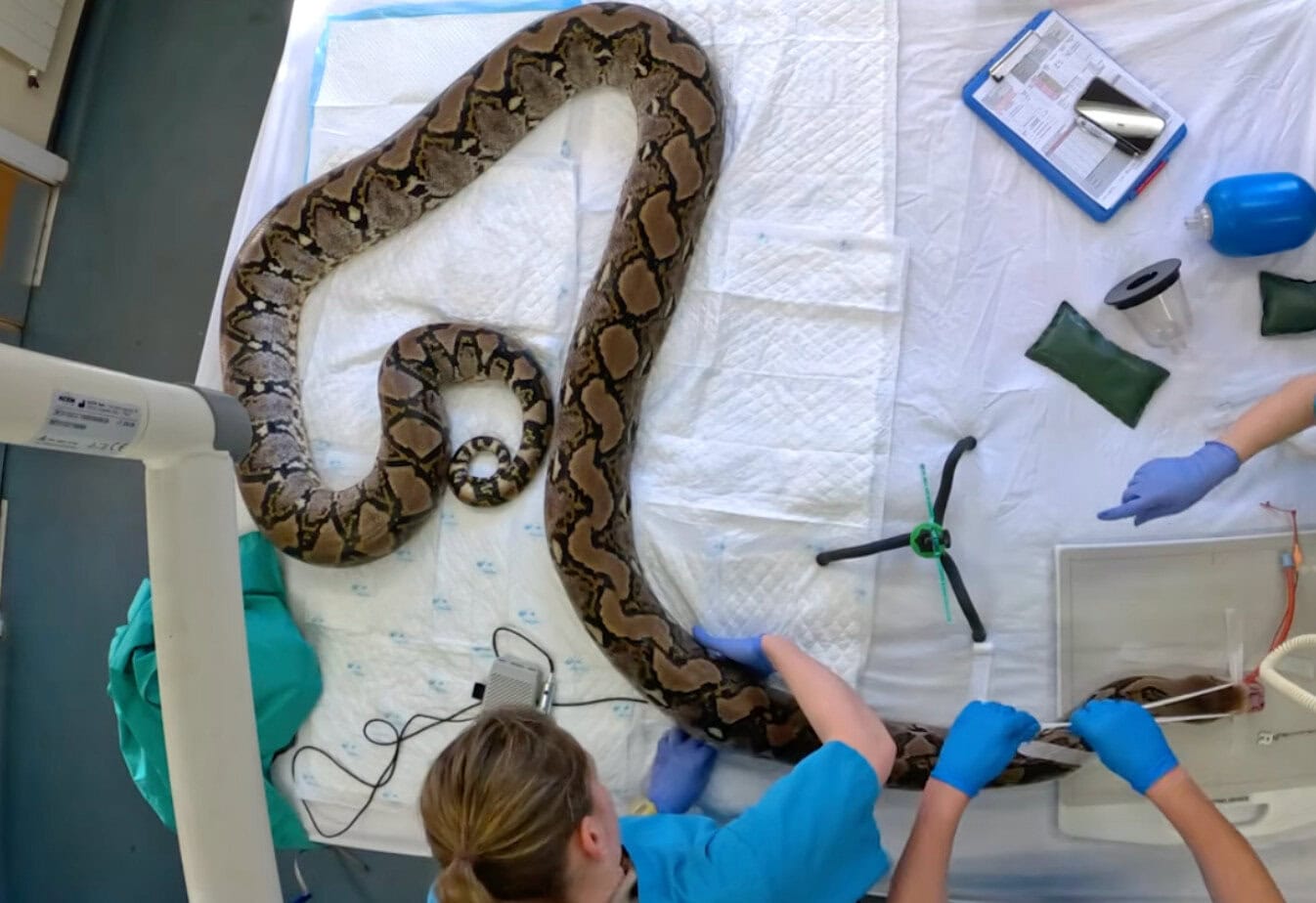
A 23-year-old python at Chester Zoo in the UK is cancer-free after vets used a treatment normally used in humans to fight a tumor that was destroying part of her jaw.
Jodie Foster, a 4.5-metre-long reticulated python weighing around 50 kilograms, is believed to be the first snake in the world to receive electrochemotherapy.
Her keepers first noticed something was wrong when she started eating less and became less active. Tests found a fibrosarcoma, a type of cancer, growing in her jaw.
Vets removed the tumor, but it later came back. This time, it had started growing into her jawbone and was making it increasingly difficult for her to eat.
With Jodie’s life at risk, vets at Chester Zoo worked with cancer specialists from the University of Liverpool to find another option.
They decided to try electrochemotherapy, a treatment already used for some cancers in humans and other animals.
The treatment combines chemotherapy with short, controlled electrical pulses. These pulses temporarily make cancer cells more open, allowing the chemotherapy drug to enter them more easily. This can make the treatment more effective while using a lower dose of chemotherapy.
A double-sized operating table
Before the treatment could begin, Jodie had to undergo another operation. Vets removed the tumor and part of her jawbone that had been damaged by the cancer. They then used electrochemotherapy to target cancer cells that might have been left behind.
Treating a 4.5-metre python also created some practical problems. Jodie was too large for a normal operating table, so the veterinary team pushed two tables together to create an operating area about the size of a double bed.
She was put under anaesthesia in her enclosure before being carried to the zoo’s veterinary centre. During the operation, heated blankets and warm air were used to keep her body temperature stable.
The complete procedure took around 90 minutes.
Jodie is eating and hunting again
Several months have now passed since the treatment, and the results are promising.
Despite having part of her jawbone removed, Jodie can still strike, grip and swallow her food normally. She is eating again, moving around her enclosure and behaving as she did before becoming ill.
A final check this week found no signs that the cancer had returned. The University of Liverpool and Chester Zoo plan to formally publish details of the procedure so other veterinarians can learn how the treatment was adapted for a snake.
Support The Animal Reader
The Animal Reader is funded almost entirely by its readers. Donations help pay freelance journalists around the world who tell stories about animals that rarely make the news.