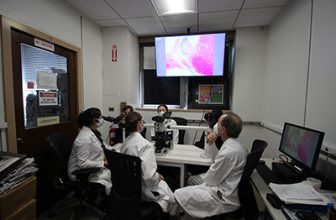
Over the past two weeks, APS staff members have worked alongside local veterinary experts and the University of Wisconsin School of Veterinary Medicine Shelter Medicine Program to complete the most comprehensive infectious disease assessment our shelter has ever undertaken.
Thanks to this collaboration, every dog in our shelter received individualized evaluation, including PCR testing, antibody titer testing, veterinary assessment, vaccination review, and ongoing monitoring. This information has allowed us to make thoughtful, science-based decisions for each dog while protecting the health of the entire shelter population and the broader community.
We are happy to share that dog adoptions and foster placements will resume on Wednesday, July 8.
What This Means
Dogs will once again be available for adoption and foster placement on a case-by-case basis.
Before any dog leaves the shelter, our team will review the dog’s medical information with adopters or foster families, including
- PCR and antibody titer test results for canine distemper
- Vaccination history
- Current health status
- Any recommended precautions or follow-up care
- What these results mean and what they do not mean
Our goal is to ensure every adopter and foster family has the information they need to make an informed decision and feel confident bringing a new dog home.
What We Learned
Our testing confirmed what veterinary experts expected: While a number of dogs tested positive for canine distemper, the vast majority of dogs also demonstrated protective antibody levels from vaccination or previous immunity.
These results allowed us to identify which dogs required additional precautions and which dogs could safely move forward toward adoption or foster placement. The ability to take an individualized approach for each dog is why comprehensive testing was so valuable.
A Note About Risk
Animal shelters care for animals from many different backgrounds, often with unknown medical and vaccination histories. Like pediatricians’ offices, daycare centers, or human hospitals, shelters will always have some level of infectious disease risk despite strong preventive measures.
No shelter can guarantee that an animal will never become ill after adoption or foster placement. What we can promise is that we will continue to use the best available science, vaccinate immediately upon intake whenever possible, closely monitor every animal, communicate openly, and provide honest counseling so adopters and foster families understand any known risks.
Transparency remains one of our highest priorities.
Thank You
We are incredibly grateful for the patience, encouragement, and trust shown by our volunteers, foster families, adopters, rescue partners, Durham County Animal Services, veterinary colleagues, donors, and our entire community.
Most of all, we want to thank our extraordinary staff. They responded to this challenge with professionalism, compassion, and an unwavering commitment to both individual animals and the health of our shelter population and broader community.
Because of this collective effort, dogs are once again finding their way into loving homes. We can’t wait to welcome adopters and foster families back through our doors!