While Jerry’s sequence in Anchors Aweigh is more famous, Tom & Jerry’s sequence in Dangerous When Wet is more important to the story. In Anchors Aweigh, Gene Kelly tells a group of school children a story about how he got his medal. This story becomes a fantasy sequence in which Gene Kelly teaches King Jerry Mouse to sing and dance. Audiences may have known that the sequence was coming; it’s briefly seen in the trailer. However, it wasn’t as heavily promoted as the sequence in Dangerous When Wet. Tom and Jerry are mentioned on the poster for the feature film and appear in the trailer. A series of publicity shots was also produced to promote the film.
Many of you probably are unaware of what Dangerous When Wet is actually about, and are only aware of the Tom & Jerry sequence. To truly understand the significance of the animated sequence, though, it is important to understand the film as well. In the film, Katie Higgens (Esther Williams) is the eldest daughter of a very athletic dairy-farming family. Guided by the coaching of a slick vitamin salesman (Jack Carson), Katie enters a contest to swim the English Channel. Meanwhile, while training in England, she meets the wealthy romantic André Lanet (Fernando Lamas).
Most cartoon releases of the film’s sequence actually leave out a lot of important details from the actual Tom and Jerry sequence, so I have uploaded my own cut of the sequence, complete with why the sequence occurred in the first place, along with all of the animated bits. It can be seen at the bottom of this article.


Dangerous When Wet was based on a story by Dorothy Kingsley, originally titled Everybody Swims, and was intended as a vehicle for both Esther Williams and Debbie Reynolds. Esther Williams was born on August 8, 1921. The reason her biggest film featured her in the water was that she was, in fact, a champion swimmer. She set regional and national records on the Los Angeles Athletic Club swim team and was scheduled to compete in the 1940 Summer Olympics, but was unable to due to the outbreak of World War II.
 Her debut film was Andy Hardy’s Double Life in 1942. Dangerous When Wet wasn’t the only film in which Williams played a Higgins. In Take Me Out to the Ball Game (1949), she played K.C. Higgins with Anchors Aweigh stars Frank Sinatra and Gene Kelly. In 1952, Williams appeared in her favorite film and one of her most successful, Million Dollar Mermaid. The film was an incredible financial success, and afterward, MGM was eager to produce another film like it for Williams to star in. This led to Dangerous When Wet.
The Tom and Jerry portion of the film was a dream Katie Higgins had. Therefore, aside from Tom and Jerry, all the other aquatic creatures represented the people in her life as she prepared for her swim across the English Channel. The octopus who woos her is the aquatic persona of the romantic Andre (who would, years later, become Williams’s real-life husband). As Williams described it in her autobiography, “It was a comic dream sequence intended to parallel the conflict my character was experiencing between her commitment to swim the English Channel and her attraction to Andre.” The back cover of the comic book in the animated sequence is actually the back cover of a Dell Comic from the period. If one looks closely, a promotion for a Dell pin-up can be spotted. It is clear that Bill & Joe had more to do with the film’s production and story than they did in Anchors Aweigh. Also, unlike in Anchors Aweigh, Bill and Joe are credited alongside Fred Quimby in the film’s opening titles.


Esther Williams discussed the making of the animated sequence in depth in her now out-of-print autobiography (Note: she accidentally calls Bill Hanna, Phil in the text, but I am leaving it in):
 “Once we reviewed the sequence on storyboards, a French bistro table was built at the bottom of the pool, with a little chair and Lucite cleats for my feet to keep me seated at the table so I wouldn’t float to the surface. Helen Rose designed a one-piece swimsuit in white, which played beautifully against the Technicolor blue of the water. Helen experimented with weights in my swimsuit to keep me from floating to the surface; clearly a dangerous idea. Besides, the weights showed on camera and in order to keep me down, she would have needed enough weights to virtually sink me. The Lucite cleats were a far better idea.
“I dove in, sat down at the underwater table, put one in the cleats, and wrapped the other around the leg of the chair to anchor myself at the bottom. I played the scene with the imaginary octopus that would later be drawn in by Hanna and Barbera (while Fernando sang off camera, “In my wildest dreams, I never thought we’d meet,” a gurgling, underwater sound added to his voice). This was all done in pantomime, as I was alone underwater. I also swam with Tom and Jerry, was chased by a cartoon shark, and was followed by a family of singing seahorses. It looked as if I swam effortlessly. Hardly. It was quite a challenge to swim the crawl and backstroke underwater. For swimmers out there, try to lift your elbows while swimming underwater. You’ll find your body is propelled to the top. In order to keep yourself under the surface, your toes must be pointed downward (an unnatural and ungainly position), and your arms stroke laterally, a technique that demands a powerful upper body. Oh yes, don’t forget that while you’re doing this, you’ve got dialogue. And don’t forget to smile!
 “Acting underwater is something quite different from swimming. In previous films, I swam, smiled, and danced ducking behind banana leaves so I could shoot up to the top of the tank for air. For the first time, I had lines, gestures, movements that would have had in any scene, dry or wet—only I had no air. After a while, it seemed so normal that the crew forgot that I was underwater. Whenever I came to the end of my breath, and shot back up to the surface, the assistant director would shout, “What’s the matter Esther, we haven’t even finished the scene yet.”
By the time Dangerous When Wet was filming, underwater photography had improved immeasurably. The sequence with Tom and Jerry is crystal clear, unlike my murky underwater scenes of my first film, Bathing Beauty.
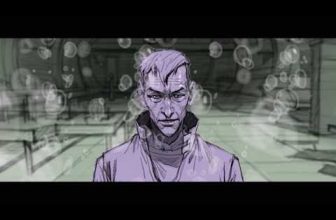
 “When the movie came back from previews, the response cards indicated that the audience didn’t believe I was underwater during the Tom and Jerry sequence. Joe Barbera was concerned. He couldn’t figure out the problem. As we were discussing the promotion for the movie Joe blurted out, “I’ve got it! There are no bubbles, Esther. People expect bubbles underwater.”
“So for the following preview, Joe and Phil had drawn $50,000 worth of pink underwater bubbles floating from my mouth whenever I spoke.
“Joe, you didn’t need to spend all that money,” I said, “I could’ve blown the bubbles for free. All you had to do was ask.”
“Yeah.” sighed Joe, “but they wouldn’t look real.”
“They returned from the next preview and called me at home, “Esther,” they said, laughing, “It works! They loved the Tom and Jerry part. The audience held their breath for the entire length of the number. You wouldn’t believe it. When it ended, you could hear a collective gasp in the theater. They just sat there breathing!”
(The above passage transcribed was directly from pages 229-230 of Esther Williams’s autobiography, The Million Dollar Mermaid)
Dangerous When Wet Full Sequence: