
I’m a filmmaker and experimental artist researching the expressiveness of moving images. From the live-action medium, I made my way to animation through the production of my first animated film, Cuentos para Dormir (Bedtime Stories, 2024). A short, for the most part abstract, experimental, animated thriller which explores the fear of darkness by recalling the nights as children sleeping in our dark rooms. Making this film during my master’s studies, I was encouraged by the academic environment to experiment with a form, in search of an appropriate way to represent darkness and fear. This new process showed me that both the challenge and the affordance of animation lie in the fact that almost anything can be animated. Unlike live-action cinema, “Free of the constraints of cinematic photo-realism, animation offers unlimited imaginative scope, particularly for personal expression” (Pilling, 2001, p.7). Far from the illusion of capturing life through the imitation of its visual reality, by imagining, for example, what a splash of water could look like, the animator is encouraged to get to what the represented thing actually is. In this sense, the animator works essentially with the internal movement of the image through the manipulation of its materiality. The combination of materiality and motion trigger off the emotional response of the spectator who is immersed in the story through its physical representation, whether sand, puppets, paint, etc. Which brings us to the question: to what extent is animation its materiality?
Through the production of Cuentos para Domir, I was introduced to one of animation’s essential aspects that lies in the decision on the film’s technique. More than a mere format through which to communicate the idea, it is one of the main tools for conveying the emotional dimension of the story. Therefore, the technique and its materiality shape animation as much as the character and background design and movement. The importance of animation’s materiality also becomes clear when we look beyond the final cut projected on a screen.

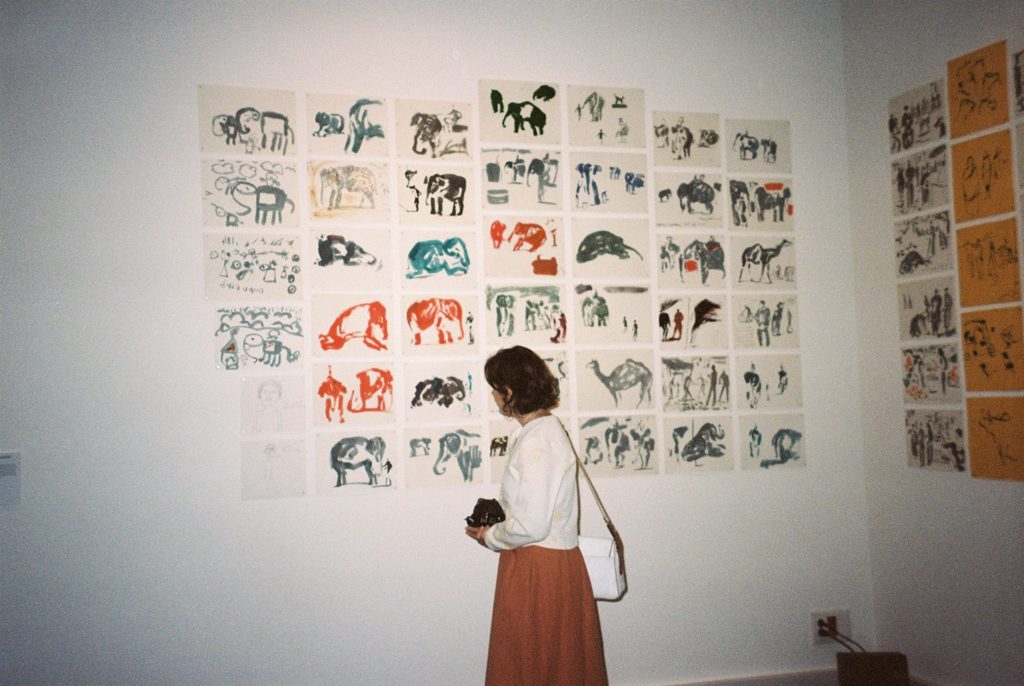
Fig. 1.Sultana’s Dream ‘Making of’ exhibition at the 71º SSIFF.
Today, animation festivals, venues and academic institutions often accompany their screening programs and curricula with exhibitions and workshops on the creative process behind a particular film or artist’s work. Exhibitions composed by stop motion sets, first drafts, sketchbooks and the exploration and development of diverse and experimental techniques deepen our understanding of the work that goes into each film. Through these venues, animation artists can show how an idea took a specific form. This highlights the importance of the materials, since properties such as malleability, resilience and the capacity to blend shape how movement can be expressed in animation. For example, in her workshops at the Queensland College of Art in Brisbane on the different techniques she has used throughout her career, Caroline Leaf explains that working within the limitations of scratch animation, such as the small scale of the film and the treatment of its material, leads to greater refinement in animation and, in other words, to a truer form of expression (NFB, 1998). This may apply to every technique and material. Even more revealing than this educational approach to animation’s possibilities, however, is the fact that these materials can become works of art in their own right, independent of the films they belong to.
Case Study:Cuentos para Domir
Applying this analysis to my own work, I go back to my first animated piece to consider how the technique in Cuentos para Domir carries the emotional narrative of the story. The main proposal of the animation project was to experiment with different materials to express the emotions evoked in the night through its darkness and shadows, resorting to abstract animation.
The short film’s animation technique is the result of a mix between rotoscoping and sgraffito. The process began with photographs taken at home at night, which were printed in black and white on tracing paper and then worked over with coloured oil pastels. The oil pastel layer stage of production involved regressing to my mind and feelings as a child, scared in my dark room, in order to reinterpret the printed shapes of the gloomy furnitures and the reflected light that breaks in from the window to represent the fears and illusions that we may project in this shadows. The next step, before digitising the images, was to cover the frames with a layer of India ink or acrylic, drawing the veil of night back over them. Finally, the ink and acrylic were scratched away over the brighter areas of the underlying shapes, like light breaking through the darkness of the night, which, rather than easing our confusion and fear, brings our most terrifying thoughts into view. This effect becomes even stronger when the frames are photographed on a light table, revealing the image hidden beneath the black layer and the light cutting through the scratches in the ink, which adds to the sense of terror. Moreover, the small format of the printed frames favoured a more abstract representation, allowing every stroke in the oil pastels and scratch on the ink become evocative. The suspense derived from the lack of an identifiable figure intensifies the viewer’s scrutiny of the image, resembling our way of looking in the dark, trying to interpret every trace, scratch, gesture and movement. In addition, this recreates the feeling of distrust of our own senses when everything we see at night becomes a product of our imagination and fear. In this manner, adding to the understanding that the style and materiality of the film in animation convey the essence of the story, this film evokes the sense of night terror through its animation technique.

Fig. 2. Frames template from Cuentos para Dormir. Black and white image sequence before manipulation with oil pastels.


Figs. 3 & 4. Photographs of the digitalization process of Cuentos para Dormir frames on a light table.
The importance of this choice of materials became even clearer to me when I recently returned to the original frames and reworked them into a new piece for a group exhibition on the theme of monsters. The installation focuses on the technique, using it to define a monster as an open figure: a shadow, a space in the dark onto which we project our fears. To achieve this, the original frames are displayed with a backlight that reveals and accentuates the images hidden beneath the black layer. As in the film, the materials of the installation carry the story: once placed in the light, the frames return to the viewer the feelings evoked by their depiction of the night. In this way, the film’s materiality has become a work of art on its own, with a potential independent life in museum and gallery spaces.


Figs. 5-7. Photographs of the installation Cuentos para Dormir for the collective exhibition ‘Monstruos’ at La Insomne Taller de Arte y Librería, Valencia, Spain.
In conclusion, the technique and the physical or digital medium chosen for an animated film should be understood as part of the animation itself, rather than as a complementary aspect of the process. As such, they deserve attention in any research or production in the field, as a key source of animation’s strength. This is also why animation never ends with the recorded piece on screen, as it expands through all its materiality.
Link to the short film Cuentos para Dormir (2024): https://vimeo.com/1228883908?fl=tl&fe=ec
References:
Bakedano, J.J. (1987). Norman McLaren: obra completa 1932 – 1985. Museo de Bellas Artes de Bilbao.
National Film Board of Canada (1998). Hand-Crafted Cinema Animation Workshop with Caroline Leaf [Video]. Consulted on 26th September 2026 at https://www.nfb.ca/film/handcrafted_cinema/
Pilling, J. (2001). Animation. 2D and beyond. RotoVision SA.
Pillink, J. (2025) Caroline Leaf. De l’animation de sable aux peintures sur ipad. Blink Blank: La revue du film d’animation, nº12, pp.6-7.
Pillink, J. (2025) Caroline Leaf. Quitter le figuratif. Charles Tatum Jr. (trad.) Blink Blank: La revue du film d’animation, nº12, pp.8-11.
Maria Farias Cobos is an Argentinian artist, photographer and filmmaker based in Valencia, Spain. She holds a bachelor’s degree in Image and Sound Design from the Universidad de Buenos Aires (2022) and a master’s degree in Artistic Production from the Universitat Politècnica de València (2025), where she began her research on the expressiveness of moving images through animation. Her work has been shown at international festivals and exhibitions. Across her practice, she has explored and developed a range of techniques and visual languages, and she is currently working in experimental and abstract animation.