A Scallop Shell Bead Buried 68 Kilometers from the Sea Rewrites the Timeline of California’s Inland Trade Networks

A bead is a small thing to hang a trade network on. But that’s what happened when archaeologists working ahead of a solar farm in Monterey County sent two shell ornaments off for radiocarbon dating and got back a number nobody expected.
The shells belong to Crassadoma gigantea, the giant rock scallop, a species that lives below the tideline in the Santa Barbara Channel and nowhere else that matters to this story. It has a thick, unyielding shell that resists shaping and drilling, which is exactly why people wanted it. Difficulty was the point. Among the Chumash and neighboring coastal groups, giant rock scallop ornaments carried the kind of status that comes from an object being hard to make and harder to get.
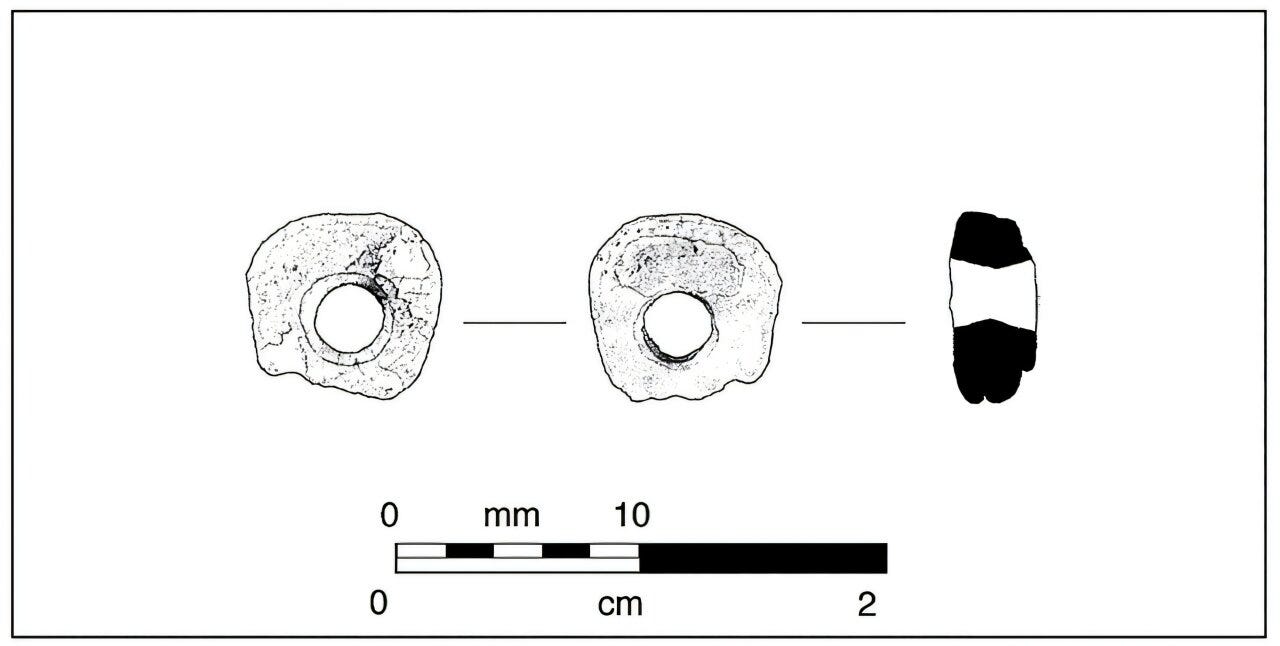
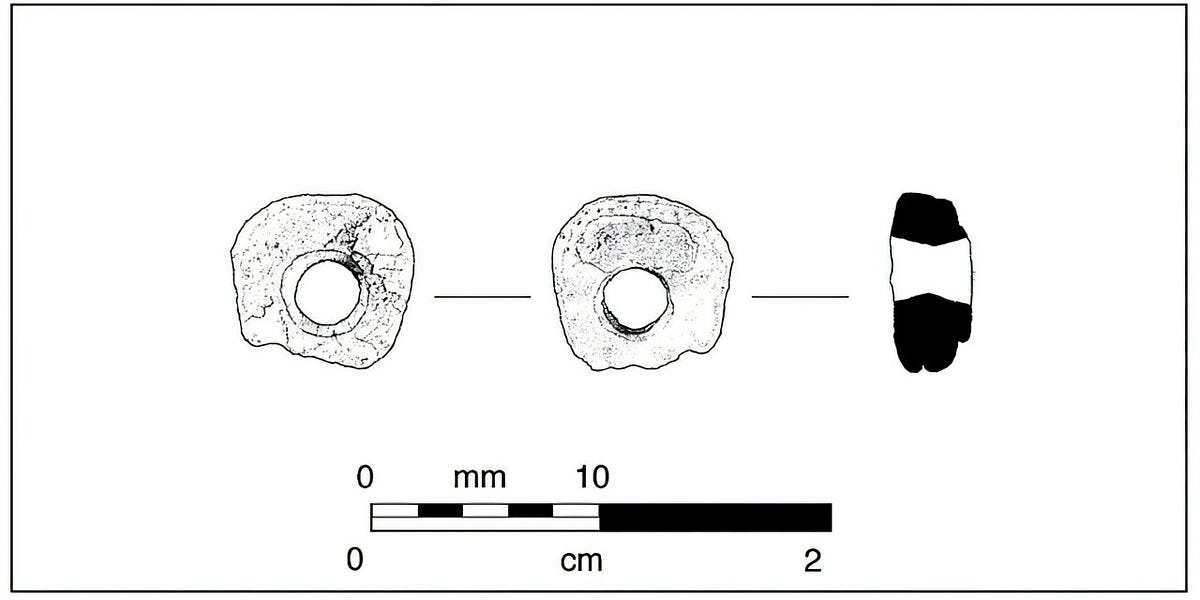
The two beads at the center of this study came out of excavations at the Turkey Flat and Lichtenstein sites, conducted between 2012 and 2020 in advance of the California Flats Solar Project, a 280-megawatt installation that required archaeological survey before construction could proceed. Archaeologists worked alongside representatives of the Salinan, Chumash, and Yokuts tribes, who granted permission for direct dating of the beads, a step that doesn’t happen automatically and that shaped how the research team approached the material from the start.
One bead, a disc-shaped ornament from the Lichtenstein site, dated to 3,674 years old. That’s a respectable age on its own. The other, a globular bead from Turkey Flat, dated to 8,508 years old. That number makes it the oldest giant rock scallop bead ever recorded, older than any previously known example from the Channel Islands themselves, where the species actually lives.
Both sites sit more than 68 kilometers from the nearest coastline. That distance is the second half of what makes this discovery strange. It isn’t just that someone was making these beads earlier than expected. It’s that someone was moving them a serious distance inland, apparently as a matter of routine, during the Early Holocene.