In one of the oldest streets in Tehran’s city centre, an informal pharmaceutical marketplace unfolds amidst a crowded street, where ‘dalals’[1] (brokers) stand on the pavements, hands brimming with packages of pharmaceuticals, whispering various medication names to pedestrians. Here Maryam, seeking Bisoprolol for her mother’s heart condition, engages in conversation with Davood, a dalal in the market. “Is the medicine foreign?” she asks, not just revealing her preference for imported medicines but also the scepticism that permeates a marketplace infamous for counterfeit drugs. Davood replies immediately and with confidence, “Yes. How many do you need?” subtly acknowledging the scarcity of genuine medications, an understanding tacitly shared between them. Maryam continues, probing the drug’s validity with, “What’s the expiration date?” — a common concern in a market rife with rumours of expired products. Davood, aiming to reassure, responds, “We have the German Concor brand, valid until 2024. It’s sourced from reputable suppliers. Feel free to verify the expiration date yourself.”
This ordinary exchange shows how scarcity in Iran’s pharmaceutical market quickly becomes a question of trust in where the medicine came from, whether it is genuine, and who to believe. To make sense of this, I draw on Hornberger and Hodges’ concept of ‘fake-talk’, which examines how claims about fake drugs circulate and what those claims do in social life.[2] Similar to rumours, fake-talk exerts its power without requiring scientific evidence or a verifiable source, deriving its potency from three social functions it serves. First, it makes scarcity intelligible as a problem of authenticity, turning shortages into questions about whether medicines are foreign, expired, smuggled, repackaged, or real. Second, it redistributes trust, since patients often rely less on official regulatory assurances than on brokers, pharmacists, relatives abroad, and other informal certifiers. Third, it gives both state officials and market actors a language through which they can (de)legitimise pharmaceutical circulation as the state labels unauthorised medicines, some of which are claimed to be counterfeit, expired, or unsafe, while consumers and dalals use claims of fakeness to challenge the reliability and efficacy of domestic production and to authorise alternative routes of access to compensate for the state’s failure in pharmaceutical provision.
Fake-talk helps show how claims about fakeness connect everyday acts of care to informal trade and disputes over Iran’s ‘pharmaceutical nationalism’. In this article, I use ‘pharmaceutical nationalism’ to name state projects that seek health sovereignty through domestic production, generic substitution, import management, and reduced dependence on foreign pharmaceutical firms.[3] Rather than treating pharmaceutical nationalism as a settled state project, I use fake-talk to examine how its claims to autonomy are unsettled in practice. In Iran, policies of self-sufficiency seek to assert state control over pharmaceutical production and distribution, yet the everyday credibility of these policies is negotiated through informal intermediaries who source, authenticate, and circulate medicines beyond the formal regulatory system. These policies aim to ensure the population’s access to affordable, quality medicines—a goal stated despite the international sanctions imposed by the U.S. and its allies. Yet this pursuit of autonomy also exposes the importance of intermediaries, who help patients find medicines, assess their authenticity, and move between formal and informal routes of access.
These intermediaries are more than profit-seekers within an illicit economy. They help turn suspect or unauthorised medicines into provisionally acceptable options. In doing so, they emerge as key figures, facilitating access to medicine and acting as unofficial arbiters in distinguishing the fake from the authentic. Therefore, they assume roles traditionally reserved for state regulatory frameworks within the formal healthcare system, regulating the availability, affordability, and safety of medicines.
Access to Pharmaceuticals in Iran: Between Self-Sufficiency and Sanctions
Since the 1979 Revolution, Iran’s pharmaceutical sector has moved from reliance on multinational companies towards state-supported domestic production of generic medicines.[4] Sanctions have intensified this drive for self-reliance and made pharmaceutical production central to Iran’s claims of health sovereignty. Despite sanctions officially exempting medicines, the broader financial and trade restrictions have profoundly affected Iran’s capacity to interact with the global pharmaceutical market, necessitating substantial government intervention.[5] Efforts have included facilitating customs processes for importing raw materials, subsidising domestic pharmaceutical companies’ production costs, and making direct financial contributions to health insurance organisations’ premiums.[6]
State officials laud these efforts as triumphs in asserting national autonomy and sovereignty, claiming that “97 per cent of medicines needed in Iran are domestically produced”[7] and that “the drug production capacity in Iran is 4.5 times the domestic demand,”[8] and that “Iranian companies can produce 80 to 90 percent of pharmaceutical raw materials.”[9] Yet, the lived experiences of patients contending with conditions such as diabetes,[10] haemophilia, and cancer[11] tell a different story, revealing a pronounced disconnect between official claims and the actual accessibility of essential medications. In state-run pharmacies across Iran, individuals, prescriptions in hand, gather closely as they await their turn to approach the pharmacists positioned behind the counter, who are gatekeepers to a scarce and highly sought-after commodity: medication.[12]
During an interview, Leila, a middle-aged resident of Tehran, expressed her profound scepticism regarding government claims of pharmaceutical self-sufficiency, saying, “They [government officials] are ‘lying like dogs’! If they were really making the drugs I need, I wouldn’t be struggling to find them.” Her choice of words vividly illustrates her doubts, and the strong feelings official statements evoke.
Later, in a discussion with a young man employed at an importing company in Tehran, I inquired about his perceptions of the quality of Iranian medicines compared to imported alternatives. His response was illuminating: “What Iranian medicine? Aren’t they all repackaged Indian and Chinese medicines?” This comment perpetuates a widespread rumour, speculating that Iranian drugs are inferior, rebranded, or second-rate versions of Indian and Chinese products. Moreover, Iranian manufacturers, depending on the type of medication, may reverse-engineer patented drugs, import Active Pharmaceutical Ingredients (APIs), and produce certain drugs under licensing agreements.[13] This dependence on international research and development, as well as imported ingredients and equipment, reinforces the perception of domestic pharmaceuticals as substandard, counterfeit, or mere imitations. Thus, fake-talk encapsulates scepticism towards the authenticity and efficacy of domestically produced medicines, serving as a medium for individuals to challenge the legitimacy of government rhetoric surrounding health sovereignty.
Conversely, the Iranian government cautions consumers against unauthorised imports obtained through alternative routes, branding them counterfeit or expired, and at best ineffective, at worst harmful, further complicating the discourse on contested authenticity.[14] This concern extends beyond illicit imports with dubious biographies to include scepticism towards verifiable domestic products that enter informal pharmaceutical markets.
In these informal pharmaceutical markets, known as ‘Bazaar-e Daru’,[15] fake-talk becomes empirically visible in the everyday acts through which medicines are assessed by asking whether a drug is foreign, checking expiry dates, reading packaging, comparing brands, invoking relatives abroad, or seeking reassurance from a dalal. Bazaar-e Daru is therefore not simply a shadow market for scarce medicines. It is a site where authenticity is socially produced, where state regulation is both enacted and bypassed, and where brokers acquire authority by translating uncertainty into provisional trust. This is why fake-talk matters analytically, as it allows us to see how claims about fakeness organise relationships among patients, pharmacists, brokers, diaspora couriers, and state regulators before any laboratory confirmation of falsification takes place.
On the Middlemen
Within Iran’s Bazaar-e Daru, three figures emerge as middlemen: pharmacists, diaspora Iranians, and dalals (brokers). Pharmacists navigate the thin line between formal healthcare services and unauthorised medicine distribution; diaspora Iranians participate in transborder care, transporting medicines in acts that merge healthcare gift-giving with suitcase-smuggling; and dalals, the vendors and brokers working in the informal pharmaceutical markets, sustain the supply chains of contraband medicines. Their work moves between formal and informal, legal and unauthorised channels. Despite their ambiguous positioning, these middlemen form a triad essential to pharmaceutical access and authentication.
The Pharmacists
Pharmacists in Iran extend beyond their traditional healthcare roles, becoming key players sustaining the Bazaar-e Daru. They face ethical dilemmas exacerbated by pharmaceutical policies, consumer preferences, and the privatised markets in which they operate. In some cases, through hoarding government-allocated stocks, rationing and upselling medications, or selling expired medications, pharmacists respond to supply shortages and regulatory failures while also exploiting consumers’ vulnerabilities.[16] In doing so, they trade on their expert status.
In an interview I conducted with a woman in her early twenties, she shared a scenario that highlights pharmacists’ involvement in the discourse of ‘fake-talk’. She had been searching for imported Gardasil, an HPV vaccine, and upon not finding it, was told by a friend to visit a private pharmacy on the eastern side of Tehran. When she inquired about the vaccine’s availability, the pharmacist suggested its Iranian equivalent. However, she was sceptical of this substitution, fuelled by the perceived inferiority and anecdotal evidence suggesting that the Iranian version had more adverse effects and lower efficacy. Persisting with her request for the imported variant, the pharmacist eventually revealed that it was available outside the ‘official market’, albeit at a significantly higher cost. This situation exemplifies how shortages, intensified by the government’s efforts to ban the imported variant in support of domestically produced HPV vaccines,[17] accelerate the circulation of contraband medicines in and out of pharmacies.
These pharmacists rely on dalals to obtain the contraband imported medicines, while also leaking domestic and foreign-made government-controlled pharmaceuticals into the informal market. Therefore, pharmacists’ participation further blurs the boundaries between regulated and unregulated medicine supplies. A 2012 study[18] on Iranian pharmacists reported that more than half of the respondents had a positive outlook towards supplying unofficial and unregistered medicine through alternative sources in case of medication shortage.
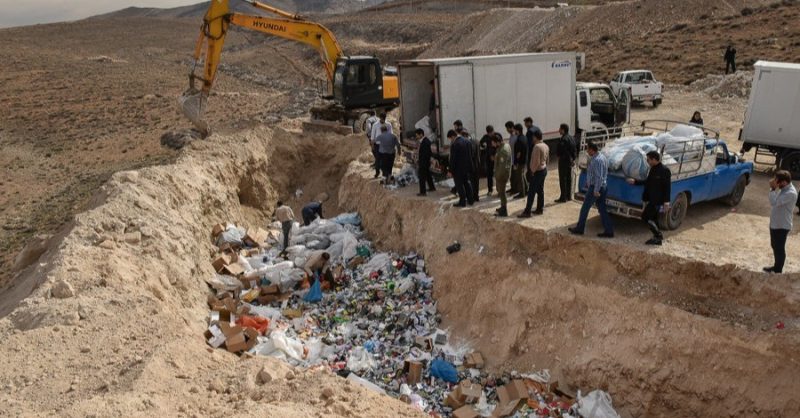
In response, the Iranian government has introduced measures such as promoting emergency numbers for public inquiries and complaints against malpractices such as price hikes, drug smuggling in pharmacies, and counterfeit sales.[19] Furthermore, health officials regularly announce surprise inspections in privately owned pharmacies. For instance, a government news agency reported that in less than a year, in the city of Shiraz, over 5,000 inspections were conducted across 602 private pharmacies, detecting the “presence of drugs outside the country’s official list.”[20] These measures indicate the evolution of fake-talk from a concept associated with unregulated markets to a significant concern within the formal pharmaceutical system.
The Diaspora Iranians
Iranians living abroad have become inadvertent suppliers and couriers of medicines to their kin back home. Their involvement is not only logistical; it grows out of familial responsibility, a form of transborder care built on trust.
For instance, I recently received a parcel from a friend in Bristol, UK, destined for her family in Iran. In it were everyday items like hair and nail supplements, vitamins, and even medical shoes. Also, last year, while visiting Iran, I delivered a bottle of “Natural Joint Pain Supplements with Turmeric, Boswellia, and Snail” to my grandmother after my grandfather had insisted on their benefits. My grandmother now claims these pills have “miraculously cured her,” but she refuses to take Iranian or other imported versions of the supplement since her supply ran out.
While these items might seem ordinary, they do more than meet physical needs: they carry familial obligation, affection, and reciprocity. The supplements, though potentially on par with Iranian equivalents in quality, are cherished for their perceived superiority—a perception not solely attributable to their foreign branding but also to a phenomenon I describe as ‘affective authentication’. By this, I refer to the emotional and moral value embedded in these manifestations of transnational care, where giving exceeds simple transaction and where commodities acquire added layers of perceived efficacy and safety through the relational ties that accompany their transfer, rather than through regulatory approval or clinical verification.
However, diaspora Iranians face ethical quandaries as they navigate their dual role as caregivers and agents within an informal pharmaceutical network, highlighting broader challenges in global health. They must tread a fine line between delivering vital care and potentially disrupting local healthcare infrastructures or breaching regulations. In doing so, the Iranian diaspora’s contribution to the pharmaceutical supply becomes more than just a matter of logistics; it shows how care, trust, and cultural identity shape global pharmaceutical markets and the dynamics of fake-talk. The process of affective authentication subverts traditional debates around authenticity, typically dichotomised into genuine versus counterfeit categories, by introducing a third dimension of authenticity that is emotionally and culturally constituted. This form of authentication, therefore, surpasses the conventional metrics of pharmaceutical quality and standards by elevating the perceived value and trustworthiness of otherwise suspect drugs.
The Dalals
Dalals, or brokers, play a crucial role in Iran’s Bazaar-e Daru, offering essential access to the international medicine market and filling gaps left by official distribution channels. They navigate both formal and informal pharmaceutical networks, frequently interacting with healthcare professionals and travellers. Beyond merely managing the flow of medicines, dalals engage in a broader spectrum of activities that redefine traditional brokerage roles.
Healthcare professionals, who control the official medicine distribution network, sometimes channel domestically produced or officially imported medicines to dalals. This practice shifts the legal risks associated with illegal sales to dalals, rather than the healthcare professionals themselves. In turn, dalals occasionally supply medications to private pharmacies and doctors, collaborating with third-party suppliers and smugglers to import medicines. Their reliance on suitcase-smuggling by Iranian tourists and diaspora travellers, who execute orders for a fee, underscores their connected role.
Operating within this partially informal and unregulated market, dalals inadvertently challenge the government’s pharmaceutical policies. They face constant monitoring and intermittent, yet severe, policing as part of broader anti-smuggling initiatives. These initiatives aim to prevent or eradicate the perceived contribution of dalals to the illegal distribution of dangerous ‘fake’ pharmaceuticals in Iran.[21] As such, the cautionary aspect of dealing with dalals lies in navigating the blurred lines of legality and authenticity. Patients seeking access to medicines must discern the right sources amid a complex web of information and uncertainty. This confusion is often compounded by competing claims and assurances from various middlemen within the Bazaar-e Daru.
A particularly intriguing aspect of dalals’ role is their emulation of medical expertise. As demonstrated by Davood and Maryam’s interaction discussed in the introduction, Davood not only identifies the medication Maryam seeks for her mother’s heart condition but also confidently assures its authenticity and quality by specifying the brand and expiration date. Dalals like Davood frequently offer advice on the use cases, side effects, and efficacy of medicines, displaying a comprehensive knowledge of the illicit market’s offerings. This performance of expertise goes beyond mere salesmanship; it positions them as unofficial arbiters of authenticity, efficacy, and quality in the Bazaar-e Daru.
Based on these dynamics, dalals represent an alternative, or at times complementary, segment to the official healthcare structure. Their ability to anticipate market demands, to procure and circulate otherwise scarce drugs, and most importantly to authenticate them to consumers not only reflects their critical role in maintaining informal markets but also their influence over the discourse of ‘fake talk’. The scope of dalals’ influence, however, stretches far beyond their contributions to pharmaceutical markets. Their operations extend into the distribution of medical equipment, health supplements, cosmetics, and even specialisedfood products. Moreover, dalals with higher financial and social credit may assume advisory roles, offering insights into navigating Iran’s import-export regulatory environment and acting as pseudo-solicitors or business logistics experts.
These roles and functions embed dalals into the broader informal economy of goods and services in Iran and position them as unofficial mediators, arbiters, and regulators of the healthcare system. As mediators, they bridge the gap between formal and informal pharmaceutical and medical networks. At the same time, as arbiters, they assess the quality and authenticity of healthcare commodities, including pharmaceuticals, mostly through dialogue rather than empirical evidence. Their regulatory role involves managing the risks and legal aspects of pharmaceutical distribution, thereby influencing market volatility and playing a key role in Iran’s healthcare system.
Conclusion
In concluding the investigation into Iran’s pharmaceutical markets, I have explored the network of middlemen: pharmacists, diaspora Iranians, and dalals. These intermediaries, far from being mere participants in an illicit economy, assume critical roles in shaping access to, and perceptions of, drug authenticity and safety amidst international sanctions and state policies driven by pharmaceutical nationalism.
Iran’s attempt to assert sovereignty over pharmaceuticals is marked by a clear contradiction. Volatility in the drug market, ongoing scarcities, dependence on international sources for raw materials, and widespread scepticism towards domestic pharmaceuticals among the Iranian populace all highlight the challenges to the government’s aspirations for sovereignty and its promises of self-sufficiency. The ethnographic evidence shows a gap between state claims and patients’ everyday experiences of searching for medicine.
Moreover, middlemen in this context facilitate access to medicines while enacting a vernacular politics of pharmaceutical care that both borrows from and unsettles state pharmaceutical nationalism. In dissecting the roles and narratives of middlemen, this article highlights how these individuals collectively construct a parallel healthcare infrastructure—one that is critiqued for perpetuating the circulation of drugs claimed to be fakes or counterfeits, and is labelled as illegal, yet simultaneously occupies a conspicuous and seemingly indispensable role in sustaining the current pharmaceutical ecosystem in Iran.
I therefore do not argue that dalals, pharmacists, and diaspora Iranians simply broker state pharmaceutical nationalism. They mediate and unsettle it. State pharmaceutical nationalism defines sovereignty through domestic production, formal regulation, and reduced dependence on foreign suppliers. Informal intermediaries redraw these boundaries in practice by making foreign, smuggled, or diaspora-sourced medicines appear necessary, trustworthy, and socially legitimate when they secure treatment for Iranian patients. The nationalism enacted here is less a doctrine of state self-sufficiency than a vernacular politics of pharmaceutical care, in which the nation is invoked through the obligation to keep Iranians alive, even when doing so requires routes the state marks as unauthorised or suspect. The Iranian case shows that pharmaceutical nationalism is not realised only through factories, subsidies, import controls, or regulatory agencies. It is also negotiated through informal markets, brokers, pharmacists, patients, and diaspora circuits that compensate for the failures of official provision. These actors do not stand outside the national pharmaceutical project. They redraw its boundaries by deciding which medicines can be trusted, which routes are legitimate, and whose authority counts in moments of scarcity. Fake-talk is the language through which these judgements are made. It allows state officials to mark informal circulation as dangerous, while enabling consumers and dalals to question the authenticity of domestic production and to legitimise alternative routes of access. Pharmaceutical nationalism in Iran, therefore, appears as a contested field in which sovereignty, care, suspicion, and circulation are continually brokered.
References
[1] A ‘dalal’ in the context of the Iranian pharmaceutical trade refers to a middleman who facilitates the distribution and authentication of medicines, predominantly within informal markets.
[2] Hornberger, J., & Hodges, S. (2023). Fake-talk as concept and method. Medicine Anthropology Theory, 10(3), 1–22. https://doi.org/10.17157/mat.10.3.7291
[3] Hayden, C. (2007). A Generic Solution? Pharmaceuticals and the Politics of the Similar in Mexico. Current Anthropology, 48(4), 475–495. https://doi.org/10.1086/518301
Mentanko, J. (2023). The limits of pharmaceutical internationalism: Mexico, the Third World, and the resource of medicinal plants in the 1970s. Humanity: An International Journal of Human Rights, Humanitarianism, and Development, 14(1), 85–101. https://doi.org/10.1353/hum.2023.a902632.
[4] Cheraghali, A. M. (2017). Trends in Iran Pharmaceutical Market. Iranian Journal of Pharmaceutical Research : IJPR, 16(1), 1–7. https://www.ncbi.nlm.nih.gov/pubmed/28496457
[5] Aloosh, M., & Aloosh, A. (2015). Lift sanctions now to save public health. Nature, 520(7549), 623. https://doi.org/10.1038/520623c
Setayesh, S., & Mackey, T. K. (2016). Addressing the impact of economic sanctions on Iranian drug shortages in the joint comprehensive plan of action: promoting access to medicines and health diplomacy. Globalization and Health, 12(1), 31. https://doi.org/10.1186/s12992-016-0168-6
Yazdi-Feyzabadi, V., Amini-Rarani, M., & Delavari, S. (2020). The Health Consequences of Economic Sanctions: Call for Health Diplomacy and International Collaboration. Archives of Iranian Medicine, 23(4Suppl1), S51–S53. https://doi.org/10.34172/aim.2020.s11
[6] Yousefi, N., Moradi, N., Dinarvand, R., Ghiasi, G., Inanloo, H., & Peiravian, F. (2019). Policies to improve access to pharmaceutical products in shortage: the experience of Iran food and drug administration. Daru: Journal of Faculty of Pharmacy, Tehran University of Medical Sciences, 27(1), 169–177. https://doi.org/10.1007/s40199-019-00259-2
Kheirandish, M., Rashidian, A., Kebriaeezade, A., Cheraghali, A. M., & Soleymani, F. (2015). A review of pharmaceutical policies in response to economic crises and sanctions. Journal of Research in Pharmacy Practice, 4(3), 115-122. https://doi.org/10.4103/2279-042X.162361
Olyaaeemanesh, A., Jaafaripooyan, E., Abdollahiasl, A., Davari, M., Mousavi, S. M., & Delpasand, M. (2021). Pharmaceutical subsidy policy in Iran: a qualitative stakeholder analysis. Health Research Policy and Systems, 19(1), 150. https://doi.org/10.1186/s12961-021-00762-6
Hosseini, S. A. (2013). Impact of sanctions on procurement of medicine and medical devices in Iran; a technical response. Archives of Iranian Medicine, 16(12), 736–738. https://www.ncbi.nlm.nih.gov/pubmed/24329148
Mohammadi, D. (2013). US-led economic sanctions strangle Iran’s drug supply. The Lancet, 381(9863), 279. https://doi.org/10.1016/s0140-6736(13)60116-6
Davari, M., Walley, T., & Haycox, A. (2011). Pharmaceutical policy and market in Iran: past experiences and future challenges. Journal of Pharmaceutical Health Services Research: An Official Journal of the Royal Pharmaceutical Society of Great Britain, 2(1), 47–52. https://doi.org/10.1111/j.1759-8893.2011.00042.x
[7] YJC News Agency. (2018, November 20). 97% of the country’s needed drugs are domestically produced: We have no imports in the field of radioactive drugs [News article]. Retrieved from https://www.yjc.ir/00SGFz
[8] Mehr News Agency. (2019, October 17). The capacity of drug production in Iran is 4.5 times the domestic demand. Retrieved from https://mehrnews.com/xQp8h
[9] Tehran Times. (2019, July 22). Iran able to produce 90% of needed pharma raw materials: VP. Retrieved from https://www.tehrantimes.com/news/438445/Iran-able-to-produce-90-of-needed-pharma-raw-materials-VP
[10] Kheirandish, M., Varahrami, V., Kebriaeezade, A., & Cheraghali, A. M. (2018). Impact of economic sanctions on access to noncommunicable diseases medicines in the Islamic Republic of Iran. Eastern Mediterranean Health Journal = La Revue de Sante de La Mediterranee Orientale = Al-Majallah Al-Sihhiyah Li-Sharq Al-Mutawassit, 24(1), 42–51. https://www.ncbi.nlm.nih.gov/pubmed/29658620
[11] Karimi, M., & Haghpanah, S. (2015). The effects of economic sanctions on disease specific clinical outcomes of patients with thalassemia and hemophilia in Iran. Health Policy, 119(2), 239–243. https://doi.org/10.1016/j.healthpol.2014.12.011
Shahabi, S., Fazlalizadeh, H., Stedman, J., Chuang, L., Shariftabrizi, A., & Ram, R. (2015). The impact of international economic sanctions on Iranian cancer healthcare. Health Policy, 119(10), 1309–1318. https://doi.org/10.1016/j.healthpol.2015.08.012
[12] Radio Farda. (2020, October 20). Iran’s Insulin Shortage Prompts Scrutiny. Retrieved from https://en.radiofarda.com/a/iran-s-insulin-shortage-prompts-scrutiny/30903314.html
[13] Ebadi Fardazar, F., Sarabi Asiabar, A., Safari, H., Asgari, M., Saber, A., & Ebadi Fard Azar, A. A. (2019). Policy Analysis Of Iranian Pharmaceutical Sector; A Qualitative Study. Risk Management and Healthcare Policy, 12, 199–208. https://doi.org/10.2147/RMHP.S209318
[14] Sirrs, C. (2023). Fluid Fakes, Contested Counterfeits: The World Health Organization’s Engagement with Fake Drugs, 1948–2017. Medicine Anthropology Theory, 10(3), 1-29. https://doi.org/10.17157/mat.10.3.7234
[15] “Bazaar-e Daru,” as a term, does not have any reference to its shadowy nature. It means “Pharma Market” and can be used to refer to the Pharma Market in general. Nevertheless, it is commonly and colloquially used to refer to the availability of pharmaceuticals beyond the official and regulated service providers within the healthcare system. Therefore, it creates an undertone of informality/illegality in its use. Here, I use these terms in an ambivalent moral-legal sense, whereby the Bazaar operates in an oxymoronic state of illegality and informality.
[16] Sabbagh-Bani-Azad, M., & Varastehmoradi, B. (2017). Regular inspection and committing major malpractices: Case of Pakdasht pharmacies. Journal of Pharmacoeconomics and Pharmaceutical Management, 3(1/2), 5–11. https://jppm.tums.ac.ir/index.php/jppm/article/view/34
[17] Khabar Online. (2023, May 13). Cancer drugs are not easily found / Gardasil vaccine is obtained from the black market. Retrieved from https://www.khabaronline.ir/xk2pz
[18] Shahverdi, S., Hajimiri, M., Pourmalek, F., Torkamandi, H., Gholami, K., Hanafi, S., Ashrafi Shahmirzadi, N., & Javadi, M. (2012). Iranian pharmacists’ knowledge, attitude and practice regarding counterfeit drugs. Iranian Journal of Pharmaceutical Research : IJPR, 11(3), 963–968. https://www.ncbi.nlm.nih.gov/pubmed/24250525
[19] Student News Agency. (2022, April 30). How to follow up on the profiteering and violations of pharmacies? Retrieved from http://snn.ir/fa/news/1007947
[20] IRIB NEWS AGENCY. (2018, December 8). Contact this system for drug complaints! Retrieved from https://www.iribnews.ir/009daX
[21] Fakhrzad, N., Yazdi-Feyzabadi, V., & Fakhrzad, M. (2024). Drivers of vulnerability to medicine smuggling and combat strategies: a qualitative study based on online news media analysis in Iran. BMC Health Services Research, 24(1), 383. https://doi.org/10.1186/s12913-024-10805-7