A workshop report of Symbiotic Viruses, convened by Benjamin Hegarty and Frédéric Keck, and held at the Collège de France and Paris Institute for Advanced Study, 4-5 March 2025
1. The virology of history
The idea that viruses might be addressed as potential allies in human health is a tantalising yet troubling prospect. In the aftermath of the COVID-19 pandemic, and the Trump administration’s ideologically driven attack on fundamental tenets of post-World War II global health and infectious disease surveillance infrastructure, a biopolitical critique of Pasteurian paradigms is insufficient. These developments have generated renewed uncertainty and urgency about what it means to “live together” with viruses under contemporary political and economic conditions of enduring inequality and neglect. Indeed, an emergent “viral turn” in the social sciences addresses these questions by attending to viruses as agents with specific stories to tell about the concept of symbiosis.

Symbiotic thinking, rooted in biological understandings of the microbial relations that make life on Earth possible, played a role in shaping the scientific and political concerns grounded in ecological reasoning in the 1970s (Lovelock 1979). This reflected an emergent concern for the environmental impact of human development at a planetary scale. A parallel discussion at the time interrogated the impacts of globalisation and inequality on health, including infectious disease ecology (Lederberg 1996). Since this time, threats to human health in the form of anti-microbial resistance and emerging infectious diseases have led to greater attention to the unexpected impacts of human interventions into microbes and their ecologies. This led to reconsideration of the role and stakes of considering how viruses as a part of and beyond histories of human intervention.
These concerns animated a workshop held at the Collège de France on 4 March and at the Paris Institute for Advanced Study on 5 March 2025, held as part of Benjamin Hegarty’s French Institutes for Advanced Studies (FIAS) fellowship on symbiotic viruses. The workshop began by situating viruses in the wave of “microbiomania” (Helmreich 2015, 65) that has swept through social theory since the 2010s. In the context of proliferating social theory which draws inspiration from the microbiome, viruses have often been neglected in favour of more charismatic bacteria. When viruses have attracted interest in the social sciences, closely linked to the study of infectious disease, they have frequently been framed in terms of a familiar doxa: that each new epidemic precipitates an epistemic rupture. Such claims of conceptual transformations made in reference to the COVID-19 pandemic, including those shaped by the origins of SARS‑CoV‑2, loomed large for the participants of the workshop. The workshop sought to critically assess claims of epistemic novelty promoted by viruses and viral pandemics by prompting an empirically grounded interdisciplinary conversation.

Participants in the workshop centred the conceptual and political challenges that viruses pose as empirical objects and as figures invested with symbiotic imaginaries. The organisers proposed the notion of the virology of history as one way of attending to viruses in their material and historical specificity. Just as twentieth‑century pharmaceutical interventions reshaped bacterial evolution and produced antimicrobial resistance at unprecedented scales (Landecker 2016), viral emergence and mutation can be understood as registers of human and non‑human histories. From this perspective, symbiosis is less a question of classifying viruses as beneficial or harmful, than a mode of tracing the complex, shifting forms that viruses assume in relation to the consequences of human management and intervention across forms of life.
2. Symbiotic viruses
This workshop started with a set of shared questions: What does attending carefully to the interdisciplinary study of viruses make visible about the use of symbiosis as a theoretical concept in the social sciences? How is symbiotic thinking positioned within contemporary political and social investments in viruses after the COVID‑19 pandemic? Why do epidemics so often invite claims that they herald an epistemic rupture or transformation? Reflecting shared theoretical commitments, the workshop responded to these questions by bringing together scholars working on infectious disease, zoonosis, ecology, antimicrobial resistance, phage therapy, and related fields. In addition to social scientists and a virologist, artists presented site‑based and performance work that opened speculative perspectives on microbial futures with shared ecologies.

While the stakes of understanding viruses are clear, one starting point was to understand how viruses have been defined, and what possibilities social scientists have with engaging with the science of viruses and its practitioners. Viruses, entangled with the cellular machinery of host cells, prompt generative insights into the implications of symbiosis across species lines. This recalls the longstanding problem of viruses as challenging objects of scientific analysis, which prompted the development of sophisticated technological prosthetics to be able to render them visible in the 20th century.
For example, in the 1950s, virologists working with the first electron microscopes showed that when viruses are “alive,” they are so fundamentally entangled with host cells that they cannot be perceived at all (Angela Creager). Gene sequencing technologies have revealed new insights into humans’ ancient evolutionary entanglement with viruses, including the capacity for memory (Eben Kirksey). Evidently, these aspects of viruses are not easily captured within a dominant language of biosecurity. However, even within the conceptual apparatus of biosecurity, interspecies encounters generate alternate ways of seeing and knowing what viruses are (Frederic Keck).
3. The ecology of viruses
That viruses are closely linked to the technologies and expertise that make them visible as objects of study draws attention to questions of politics and power. This is evident in both the anthropocentrism inherent to many ways of describing viruses, and some of the risks posed by symbiosis as a potential state of equilibrium that frames some bodies, both human and non-human, as more disposable than others. The complex ecological, social, and epidemiological factors that transform non-human viruses into virulent pathogens requires a detailed understanding of the meanings of ecological relations and the knowledge used to produce it.
How do symbiotic viruses become pathogenic in the context of shifting ecological conditions at a planetary scale? One answer to this question emerges in the role diverse hosts have played in shaping understandings of what viruses are. For example, as an intermediate host for rabies, the virome of bats reveals new insights into emergence as the condition of specific and constantly transforming ecologies (Hervé Bourhy). Rodents are another group of animals that have enabled advances in virological knowledge, as was the case in the way that mpox contributed to new knowledge across rodent biodiversity, taxonomy, phylogeny, and biogeography (Jules Villa). Rather than limited to genetic studies, ecological understandings of viruses can also be studied ethnographically at the junction of human-induced crises, rather than addressed as a return to a naïve utopian vision of natural balance.
For example, close ethnographic attention to how Chinese market holders navigated a regulatory context that forbade the sale of live poultry but for which there was strong market demand, revealed other unseen, social relations between traders, buyers, and wholesalers, within which viruses circulated and came to be assigned meaning (Nan Nan). In the case of SARS‑CoV‑2, new multispecies approaches can help to study patterns of viral exchange in the context of altered ecologies and adapted immune systems. Rather than a politics of knowledge concerned with origins, SARS‑CoV‑2 can instead be interpreted as a mutant swarm, one usefully articulated in terms of symbiosis as a continuum of relations, which can harm or potentially provide benefits under specific conditions (Eben Kirksey).
4. Viruses in the web of life
The position of viruses within the web of life can help to decentre anthropocentric tendencies in infectious disease research and more recent One Health frameworks. Such a view questions the logic of separation of animals from humans in a study of shared virological profiles of human and non-human primates. At a changing forest edge in Central Africa, a complex world of virus-sharing reflects a web of life, encompassing diverse relations between humans, animals, and ecologies (Tamara Giles Vernick, Romain Duda, Victor Narat). Such a web of life is not always a benevolent form of symbiosis. In the case of the mpox epidemic, the rapid growth in cases since 2000 and subsequent mutation into new clades demands attention to shifting viral ecologies and viral temporalities. Indeed, the eradication of smallpox – and cessation of vaccination from the 1970s — led to a decline in cross-immunity for mpox, as massive transformation in ecosystems led to a proliferation and synanthropisation (wherein an undomesticated animal comes to live in close association with humans) of small rodents (Camilles Besombes).
The altered biologies of humans after smallpox, combined with altered ecologies and civil unrest, contributed to a generation of new subclades of mpox with pandemic potential. What biological insights might draw greater attention to the consequences of human intervention into ecologies and in turn shared viromes in a web of life? French theoretical biologist Jacques Leibowitch’s ecological perspective on HIV offers one potential perspective. Arguing against the grain that AIDS was an immune deficiency syndrome, Leibowitch presented a theory in which the body was an ecosystem with competing pathogens, and in which relationships with retroviruses may take non-aggressive forms (Guillaume Lachenal). Situating this biological history in the context of broader ecological research on zoonotic viruses raises important questions about the position of symbiosis at the level of human disease in a fraught and politicised context of scientific discovery, for HIV/AIDS and beyond.
5. Viral therapeutics
What is clear is that discussion about viruses must take account of the conditions of the host and environment that they inhabit. The quality of different viruses gave rise to distinct the infrastructures oriented towards therapeutic outcomes. The UK’s Common Cold Research Unit (1946-1990) was designed to provide a means of studying usually mild infections under controlled conditions, with human volunteers recruited under the guise of a “free” holiday in the spirit of post-World War II voluntarism and recreation. Yet ironically, while outwardly purporting to be “waging war” on causes of the common cold, researchers also had to find ways of allowing cold viruses and humans to be able to live together (Beth Greenhough). In this case, the infrastructure for studying the virus reflected a “domestic” orientation, shaped by its biological characteristics.
Such forms of living together, framed as symbiosis, are usually considered in terms of one classical definition of the term: the persistent living together of unrelated organisms. Yet such a definition of symbiosis may struggle to account for a spectrum of ever-changing relationships between entities that are formed and transformed by the relationship between them. The concept of pluribiosis allows for the integration of social, biological, economic and political dimensions, perhaps suggesting greater possibility for political participation and intervention in seemingly intractable problems for human health, such as anti-microbial resistance (Charlotte Brives). The pluribiotic quality of viruses is also reflected in long histories of the reuse and sharing of bacteriaphages as a component of a shifting order of health from the 1940s to 1990s, again revived in the context of anti-microbial resistance (Claas Kirchhelle). The rise of molecular technologies has revealed many viruses in human blood that make pluribiosis a specific kind of problem. The GB virus, nicknamed “good boy,” was identified as a viral stowaway with unexpected benefits for its hosts, identified in 1990s research on hepatitis and HIV/AIDS before treatment was widely available (Benjamin Hegarty). Each of these examples illustrates the pluribiotic potential of viruses in relation to therapies and vaccines at the intersection of political, economic, and technological transformation.
6. Knowing viruses otherwise
Viruses provide a fascinating lens on what, following Hannah Landecker (2016), the workshop organisers dubbed the virology of history. The virology of history helps to track the effects of human intervention and non-human agency in the context of altered ecologies and unequal economic systems. This requires going beyond a view of symbiosis as a master metaphor that surfaces an idealised, natural state. Rather, the meanings attached to relations with viruses as symbiotic are also shaped by the specific scientific, technological, political, social and biological conditions of a given moment.
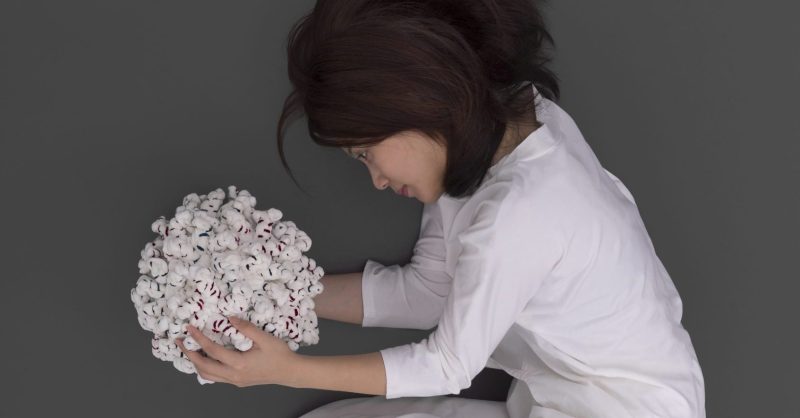
For example, James Lovelock was a scientist who worked for the UK’s Common Cold Research Unit during the Cold War. Understanding this context may help to better contextualise the intellectual history of both his and Margulis’s shared visions of Gaia as a cybernetic system. Perhaps Lovelock’s experiences of the claustrophobic containment of the lab as an enclosed environment, and reflection of recognition of shared dependencies, emerged via the specific conditions of post-WWII and the Cold War world order. The limits of scientific knowledge demand an open and humble invitation to greater public participation in the process of imagining relations with viruses. To this end, the workshop included two artistic interventions on the edge of the River Seine which invited a sensory experience of symbiotic relations with viruses (Pei Ying-Lin and Enoki Collective).
Viruses help to problematise the concept of the individual, given their capacity to share genes, operating in a way as a mechanism of genetic transfer across species. This leads to a concluding question of the relevance of viruses to social theory. Does recent concern for viruses among social scientists reflect a shift away from stable cellular self to fast-mutating, omnipresent, and hybrid virus-self, a vision of flexibility and mutation tied to contemporary political and sociological investments? Considering symbiosis in the context of the epistemic meanings granted to specific viruses, and the technological prosthetics used to study them, generates a better understanding of how viruses become pathogenic—or not—under specific conditions. Symbiosis can help to understand the specific ways that human interventions can generate the conditions for viral emergence and spread, as well as position humans and their interventions into microbial worlds as part of a wider web of life.
Videos by Lisette Winkler
References
Helmreich, Stefan. 2015. Sounding the Limits of Life: Essays in the Anthropology of Biology and Beyond. Princeton University Press.
Landecker, Hannah. 2016. ‘Antibiotic Resistance and the Biology of History’. Body & Society 22 (4): 19–52. https://doi.org/10.1177/1357034X14561341.
Lederberg, Joshua. 1996. ‘Viruses and Humankind: Intracellular Symbiosis and Evolutionary Competition’. In Emerging Viruses, edited by Stephen Morse. Oxford University Press.
Lovelock, James. 1979. Gaia: A New Look at Life on Earth. Oxford University Press.
Workshop participants (4-5 March 2025)
- Angela Creager (Princeton University)
- Camille Besombes (Sciences Po)
- Hervé Bourhy (Institut Pasteur)
- Charlotte Brives (University of Bordeaux)
- Romain Duda (Institut Pasteur)
- Tamara Giles-Vernick (Institut Pasteur)
- Beth Greenhough (University of Oxford)
- Claas Kirchhelle (CERMES3)
- Eben Kirksey (University of Oxford)
- Guillaume Lachenal (Sciences Po)
- Christos Lynteris (St Andrews)
- Nan Nan (Laboratory for Social Anthropology, Collège de France)
- Jules Villa (Institut Pasteur)
Artists
- Enoki Collective (Joanna Wong and Christy Nguyen)
- Pei-Ying Lin (Eindhoven/Taiwan)
Acknowledgements
We are enormously grateful to the Paris Institute for Advanced Study (IEA), and the support of Saadi Lahlou and Palius Yamin, for funding received to undertake the workshop as part of Benjamin Hegarty’s FIAS fellowship at the Paris Institute for Advanced Study, and for making available the patrimonial rooms in the historic mansion Hôtel de Lauzun at 17 Quai d’Anjou. We would especially like to thank the staff of the IEA, particularly Sandrine Morvan for her attentive support in formulating the program and ensuring smooth running of the event on the day, as well as Lisette Winkler for her video documentation of the artistic component. We thank participants in the workshop for their generous engagement, as well as non-presenting participants for their interest and contributions. This workshop benefited from funding from the European Union’s Horizon 2020 research and innovation programme under the Marie Skłodowska-Curie grant agreement No 945408, and from the French State programme “Investissements d’avenir”, managed by the Agence Nationale de la Recherche (ANR-11-LABX-0027-01 Labex RFIEA+).