For decades, Homo erectus has played a starring role in the story of human evolution. It is the species credited with longer legs, larger bodies, and the first sustained expansion beyond Africa. Textbooks tend to treat it as a coherent package: a recognizable anatomy that emerged, stabilized, and then spread.
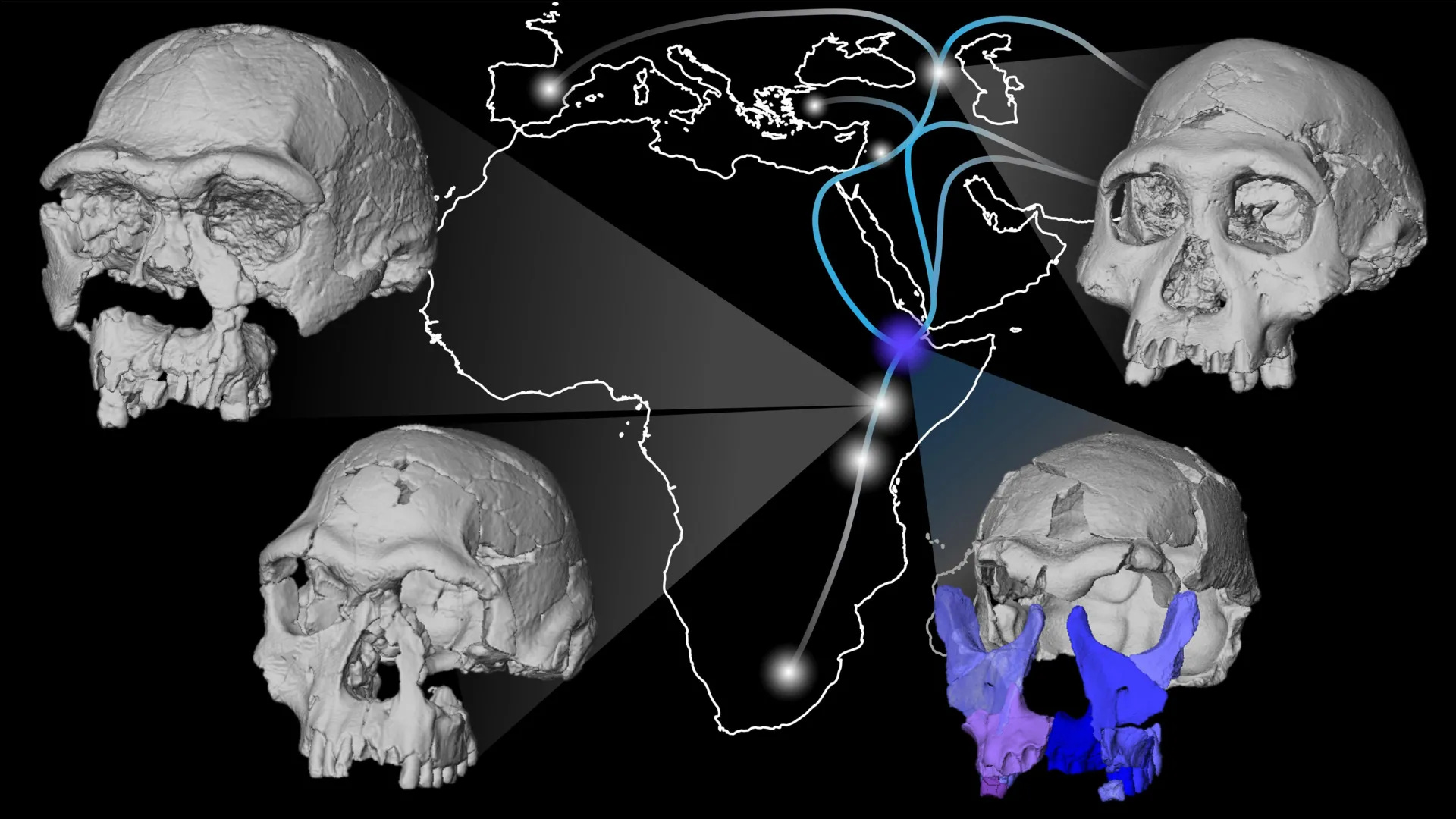
A newly reconstructed skull from Gona, Ethiopia, suggests something messier.
The fossil, known as DAN5 and dated to roughly 1.5 million years ago, looks like Homo erectus where it matters most to classification. The braincase fits expectations. But the face and teeth tell a different story, one that leans closer to earlier members of the genus Homo. The result is a mosaic that resists easy labels and forces a reconsideration of how this influential species came to be.