People love colourful betta fish that swim into view in home tanks. They have bold colours and wide tails and swim with attitude. Just like players choose GameZone Casino for fun, owners want lively spaces where betta fish can thrive. Tank size, clean water, and timely meals are all important, but something deeper goes unnoticed. There is a quiet need beneath the surface of routine checks: mental energy and movement that means more than just staying alive. Enrichment changes how they look around, respond, stop, and start again.
Providing mental stimulation and understanding your betta’s natural habits not only keeps it entertained but also promotes long-term health and activity. This article explores practical ways to enrich your betta’s environment and decode their behaviors so you can enjoy a thriving, playful betta.

Understanding Betta Behavior
Before you give your betta new toys or make changes, watch how it moves. These fish are smart and aware of their surroundings because they react in clear ways. When you run around and poke at plants, it usually feels fine and safe. If it stays behind a decoration for most of the day, something might be wrong. Do you ever rub up against the edges of glass? That habit usually means being uncomfortable, and it might also mean being alone.
The fish sometimes pushes out its gills and fans its fins. This could mean energy or pride. It’s okay to stay like that for a short time, but if you stay like that for too long, it could be bad for you. When males feel safe, they often make floating bubble clusters, which is a mating instinct. These signs can help you make care plans that work with how your betta really acts.
Rotating Decorations and Plants
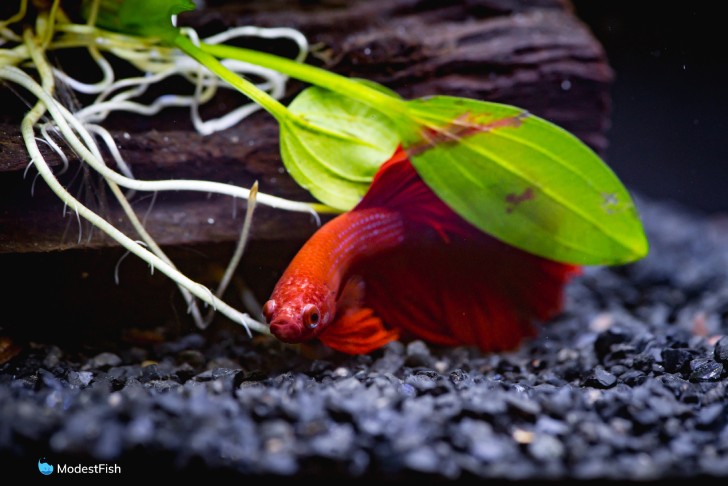
When you move the plants and decorations around, your betta will be more interested. Moving pieces around instead of keeping them still opens up new paths that mimic how this fish naturally swims through water. To make it feel more like the wild, try moving rocks or putting a cave in a different corner every few weeks. Slow changes are important because quick changes could hurt the helpful microbes that live in the glass walls. Throwing in a leaf that is floating or tilting a fake log a little bit could cause bursts of nosing and darting. What looks small to us often means a lot more down below. Stability is still important even when things are changing.
Safe Toys and Interactive Play
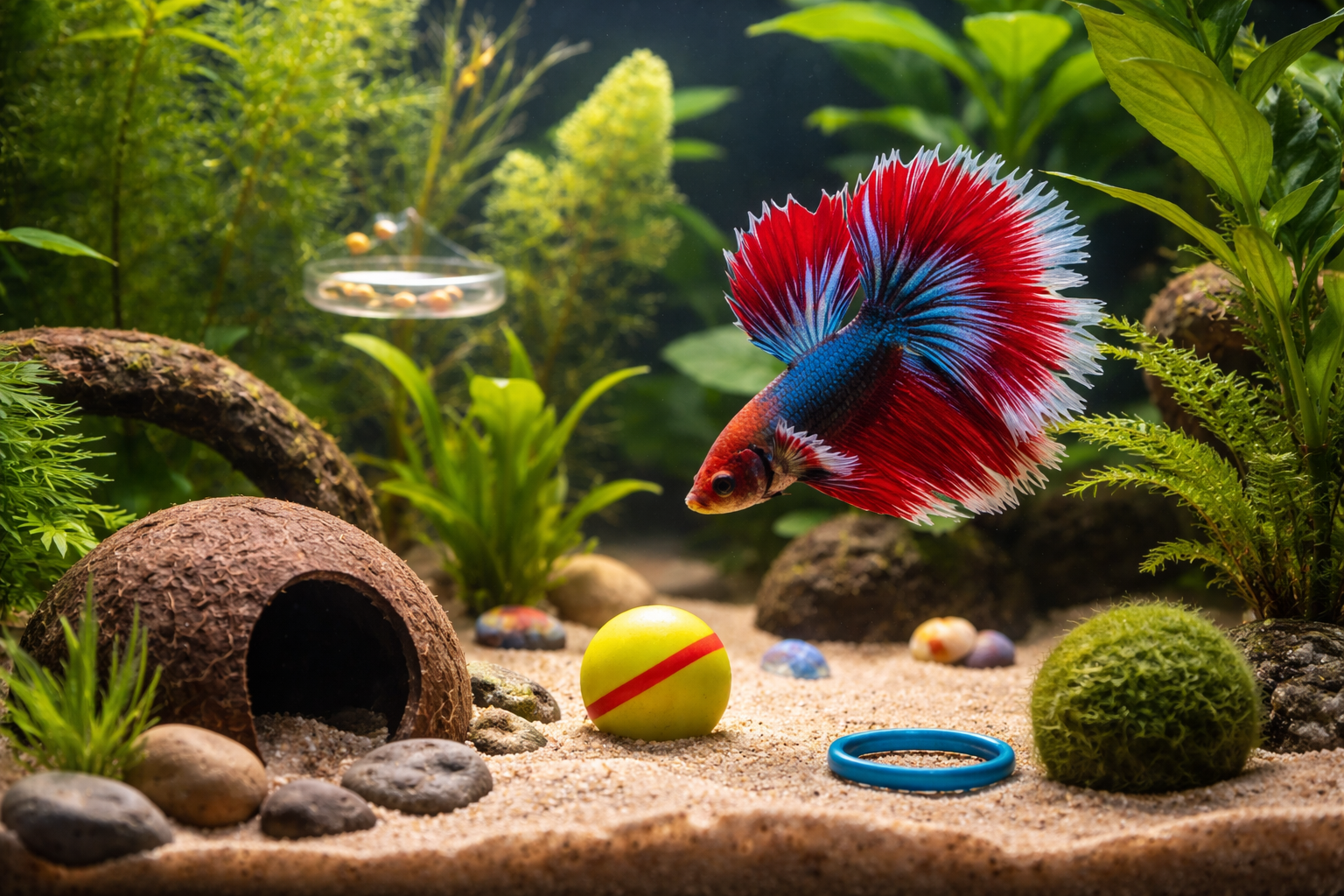
To keep your betta busy, try putting safe things in the tank that are made for fish. You could get your pet to move and be interested by giving them floating ping-pong balls, small tunnels, or a mirror to watch closely. Limit mirror sessions to short amounts of time because too much time in front of one can be stressful. Swimming through or around things keeps you active and your mind sharp. When your fish meets new things in the tank, pay attention to what it likes. That behaviour gives you clues about what it likes. Use those clues to choose new things that it will like.
Creative Feeding Techniques
Your betta can stay sharp and move around during mealtime. Instead of just throwing food down, spread pellets through the plants so the animals have to find them. A feeding ring or slow-release device makes eating take longer, which makes people act in ways that are natural. This makes dinner more interesting and cuts out boring parts. If you keep doing them, your fish might start to look forward to these little puzzles. Routine tasks like these make activity build up slowly.
Target Training and Bonding
A tiny pointer or even the tip of your finger could help a betta learn the small moves it picks up quickly. When you show these fish a mark to follow, they catch on quickly. For example, you can nudge them close to something tasty and then eat it. Think of short games every now and then, nothing too long, just fun times that keep things interesting. Each round slowly builds trust as the two of you work together without rushing or forcing it. Gentle touches help, and so does giving food after a job well done, like giving praise at the right time. When the pressure is low and joy sneaks in every minute, learning happens best.
Encouraging Natural Behaviors
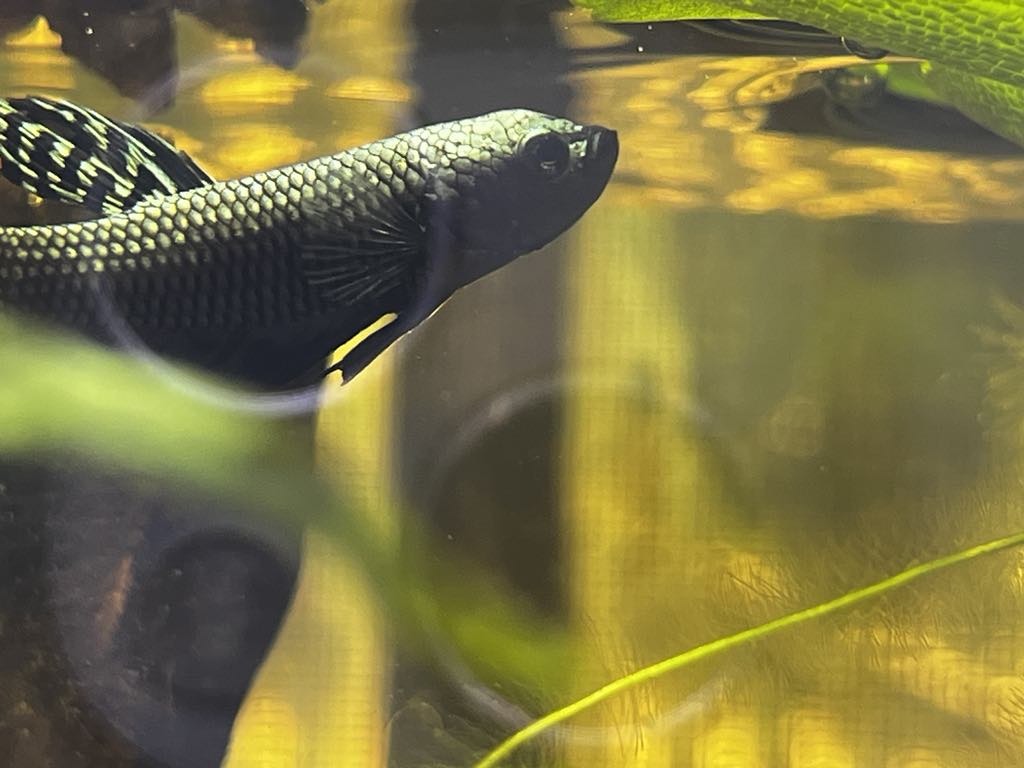
Your betta will act more like itself in a calm place. When males are comfortable, they often make bubble nests at the top. Open surface areas help this behaviour. There are clumps of plants or small shelters below that look like wild hideaways and make people want to explore instead of being scared. You can change your fish’s environment quietly by watching what it does every day. Less time stuck near walls and more time swimming freely thanks to peaceful routines.
Safety Considerations
Adding things can help, but keeping your betta safe is the most important thing. It might get too much change or too much handling, so take it easy. When you look in a mirror, pay close attention for a short time. Things inside the tank need smooth surfaces and no sharp edges. Before putting new things in water, always wash them well. When you add new things, the water conditions often change, so it’s important to check the quality. Keeping an eye on things helps keep things stable, which is important. The betta can play and change without stress as long as the steps are followed. Even when something new comes into view, comfort comes from consistency.
Final Thoughts
Seeing how your betta acts can help you make the environment better. Changing plants from time to time gives you new things to look at without adding stress. If you check for sharp edges first, floating things might be interesting. Meals became puzzles that made people eat more slowly and made them curious. If you see tiny bubbles rising, it could mean nesting. Give that instinct some room. When energy fades, shadows under leaves make quiet places. Changes that are too big can mess up routines, so small steps are best. Safety is always more important than variety. A steady mix of calm and change will help make the future better.