Nestled along Belize’s central coast, Gales Point Village is a unique community where rich Maroon cultural heritage meets some of the country’s most important coastal ecosystems. Yet, the village faces growing threats from climate change, including coastal erosion, habitat loss, and declining biodiversity. But Gales Point is more than a coastline. It is home. A place shaped by the sea, by tradition, and by a community that has lived with nature for generations.
Through the Strengthening Climate Resilience, Saving Endangered Species, and Improving Livelihoods Project, funded by the Government of Canada through the Local Engagement Action Fund (LEAF), this historically marginalized Maroon Creole community began turning vulnerability into leadership. Working in collaboration with the Clearwater Marine Aquarium Research Institute (CMARI), residents and young people became active partners in restoring habitats, protecting endangered species, strengthening livelihoods, and building a more resilient future.
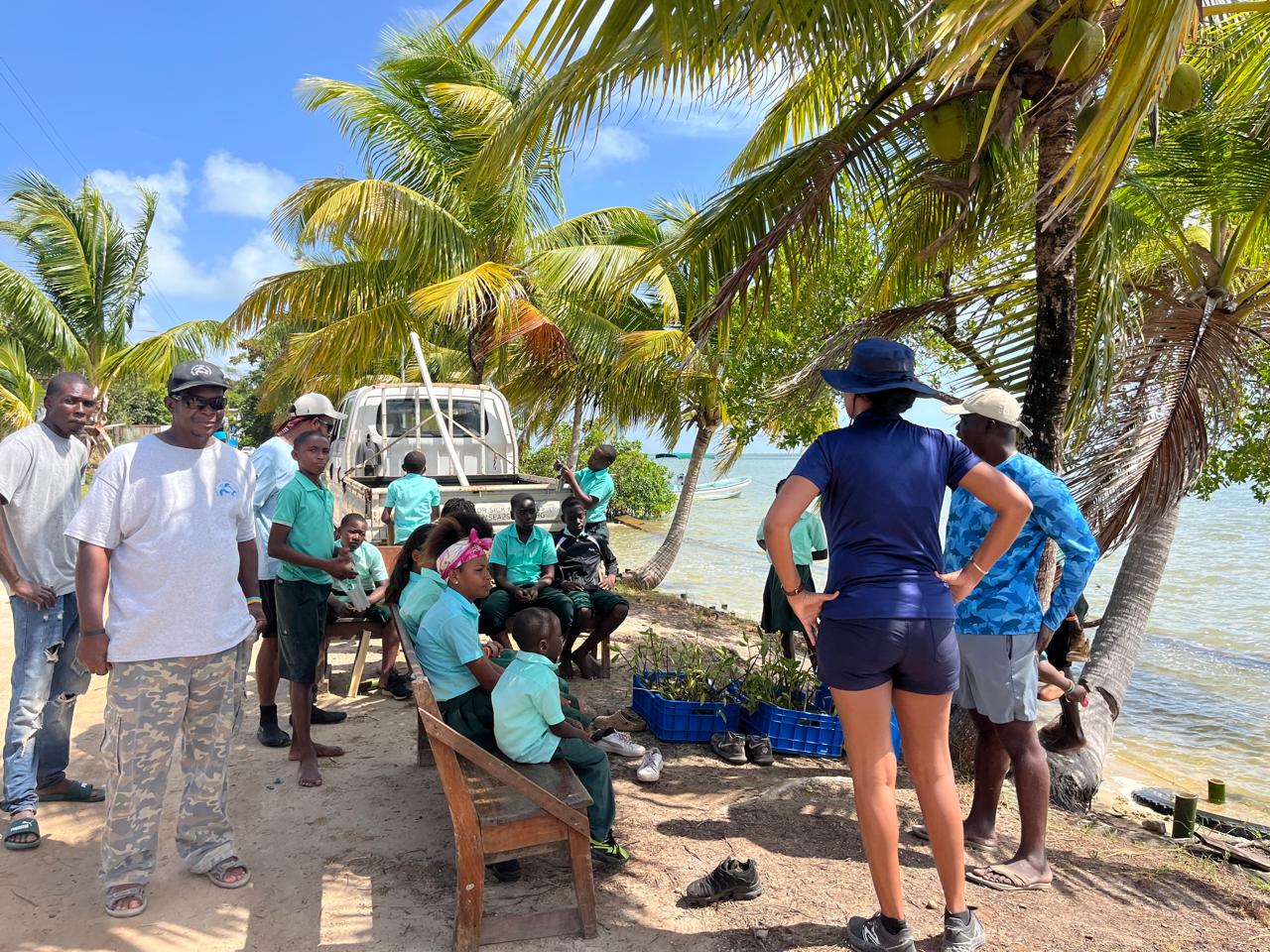
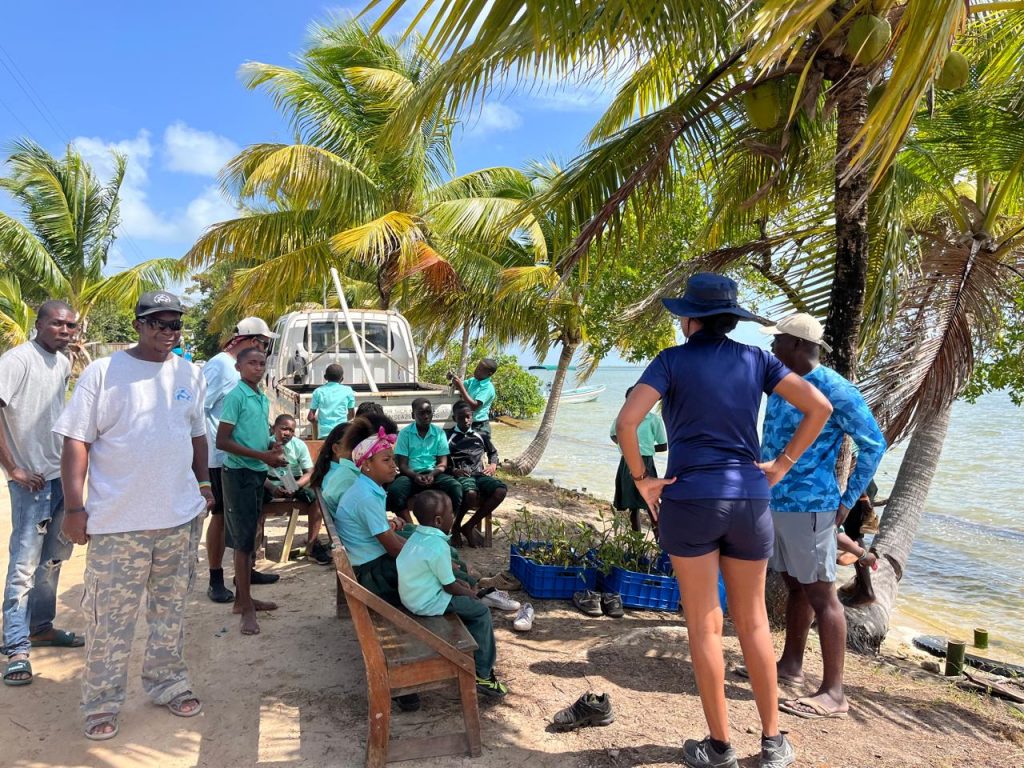
Over the past 18 months, community members and youth have played a leading role in restoring critical habitats. More than 1,100 mangrove seedlings were planted by 57 youth along the eroding shoreline of the Gales Point peninsula. These mangroves are helping stabilize the coast while creating important habitat for marine wildlife, fostering youth stewardship, and bolstering community ownership of climate adaptation. Mangroves replanted under this project have an overall success rate of 70%. This result reflects not only technical restoration work, but also the commitment of local youth and community members who participated in planting, monitoring, and learning how mangroves protect the coastline. Additionally, 13 youth volunteers participated in seagrass monitoring surveys, collecting valuable data to help guide future conservation efforts and support the recovery of this critical ecosystem.
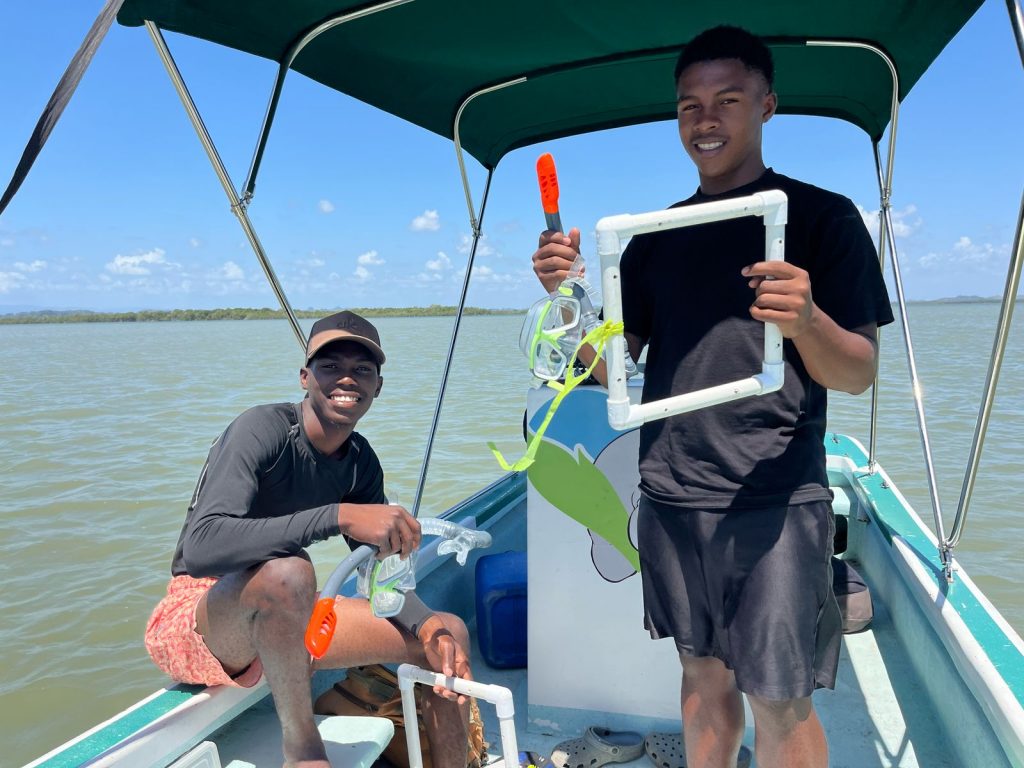
The restoration work was deeply connected to community priorities. Residents helped select the mangrove restoration site to protect the village cemetery from the impacts of coastal erosion. Restored mangroves can also support local livelihoods by providing nursery habitat for fish, shrimp, and other marine species on which coastal fishing communities depend. For Gales Point, this was not simply a technical decision. The cemetery is a place of memory, ancestry, and cultural significance. Protecting it meant protecting a part of the community’s history and identity.
While mangroves fortified the coastline, an entirely different transformation was taking root inland. Given Gales Point’s remote location, limited public transportation, and low economic activity, many residents face restricted access to fresh produce and livelihood activities. This project responded to this reality through an innovative agroforestry initiative designed to strengthen food security, improve nutrition, restore degraded land, and create long-term economic opportunities. 21 villagers worked alongside agricultural experts to establish a community forest garden on a one-acre plot. For families in Gales Point, the forest garden is more than a restoration site. It is a practical investment in nutrition, household resilience, and future income.
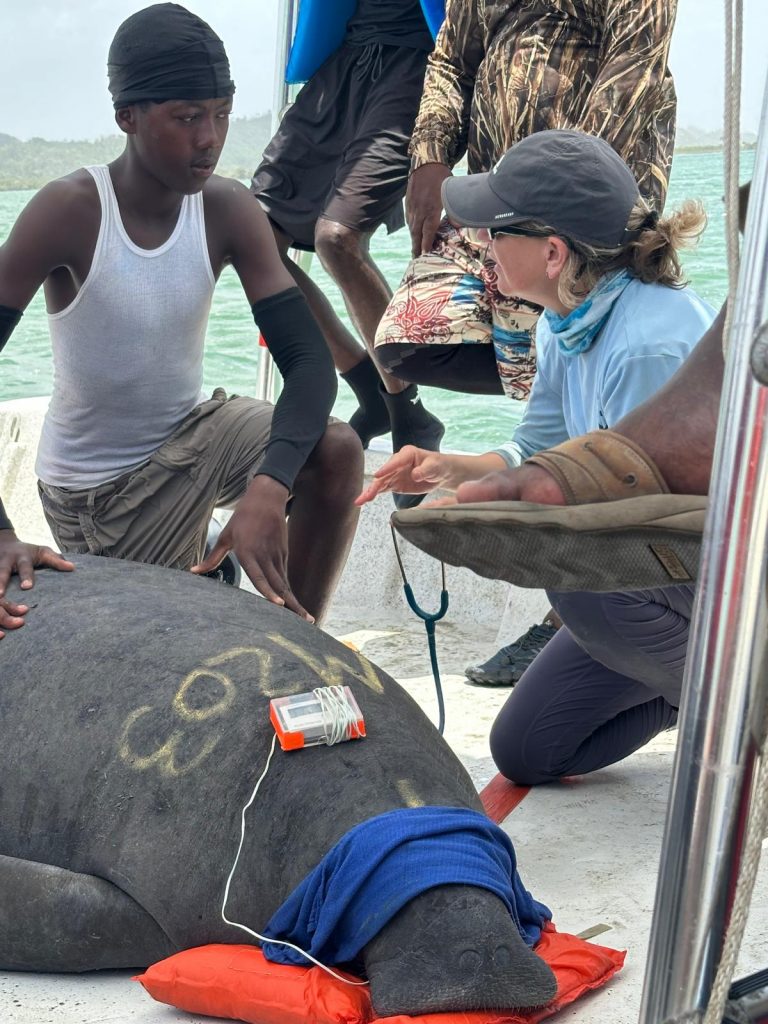
Conservation efforts also extended to Belize’s Greater Caribbean manatees, a threatened population facing habitat loss, watercraft collisions, and other pressures across its range. Belize’s lagoons, rivers, mangroves, and seagrass beds are therefore critical to their survival. During the 2025 Belize Manatee Health Assessment and Tagging program, eight youth (7 males, 1 female) were trained in manatee health assessment, satellite tagging, and community-based monitoring. Through this work, young villagers contributed directly to scientific research taking place in their own community.
Education and outreach remained at the heart of the project. Marine conservation camps, climate change workshops, school presentations, and community events have engaged more than 150 residents (more than half of the village’s population). The activities helped equip participants with the knowledge and skills needed to respond to local environmental challenges and strengthened the connection between conservation, culture, and community well-being.
One of the most important outcomes was the formation of the “Gales Point Climate Warriors,” a community group committed to promoting climate action and resilience within the village. Comprising mostly of women, the group emerged organically from the project and has made coastal erosion a top priority. For the members, erosion is not only an environmental threat. It is a direct threat to ancestral lands, cultural heritage, local identity, and the physical spaces where generations have lived, gathered, remembered, and passed down traditions. Their leadership reflects a deeper truth: sustainable climate action cannot be separated from the people whose lives, histories, and futures are tied to the land.
Community leadership and engagement remained central to the project’s approach. Residents did not simply participate in activities; they helped shape them. They guided the design of the agroforestry initiative, selected restoration approaches, identified native plant species, and ensured that solutions reflected local knowledge and priorities. By combining habitat restoration, wildlife conservation, sustainable livelihoods, and environmental education, this project demonstrated how community-led action can protect both people and nature.
This project has also helped reshape community perceptions of who can participate in science and conservation. In 2025, a young woman from Gales Point became the first female youth from the community to take part in the manatee health assessment and tagging research. Her enthusiasm and courage inspired other young women to see themselves in similar roles. The following year, we were proud to welcome five female Gales Point youth into the program.
“Gales Point demonstrates that the communities most affected by climate change must be at the center of shaping the response. By combining local knowledge and leadership with scientific expertise, this project has delivered tangible results for coastal restoration, biodiversity protection, and sustainable livelihoods. It has also opened new pathways for women and young people to lead, contribute to conservation research, and influence the future of their community. Canada is proud to support locally led solutions that strengthen resilience, protect cultural and natural heritage, and ensure that historically marginalized communities are recognized not simply as beneficiaries, but as essential partners and leaders in climate action.”
Shehryar Sarwar, Head of Cooperation for Canada in Jamaica and Belize
This growing participation reflects more than increased interest in research. It marks a meaningful shift in the community’s attitude toward conservation leadership. Women and young people are now eager to engage in field activities with greater confidence, embracing opportunities to learn, contribute, and lead. Community members increasingly see themselves not just as beneficiaries of conservation, but as active stewards of the land and waters they love.
Together, the residents of Gales Point are creating a model for community-based conservation and climate resilience that can benefit generations to come. Their story shows what becomes possible when historically marginalized communities are not treated as passive recipients of climate support, but as partners, knowledge holders, and leaders.
When communities lead, resilience lasts!