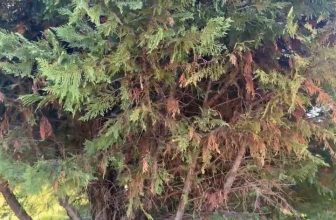
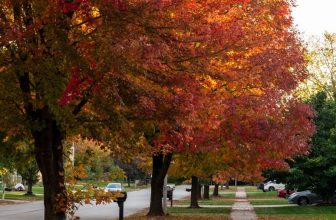
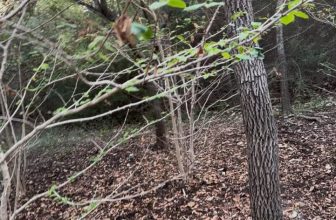
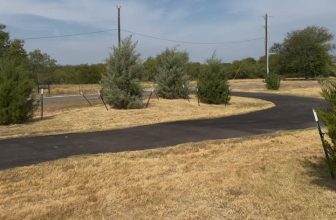
Today we’re in Mineral Wells, Texas, inspecting one of the most severe cases of Oak Wilt I’ve evaluated this season. As I walked the property, it became immediately apparent that this disease has already established itself within the landscape and is now threatening an entire population of mature Southern Live Oaks (Quercus virginiana).
One of the largest trees on the property, an impressive mature Southern Live Oak estimated at well over 25 to 30 inches in diameter, has already entered rapid decline. Several additional Live Oaks throughout the property are now exhibiting symptoms consistent with Oak Wilt, making this no longer an isolated tree problem, but a property-wide management issue.
The speed at which this disease can spread through mature Live Oak populations is exactly why Oak Wilt remains one of the most devastating tree diseases affecting North Texas.
During my inspection, one tree immediately stood out. The canopy was rapidly thinning, large quantities of leaves had already fallen to the ground, and extensive veinal necrosis was visible throughout the remaining foliage. The tree appeared to be collapsing much faster than what we would normally expect from drought, nutrient deficiencies, or ordinary environmental stress.
Unfortunately, those are classic warning signs that the vascular system may already be failing.
The immediate priority on this property is preserving every healthy Southern Live Oak that still has recovery potential while slowing additional spread throughout the landscape.
What Is Oak Wilt?
Oak Wilt is one of the most destructive vascular diseases affecting oak populations throughout Texas. The disease is caused by the fungal pathogen Bretziella fagacearum, formerly known as Ceratocystis fagacearum.
Unlike many diseases that simply attack leaves or twigs, Oak Wilt attacks the tree’s water-conducting system.
Specifically, it colonizes the xylem.
The xylem functions as the plumbing system of the tree, transporting water and dissolved minerals from the root system upward into the canopy.
Once the fungus enters the vascular tissue, the tree immediately begins defending itself.
In an effort to stop the fungus from spreading, the tree produces tyloses and gummy compounds that plug portions of the xylem.
While this defense mechanism attempts to isolate the pathogen, it also blocks the movement of water.
The result is hydraulic failure.
Leaves no longer receive adequate moisture.
Canopies begin wilting.
Branches rapidly decline.
Eventually, the tree dies.
This is why Oak Wilt progresses so aggressively once symptoms become visible.
What I Observed During This Inspection
As I continued evaluating the property, several symptoms strongly suggested Oak Wilt was actively affecting multiple Southern Live Oaks.
The most obvious symptoms included:
- Extensive veinal necrosis
- Gray-green foliage
- Rapid leaf cast
- Large quantities of leaves beneath the canopy
- Progressive canopy thinning
- Sudden decline in an otherwise mature healthy tree
One of the characteristics that separates Oak Wilt from many other oak diseases is the speed of decline.
Healthy mature Live Oaks rarely decline this rapidly unless a significant vascular problem exists.
That rapid canopy collapse immediately raises concern for Oak Wilt.
Although laboratory confirmation may still be recommended, the combination of visual symptoms, surrounding oak populations, and property history makes immediate preventative action extremely important.
Why Southern Live Oaks Are So Vulnerable
Southern Live Oaks possess one characteristic that makes Oak Wilt especially destructive.
They naturally form interconnected feeder root systems beneath the soil.
Over decades of growth, neighboring Live Oaks frequently develop root grafts where roots physically fuse together.
These grafts normally benefit the trees.
They allow neighboring oaks to share:
- Moisture
- Nutrients
- Structural support
Unfortunately, they also allow Oak Wilt to move directly from one tree into another.
According to Texas A&M Forest Service, underground root-graft transmission is the primary method of Oak Wilt spread in mature Southern Live Oak populations.
This means one infected tree can eventually threaten dozens of surrounding trees.
That is exactly why this Mineral Wells property requires immediate attention.
The disease no longer exists within one tree.
It now threatens the entire grove.
Understanding Root-Graft Transmission
One of the biggest misconceptions homeowners have is believing Oak Wilt only spreads above ground.
In reality, the greatest danger often exists below the surface.
As roots from neighboring Live Oaks naturally grow together, vascular connections develop between individual trees.
Once Oak Wilt reaches those connections, the fungus can move directly through the shared vascular system.
The disease literally travels underground.
This explains why entire neighborhoods may eventually experience widespread Oak Wilt mortality.
The fungus simply continues expanding from tree to tree beneath the soil.
For homeowners, this is one of the most frightening aspects of the disease because outward symptoms usually appear long after underground transmission has already begun.
The Role of Nitidulid Sap-Feeding Beetles
Oak Wilt also spreads above ground through one of its most well-known vectors:
Nitidulid sap-feeding beetles.
These small beetles are naturally attracted to:
- Fresh pruning cuts
- Broken limbs
- Storm damage
- Fresh bark wounds
When they visit fungal mats produced on infected Red Oaks, microscopic spores adhere to their bodies.
The beetles then fly to healthy oak trees where they feed on fresh wounds.
As they feed, fungal spores can be introduced directly into healthy vascular tissue.
This is why Texas A&M strongly recommends avoiding unnecessary pruning during periods of elevated Oak Wilt activity.
Fresh wounds provide ideal entry points for infection.
If emergency pruning becomes necessary, wound dressing should be applied immediately following pruning according to current Texas A&M recommendations.
Why Oak Wilt Is So Devastating Across North Texas
One of the reasons Oak Wilt has become such a serious problem across North Texas is the enormous number of mature Southern Live Oaks growing within residential neighborhoods.
Communities such as Mineral Wells, Weatherford, Granbury, Stephenville, Fort Worth, Southlake, Westlake, Keller, and surrounding areas contain thousands of mature Live Oaks growing within root-graft distance of one another.
Once the disease enters a neighborhood, containment becomes extremely difficult.
Entire landscapes that have taken decades to establish can experience widespread mortality within only a few years if preventative treatment programs are not implemented.
That is why Arborist USA places such a strong emphasis on early diagnosis and preventative plant healthcare before widespread infection occurs.
Why Early Intervention Is Critical
One of the biggest mistakes homeowners make is waiting until every tree begins showing symptoms before taking action.
With Oak Wilt, that approach often comes too late.
By the time a Southern Live Oak begins exhibiting extensive veinal necrosis, canopy thinning, and rapid leaf cast, the fungus may have already become established within the vascular system and may already be spreading underground to neighboring trees through interconnected feeder root grafts.
This is why Arborist USA strongly recommends treating healthy, asymptomatic trees located near confirmed or suspected Oak Wilt infections.
Healthy trees absorb preventative treatments much more effectively than trees already experiencing severe vascular dysfunction.
Preventative care is always more successful than emergency response.
Low-Volume Macro Infusions with Alamo® Propiconazole
Following my inspection, I recommended immediate preventative treatment using Low-Volume Macro Infusions with Alamo® (Propiconazole).
Alamo has become one of the industry’s most recognized fungicides for Oak Wilt prevention and suppression and is widely recommended by Texas A&M Forest Service for protecting high-value oak populations.
Unlike foliar sprays or soil drenches, low-volume macro infusions deliver the fungicide directly into the tree’s vascular system.
Small infusion tees are installed around the root flare, allowing the tree to naturally absorb the product into the xylem.
Once inside the vascular tissue, the fungicide moves upward with the transpiration stream, providing internal protection where the fungus attempts to establish itself.
Modern low-volume macro infusion systems provide several important advantages:
- Fewer injection sites
- Reduced wounding
- Faster uptake
- Improved distribution throughout the canopy
- Long-term vascular protection
The objective is preserving healthy vascular tissue before widespread fungal colonization occurs.
Why Healthy Trees Respond Better
One of the greatest advantages of preventative treatment is that healthy trees still possess strong physiological function.
Healthy trees continue producing carbohydrates through photosynthesis.
Those carbohydrates provide the energy required for:
- Root growth
- New foliage production
- Defense against pathogens
- Wound compartmentalization
- Recovery from environmental stress
Once a tree becomes severely infected, carbohydrate reserves begin declining rapidly.
As energy reserves diminish, recovery becomes increasingly difficult.
This is another reason early treatment is so valuable.
The tree still possesses the energy necessary to respond positively.
Integrated Pest Management
Protecting mature Southern Live Oaks requires much more than fungicide alone.
Environmental stress and insect pressure often work together to accelerate decline.
Our Plant Healthcare Program also includes an Integrated Pest Management (IPM) program designed to reduce additional stress placed on the tree throughout the growing season.
IPM focuses on monitoring and managing insects before they become severe enough to weaken the tree further.
Healthy trees naturally tolerate minor insect activity.
Stressed trees do not.
Reducing insect pressure allows the tree to redirect energy toward maintaining healthy vascular function and producing the carbohydrates needed for long-term survival.
Micronutrients and Tree Vigor
One of the most overlooked aspects of Oak Wilt prevention is overall tree health.
Healthy trees are naturally more resilient than stressed trees.
That is why every Oak Wilt prevention program we install includes a comprehensive micronutrient program.
Micronutrients support:
- Chlorophyll production
- Photosynthesis
- Root development
- Enzyme activity
- Stress tolerance
- Overall canopy density
The objective is strengthening the tree from the inside out.
A vigorous tree is far better equipped to tolerate environmental stress while maintaining its natural defense systems.
Plant healthcare should never focus on a single product.
It should focus on the entire physiological system of the tree.
Monitoring the Remaining Oak Population
Because several Southern Live Oaks on this property are already showing symptoms, continued monitoring will be extremely important.
Every remaining oak should be evaluated routinely for changes in:
- Canopy density
- New leaf discoloration
- Premature leaf cast
- Veinal necrosis
- Crown thinning
- Root flare condition
- Additional environmental stress
Early detection provides the greatest opportunity to preserve mature trees before widespread decline occurs.
This is exactly why recurring Plant Healthcare Programs are so valuable in neighborhoods where Oak Wilt has already been confirmed.
Final Thoughts
This property in Mineral Wells, Texas demonstrates just how devastating Oak Wilt can become once it enters a mature Southern Live Oak population.
What began as one declining tree now threatens an entire grove of magnificent oaks that have likely shaded this property for generations.
The disease spreads aggressively through underground feeder root grafts while also utilizing Nitidulid sap-feeding beetles to introduce fungal spores into fresh wounds on healthy trees.
Without intervention, losses can become extensive.
Our objective is interrupting that cycle before additional trees become infected.
Through:
- Low-Volume Macro Infusions with Alamo® Propiconazole
- Immediate preventative treatment
- Integrated Pest Management
- Micronutrient supplementation
- Annual monitoring
- Science-based Plant Healthcare
we are giving these mature Southern Live Oaks the greatest opportunity for long-term preservation.
At Arborist USA, our mission is not simply treating Oak Wilt after it appears.
Our mission is protecting healthy trees before this devastating disease has the opportunity to destroy an entire landscape.
Today we’re in Mineral Wells, Texas inspecting one of the most concerning Oak Wilt cases we’ve encountered this season.
This property contains approximately fifteen mature Southern Live Oaks (Quercus virginiana), and several of them are already showing symptoms consistent with Oak Wilt. One mature tree has entered rapid decline with severe veinal necrosis, extensive leaf drop, gray-green foliage, and significant canopy deterioration.
The biggest concern is that this is no longer just one sick tree.
Oak Wilt has the potential to spread throughout the entire grove.