1) Tell us a little bit about yourself. How did you get into writing?
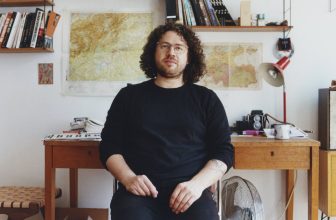
I got a very late start as a novelist. I have just retired after 43 years as a Professor of English at Brandeis University, so I had a career writing scholarly books. The book most worth mentioning is Lincoln’s Tragic Pragmatism, my book on the Lincoln Douglas debates and the political crisis of the 1850s. I’ve also had a small career as a poet, publishing three volumes over the last thirty years. My poetry is mostly narrative poetry in blank verse, or dramatic monologues, so I have always written poetry in areas adjacent to prose fiction, seeking to reclaim for poetry some of the territory (storytelling, engagement with characters, change over time) that poetry has largely ceded to fiction. I hadn’t written prose fiction since junior high school, but I’ve been teaching students how to read novels for decades, and every professor has a novel in there somewhere, and I have been toying with a few possible novels for almost fifty years. When I was captured by the story in A Moment’s Surrender and started to draft it I was surprised by how little a long career of teaching students how to read novels had taught me about how to write one. There are so many different scales to take care of! On every page you make a thousand commitments you have to follow through on. But you are at the same time paying attention to the large scale shape of your story, which you keep rethinking as you go along, as new possibilities emerge in the writing and as your sense of the characters matures. Basic things like how to write plausible dialogue and choosing when to narrate and when to dramatize I had to learn from the beginning, and am still learning.
2) What inspired you to write your book?

I’ve had some elements of this story in the back of my mind since the 1980s. My room-mate at my first job did have a friend who was randomly murdered after telling him that he was leaving his wife that day, so my friend was in the situation of having to decide how much to tell the widow about what he knew. I always thought he was going to write a novel turning on that murder — he did publish a few poems about it — but he died in 2001 and left the story untold. I added the idea that the woman the murdered man was leaving his wife for was the protagonist’s own long-ago ex, and that the victim had been, years before, when they all were graduate students, also having an affair with that same woman behind the protagonist’s back. Once I had the idea that the aftermath of the murder would entangle the protagonist between the two women, with each of whom he is in an awkward position, and that the two women would have very different relationships with the murdered man, and very different ideas about what love is, I had the starting point of the story.
For many years I have spent a week every summer at a Unitarian-Universalist retreat center in Maine called Ferry Beach. One of the features of that retreat is an ongoing writing group. The leader had an endless supply of interesting prompts. Many of the members also were working on long-term projects. A great deal of my novel was sketched out at Ferry Beach and my friends there have been following its progress over the last five years.
3) What theme or message do you hope readers will take away from your book?
A Moment’s Surrender seems to express a great deal of skepticism about love. Love ties together what is angelic and what is demonic in us; it ties together what is spiritual in us and what is carnal; it exalts us, but also sometimes moves us to do things that debase us. Even the best things about love are double. Paul knows that Susan is in a desperate situation, and he wants to do his absolute best for her. But he also knows that what moves him to love Susan, his jealousy of (and rivalry with) Tom, his unresolved and powerfully mixed feelings about Rachel, won’t quite stand examination. And he knows that Susan is not available to him, because she is grieving Tom (whom for all his faults she deeply loved), and she is dying (and needs to prepare her and her six year old son for what is happening to them). So Paul does his best to keep how he feels from Susan, which is impossible. He also wants to help and to protect Susan in a selfless way, but as Rachel points out to him, sometimes there is not a lot of difference between rescuing someone and capturing that person. Paul is also haunted by the long ago failure of nerve with Rachel which destroyed their relationship, and he believes that in some way he can’t anticipate he will always fail those who need him most. Susan, for her part, sees herself as the ever-faithful wife of Tom, her unfaithful husband. But when Paul, without having any idea that he is doing this, supports her through a moment of despair, she falls in love with him, but sees her feeling for him as a betrayal of Tom, and blames herself for using Paul’s feeling for her to manipulate him into providing the help she needs on her way to death (and into adopting her son after he dies). The serially unfaithful Tom loves Susan because he sees loving her as a chance to become a better person than he is, but he also knows from the beginning that despite her love of him and continual readiness to forgive him, he can never actually be the person he wants to be, and that the cycle of transgression and forgiveness is finally just part of the sexual dance between them. He knows you can’t cure a broken will by willing differently, and every promise he makes to himself is a charade he performs for himself, for an audience he knows he can’t hope to fool. Rachel sees herself as a transgressive facer of facts, and the chief fact she sees herself as facing is the idea that there is no sexual relationship that does not involve some measure of exploitation. But she isn’t really at peace with that idea, and because of it she continually torments everyone else, and herself most of all.
Although the title A Moment’s Surrender seems to come from a romance-novel, it’s actually a line from The Waste Land. It’s hard to find any work of literature that has a darker view of sex and love than The Waste Land does. And yet, towards the end, the over-narrator says:
My friend, blood shaking my heart
The awful daring of a moment’s surrender
Which an age of prudence can never retract
By this, and this only, we have existed
Which is not to be found in our obituaries
Or in memories draped by the beneficent spider
Or under seals broken by the lean solicitor
In our empty rooms
I think this passage argues that despite everything a spontaneous openness to love is redemptive, even if it involves risk, even if it involves shame, even if it doesn’t work out, even if it seems like a mistake. Tom, Paul, and Rachel all feel this kind of love for Susan, and Susan feels it for all three of them. Despite every complication, despite every misstep, this reckless, impossible love redeems them all, even in the face of everything they do that would seem disqualifying. That kind of love does not promise happiness, but it does promise that something about us matters. We can’t ask love to conquer death, because nothing conquers death, but because of love death doesn’t conquer everything. As Philip Larkin says, “What will survive of us is love.”
4) What drew you into this particular genre?
I have a lifelong love of Nathaniel Hawthorne’s novels. I wanted to emulate his extremely close examination of the chaotic tangle of intimate human feelings and the moral compromises we never quite get over in our relationships with each other. I was particularly interested in his richly erotic and morally complex female characters, Hester Prynne most of all.
5) If you could sit down with any character in your book, what would you ask them and why?
Could I have two characters, please?
When I was writing A Moment’s Surrender I was so emotionally invested in Susan I thought my relationship with her was just about as neurotic as Paul’s was. But I realized that Susan did not see herself in the idealized way that Paul sees her (or that I do, even now). I had to free her from my predisposition in her favor by giving more space to the skepticism about herself she gives voice to in her internal monologue. She’s terribly unfair to herself, and she treats herself worse even than how Rachel treats her. But at the same time she’s never totally wrong about herself either. The tension between her emotional generosity, her courage in the face of grief and death, her devotion as a parent, on the one hand, and on the other hand her harsh view of herself, and her desire to keep others from knowing exactly what she is thinking and feeling (even as what she loves about Tom is his ability to “know her down to the ground”), is very interesting to me. You can love her and be loved by her, but there will always be some sadness in her that is beyond your reach. I know she ultimately accepted Paul’s love of her. I would want to ask her whether, at the end, she felt that she had been able to love Paul back in the right way; did she feel in loving Paul that she had somehow proven false to the very unfaithful Tom, or was it possible for her to love both of them fully at the same time, different as the love she felt for Paul was from her love for Tom? And I’d like to ask her why she chose to be buried with Tom.
I’d also want to ask a few things of Rachel. Many readers tell me that they find her a very dark character, someone with almost no redeeming qualities. I didn’t see her that way, although I saw her as a character with a dark side she was always giving in to. She’s very cruel, and she takes much too much pleasure in cruelty, but she’s also almost always right about the other characters (except about Susan, who is not the masochist or the Pollyanna Rachel assumes Susan would have to be to put up with Tom). Rachel is also wounded, and very very lonely, and she never seeks to extenuate or rationalize what she does, which she always sees with perfect clarity. The main thing is that at the key moment, when she really has a chance to do the harm to Susan she has been itching to do for the whole novel, she can’t do it. And it is Rachel, after all, who finally brings Paul and Susan together. It’s far harder to predict her future after the novel ends than to predict Paul’s or Jack’s. I’d like to ask her what she thinks will become of her.
6) What social media site has been the most helpful in developing your readership?
I am completely dependent on social media to develop my readership, since my book is a print on demand title. I have an author website (http://www.johndaviesburt.com) with a mailing list, and of course I have many facebook friends. But mostly I have sought readership through book blogs like yours, and through Goodreads. I have been sending queries to book review blogs found on lists compiled by Reedsy, The Independent Book Review, TCK Publishing, and Erica Verrillo.
7) What advice would you give to aspiring or just starting authors out there?
I’m not sure I’ve had the kind of success that would make me a qualified advisor, but I can say what I’ve found helpful.
It’s really important to have your draft be read by other eyes. In my case, that meant first of all my friends, my family, and my colleagues. (I had particularly important help from my colleagues Steve Dowden at Brandeis and Tim Peltason at Wellesley.) But you also need readers who aren’t tied to you in quite the same way. Once my first draft was done, I took many courses at Grubstreet, a writing workshop in Boston that offers dozens of courses, both in person and online. Every course I took there was valuable, and frequently I took several courses from the same instructor. I later hired several of these instructors to read my draft and offer advice, and their advice was always valuable. (I hired one instructor a second time, to see if I had revised my manuscript in the right direction.) There are many other editors who offer beta reading services on Reedsy. I had good experiences with consultants from Reedsy and from Manuscript Wish List, who helped me with my query letter and my opening chapter, although I didn’t hire a beta reader from either source. I had no success getting more than a nibble from the many agents I sent queries to, but when I applied to independent presses and to novel contests I often got detailed letters back. (Duotrope was a very useful site both for finding contact addresses for agents and entry deadlines for contests.) I know some beginning authors are skeptical about applying to contests, but my experience applying for the Prize Americana was wholly positive. In particular, I found that Press Americana’s publisher’s editor, Leslie Kreiner Wilson, who went over my book carefully several times over many months, improved my book in many ways I could not have imagined beforehand. (In fact, what I think of as the single best sentence in the book was her suggestion.) When Press Americana accepted my book I was at the point of going the self-published route. I’m glad I didn’t. I had no idea how much better a manuscript is once a publisher’s editor has gone over it.
8) What does the future hold in store for you? Any new books/projects on the horizon?
As I said, I’ve just retired from my university, and I am just sketching out a second novel. It will be set at an actual International Genetics Conference that was taking place in Edinburgh during the week before the Second World War broke out. I’ve been playing with writing a novel about this conference since 1975, when I stumbled across the proceedings in my college library. It was, as you might imagine, a hotbed of intrigue. the conference was supposed to be held in Moscow the previous year, but Stalin turned against Mendelian genetics (and later executed the Soviet scientists who were organizing the Moscow conference). The Polish geneticists were caught in Britain by the invasion, and were never able to go home for the rest of their lives (because the Communist postwar government had suspicions about them). The American geneticists often had had unsavory associations with eugenics, but at the conference composed an important statement against eugenics. I was interested in what the German geneticists wrote. Quite a few came, but no real Nazi was going to go to Edinburgh in August, 1939. I imagine they were in a complicated position. Surprisingly, a larger than expected number of the German geneticists were women (which gave me my plot).
About the Author

John Burt is the Paul Prosswimmer Professor of American Literature at Brandeis University and the author of the novel A MOMENT’S SURRENDER (Hollywood Books International, forthcoming), three volumes of poetry: THE WAY DOWN (Princeton University Press, 1988), WORK WITHOUT HOPE (Johns Hopkins University Press, 1996), and VICTORY (Turning Point Press, 2007). His non-fiction book LINCOLN’S TRAGIC PRAGMATISM (Harvard University Press, 2013) was positively reviewed on the front page of the NEW YORK TIMES BOOK REVIEW. He is the literary executor of the poet and novelist Robert Penn Warren, whose collected poems he edited.