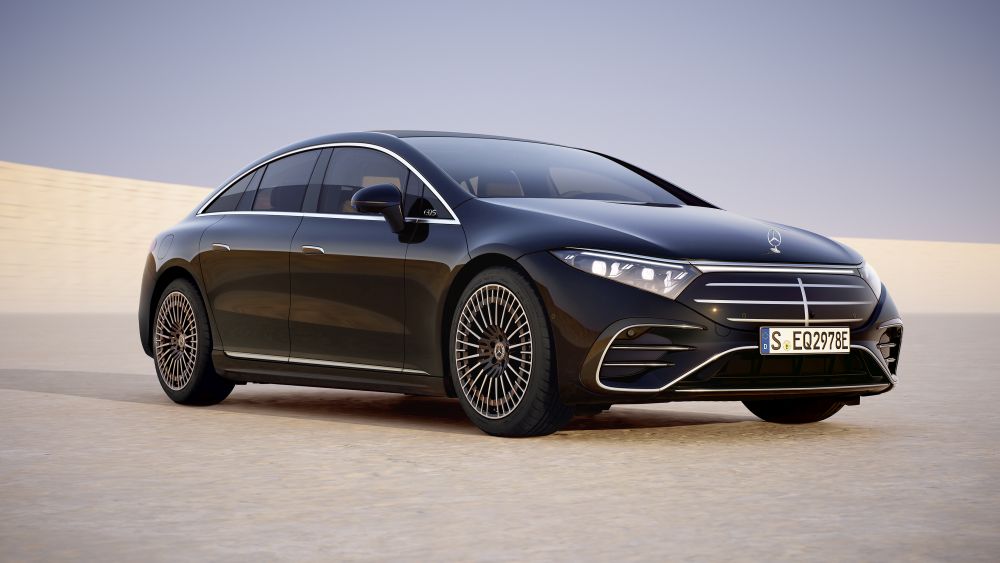
Forty-five million American households rent. That is a staggering number of people who cannot simply call an electrician and bolt a Level 2 wall box to their garage wall. If you own a Mercedes EQS, EQC, EQB, or any other EQ model and you live in an apartment, the charging question is not hypothetical. It is your Tuesday morning reality.
The good news: apartment EV ownership is genuinely workable. The not-so-good news: you need a plan that accounts for your building, your landlord, and your daily mileage before you pick up the keys. This guide walks through every layer of that plan so you are not guessing in a parking garage at 11 p.m.
Why the Scale of This Problem Matters Right Now
Electric vehicle adoption is not slowing down. Electric car sales exceeded 17 million globally in 2024, reaching a sales share of more than 20%, according to the International Energy Agency’s Global EV Outlook 2025. That is one in five new cars sold worldwide going electric in a single year.
At the same time, the U.S. Census Bureau reported in 2024 that there are approximately 42.5 million renter households in the United States, meaning tens of millions of current and future EV buyers cannot install their own home charging without a landlord’s approval. Those two trends are on a collision course, and Mercedes EQ drivers living in apartment buildings are right in the middle of it. The charging gap is real. But it is solvable.
The Apartment Charger Decision Stack
Think of your situation as a stack of options, each one more permanent than the last. You work down the stack until you find what your building actually supports.
- Layer 1: Level 1 trickle charging. Every EQ model ships with a Mode 2 cable that plugs into a standard 120V outlet. You will add roughly 4 to 5 miles of range per hour. On a shorter-range model like the EQA 250, that is functional for daily errands if your commute stays under 30 miles. On the EQS with its 108 kWh battery, it is essentially useless as a primary source. Consider it a backup, not a strategy.
- Layer 2: Dedicated 240V outlet in your parking space. Some apartment buildings already have 240V circuits run to covered parking for EV use. Before signing a lease, ask the property manager directly. One conversation can save you years of frustration. A Level 2 charger on a 240V circuit delivers around 25 miles of range per hour, which fully restores most EQ models overnight.
- Layer 3: Building-installed charging stations. This is the cleanest solution for residents and for the property. A growing number of apartment communities are partnering with installers who design systems with billing features, power-sharing across multiple stalls, and Wi-Fi-enabled management. When your landlord is on board, companies that specialize in EV chargers for apartments can handle everything from the electrical assessment to tenant billing so the property manager never has to think about it again.
- Layer 4: Public network charging as a daily anchor. If your building has nothing and won’t install anything, a nearby DC fast charger becomes your home charger. This works better than it sounds on the EQS, which charges from 10% to 80% in roughly 31 minutes on a 200 kW DC station. One stop on your commute or during a grocery run keeps you topped up without drama.
Mercedes EQ Charging Tiers at a Glance
Not every EQ model behaves the same way on a slow circuit. Here is how the current lineup handles the charging situations apartment dwellers realistically face:
| Model | Battery (kWh) | Max AC Speed | Max DC Speed | DC 10–80% Time
|
| EQA 250 | 66.5 | 11 kW | 100 kW | ~32 min |
| EQB 350 4MATIC | 66.5 | 9.6 kW | 100 kW | ~32 min |
| EQE 350+ | 90.6 | 9.6 kW | 170 kW | ~32 min |
| EQS 450+ | 108.4 | 9.6 kW | 200 kW | ~31 min |
| EQS SUV 450 4MATIC | 108.4 | 9.6 kW | 200 kW | ~31 min |
The practical takeaway from this table: the EQA and EQB handle slower AC circuits better in relative terms because their smaller batteries fill faster. The EQS is an absolute beast on a DC fast charger and genuinely does not need nightly Level 2 access if you have a fast charger within a few miles of your daily routine.
How to Actually Talk to Your Landlord
Most landlords are not hostile to EV charging. They are skeptical about cost and complexity. Come in with answers, not a request.
The frame that works best: EV charging is a tenant retention feature, not an expense. Properties with on-site charging attract longer leases, higher-income renters, and a reputation for being forward-looking. That pitch lands better than “I bought a Mercedes and need a plug.”
Bring three pieces of information to the conversation:
- A summary of what a professional installation assessment looks like (most reputable installers offer this at no charge to the property)
- State and utility rebate programs that may cover 50% or more of installation costs
- A billing model that shows residents pay for their own electricity, not the building
If your landlord says no today, document the conversation and ask again in six months. The market pressure from EV adoption is only going to grow.
Public Charging as a Real Strategy, Not a Fallback
“In most cases, people charge at home and at work, when their car is parked and they’re busy doing other things.”-Mercedes-Benz EV Charging Guide. That quote from Mercedes-Benz’s own guidance points to the right mindset shift. If your apartment provides nothing, your charging “home base” becomes wherever you park for two hours anyway. A supermarket with a 100 kW charger in its lot is a perfectly good answer to the apartment problem if your routine takes you there three times a week. Plan the stops you already make, not extra trips.
Mercedes EQ models from the 2024 model year onward can access the Tesla Supercharger network via a NACS adapter, and 2025 and later models have the NACS port built in. That opens up more than 30,500 additional stations nationwide. Combined with the Mercedes me Charge network, the public charging map is denser than most apartment dwellers realize.
The Lease Checklist Before You Sign
If you are apartment hunting right now with an EQ in your driveway or on order, these are the five questions to ask before putting down a deposit:
- Does the property have any existing EV charging stations, and how are they billed?
- Are there 240V outlets in covered or assigned parking?
- Is the landlord open to installing charging hardware if a tenant covers costs?
- What is the nearest DC fast charger, and how far is it from the building?
- Does your lease allow you to install a personal Level 2 charger in an assigned space?
Two yes answers to this list and you are in good shape. Four or five and you have found a unicorn. Zero and you are betting your commute on public infrastructure alone, which is possible but requires honest planning about your daily mileage.
The Honest Bottom Line
Apartment EV ownership in 2025 is not the friction-heavy experience it was three years ago. Public networks are denser, more Mercedes EQ models support fast DC charging, and building owners are increasingly motivated to add charging as a feature rather than a burden. The gap between what renters need and what properties offer is closing fast.
If you are waiting for perfect home charging before committing to a Mercedes EQ, you may be waiting longer than you need to. The smarter move is understanding your specific building’s infrastructure today, making the ask to your landlord with real numbers behind it, and treating the public network as a genuine part of your charging routine rather than a worst-case backup.
Your EQ is ready for apartment life. The question is whether your building is ready for your EQ.