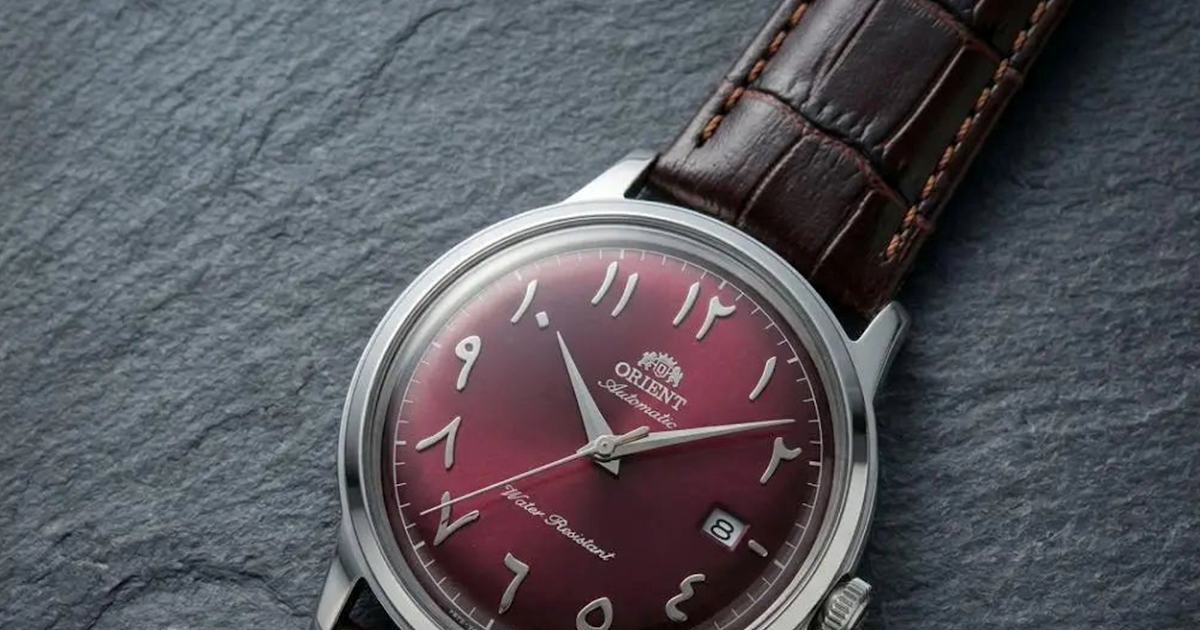

In
watch terminology, an “Arabic numeral dial” normally means a dial using
familiar numbers such as 1, 2, 3, and 4, as opposed to Roman numerals or simple
hour markers. However, this common description creates a certain irony: the numerals
most watch collectors call Arabic are not necessarily the ones they would
encounter on signs, documents, and clocks in much of the Arabic-speaking world.
The
symbols ٠ ١ ٢ ٣ ٤ ٥ ٦ ٧ ٨ ٩
are generally known in English as Eastern Arabic numerals or Arabic-Indic
numerals. Their familiar Western equivalents
are 0 1 2 3 4 5 6 7 8 9. Both belong to the broader Hindu-Arabic numeral
system, which originated in India and was developed and transmitted through the
Islamic world before reaching Europe.
The
term “Eastern” is important because the numerals are not used uniformly across
every Arabic-speaking country. They remain common in the Arabian Peninsula and
the eastern Arab world, while Western numerals are widely used in parts of
North Africa and are also frequently seen alongside Eastern numerals elsewhere.
There is also a related Persian form, in which some of the characters differ
slightly. A watch described simply as having an “Arabic dial” may therefore
require a closer look at exactly which numeral style it uses.

On
a watch dial, Eastern Arabic numerals offer more than a change of language.
Their rounded and flowing forms give a familiar watch design a noticeably
different character. Depending on the typeface, they can appear highly
traditional, almost calligraphic, or surprisingly modern. Even collectors who
do not read Arabic can usually learn to recognize them quickly, since their
position around the dial provides an immediate reference.
Such
dials are often associated with watches made for the Middle Eastern market.
Rolex is probably the best-known historical example. The company produced
watches with Arabic-language day and date displays and Eastern Arabic hour
numerals for prominent customers and regional markets decades ago, particularly
within the Day-Date collection. Modern Eastern Arabic numeral Rolex models have
helped renew international collector interest in the style, although the idea
itself is far older than the current fashion surrounding them.
Part
of their appeal comes from rarity. In many cases, an Eastern Arabic dial was
offered only through particular distributors, in certain countries, or as part
of a small regional edition. This can turn an otherwise familiar watch into a
much less common variation. At the same time, the numerals should not be
treated merely as an exotic design theme. For many buyers, they are simply the
natural local way of displaying numbers.

All
this information comes to mind following a recent batch of Eastern-Arabic
versions of the Bambino, which popped up on Orient USA website (but not on the
international / Japanese site). I can only assume these are also available on
certain local distributors in the Middle East.
The
watches released include reference RA-AC0035E with a green dial and golden markers
and hands, ref. RA-AC0036L with a blue dial, RA-AC0037R with a red dial,
RA-AC0038S with a white dial and gold-colored markers and hands, and reference
RA-AC0039Y with an ivory dial.
Mechanically, they are identical to standard 40.5mm Bambinos and use the same F6724 movement. Hence, the date wheel still features standard “western” numbers, which is not surprising, although it would have been nice if the dates were also printed using Eastern Arabic digits.

Older appearances of Eastern Arabic numerals on Orient dials are quite rare – ignoring, of course, various cheap re-dialed watches you can find online. However, a number of Tristar models with Arabic dials do exist, and interestingly, those watches, which feature a day-of-week disc as well, were sold with the days written in Arabic.
Eastern
Arabic numeral dials have never been a major part of Orient’s catalog, making
releases like these all the more interesting. Together with the earlier Arabic
Tristars, they show that while uncommon, the style is by no means new to the
brand. Hopefully, this won’t be the last time Orient revisits it – perhaps next
time even extending the treatment to the date and day displays for a truly
complete Arabic dial.

Photos
were taken from various current and old Orient publications and sale ads.