The Great POWER RECORDS BATMAN Album of 1975


TOYHEM! 50 YEARS of sonic satisfaction!

—
Welcome to TOYHEM! For the seventh straight holiday season, we’re bringing you a series of features and columns celebrating the toys of our youth, which often made for the best memories this time of year. Click here to check out the complete index of stories — and have a Merry Christmas, a Happy Chanukah and Happy Holidays! — Dan
—
If you were a Batman kid 50 years ago — and I most certainly was, as you know — if he wasn’t on TV and you didn’t feel like reading (or watching your View-Master), your next best option was Power Records.
In 1975, you could get Book and Record sets, like “Stacked Cards” or “Robin Meets Man-Bat,” standalone singles, or two LPs, one numbered #8155, the other #8167.
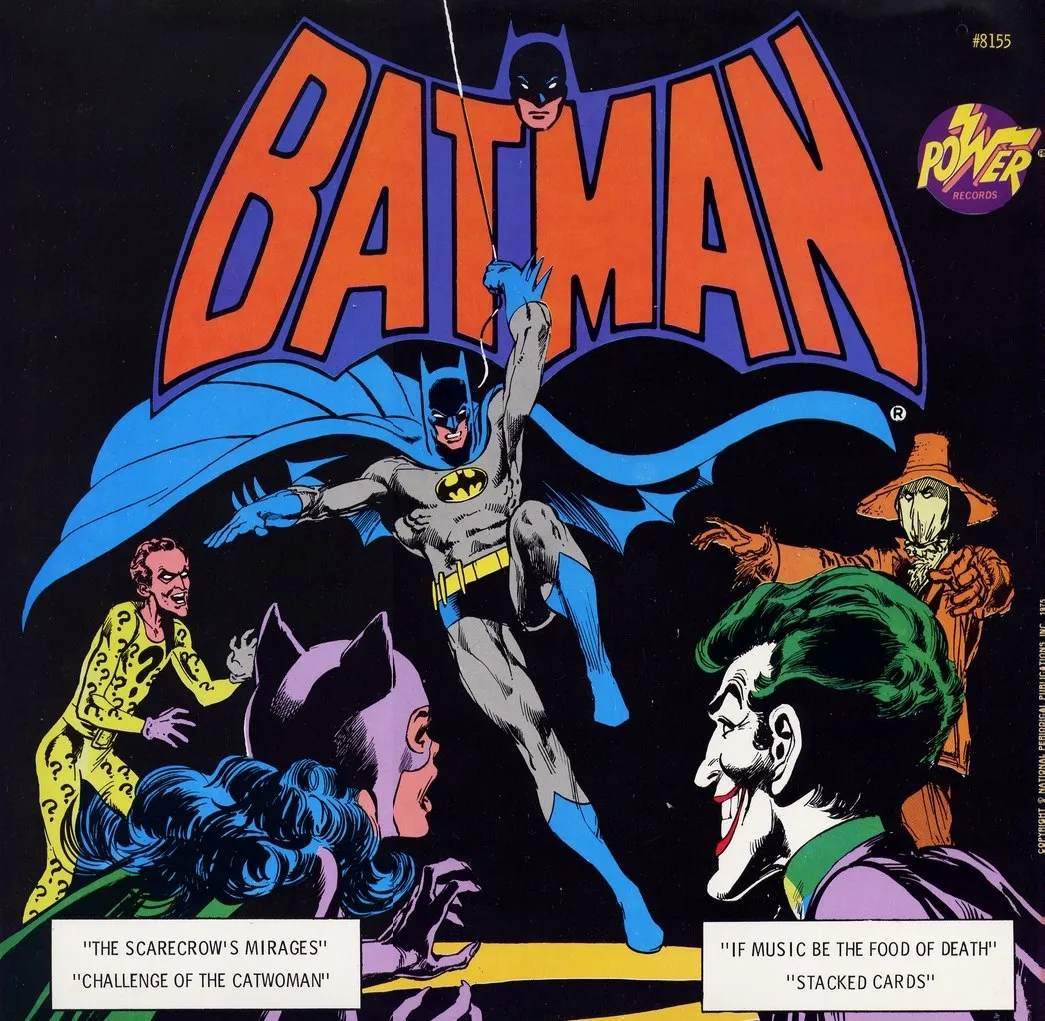
I had the first album with its collection of four dramatic, surprisingly mature audio plays: “Stacked Cards” written by Joey Lapidos; “The Scarecrow’s Mirage,” written by E. Nelson Bridwell; “Challenge of the Catwoman,” by Bridwell; and “If Music Be the Food of Death,” written by Joan Wile.
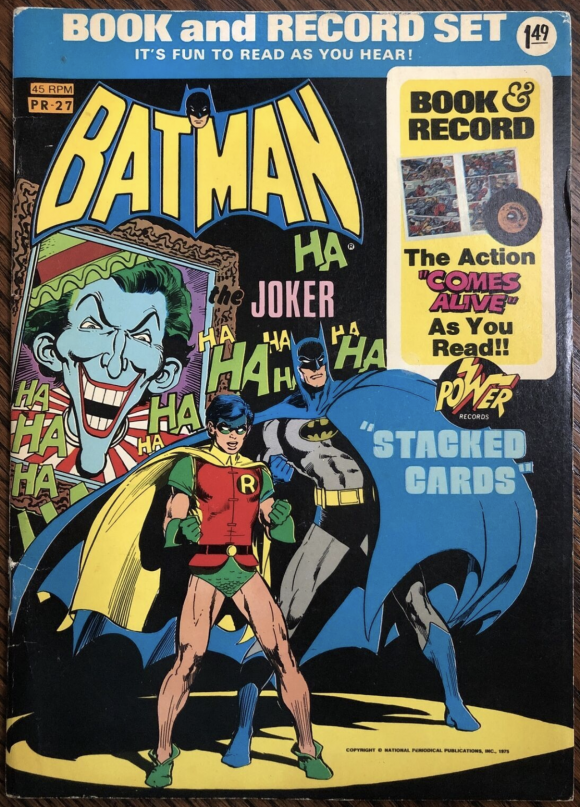
The Book and Record version
“Stacked Cards” is the one everyone remembers, not just because of its fabulous Neal Adams/Dick Giordano-illustrated Book and Record version, but because Batman and Robin openly ponder whether they should get the Joker a frontal lobotomy and just be done with it. (They’re probably right, kids.)
“The Scarecrow’s Mirage” stands out because producer Cornel Tanassy (presumably) made the sharp-eared choice to muffle Jonathan Crane’s voice so it sounded like he was speaking from behind the burlap of his mask. In “Challenge of the Catwoman,” the Feline Fatale sounds suitably seductive, while the actor playing the Riddler in “If Music Be the Food of Death” does a higher-pitched Frank Gorshin.
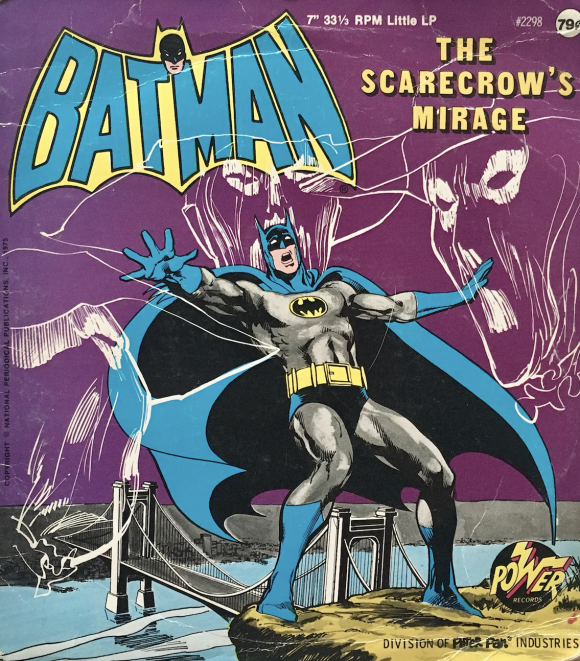
The standalone version
That Riddler can be a bit irritating, unfortunately, but the voice-casting and direction is overall rock solid. Batman is stony tough (though a little wooden at times) and Hudson University student Robin is enthusiastically youthful. The Joker, though, gets big points for his counterintuitively gravelly voice.
When reading mid-’70s Batman comics, my mind voices sometimes lapse into these versions and they fit well, for the most part. This is not Andrea Romano/DC Animated Universe level, but still first-rate, though the actors are unfortunately unidentified.
And what can you say about the Adams cover? Well, here’s what I said about it in NEAL ADAMS’ 13 GREATEST BATMAN COVERS – RANKED: “This album cover is a very basic, no-frills tableau but it’s highly effective in atmosphere and concept – and perfect for setting the mood for the record’s four stories. On top of that, Adams didn’t draw the Riddler, Catwoman or Scarecrow in the comics, so that’s a big bonus.”
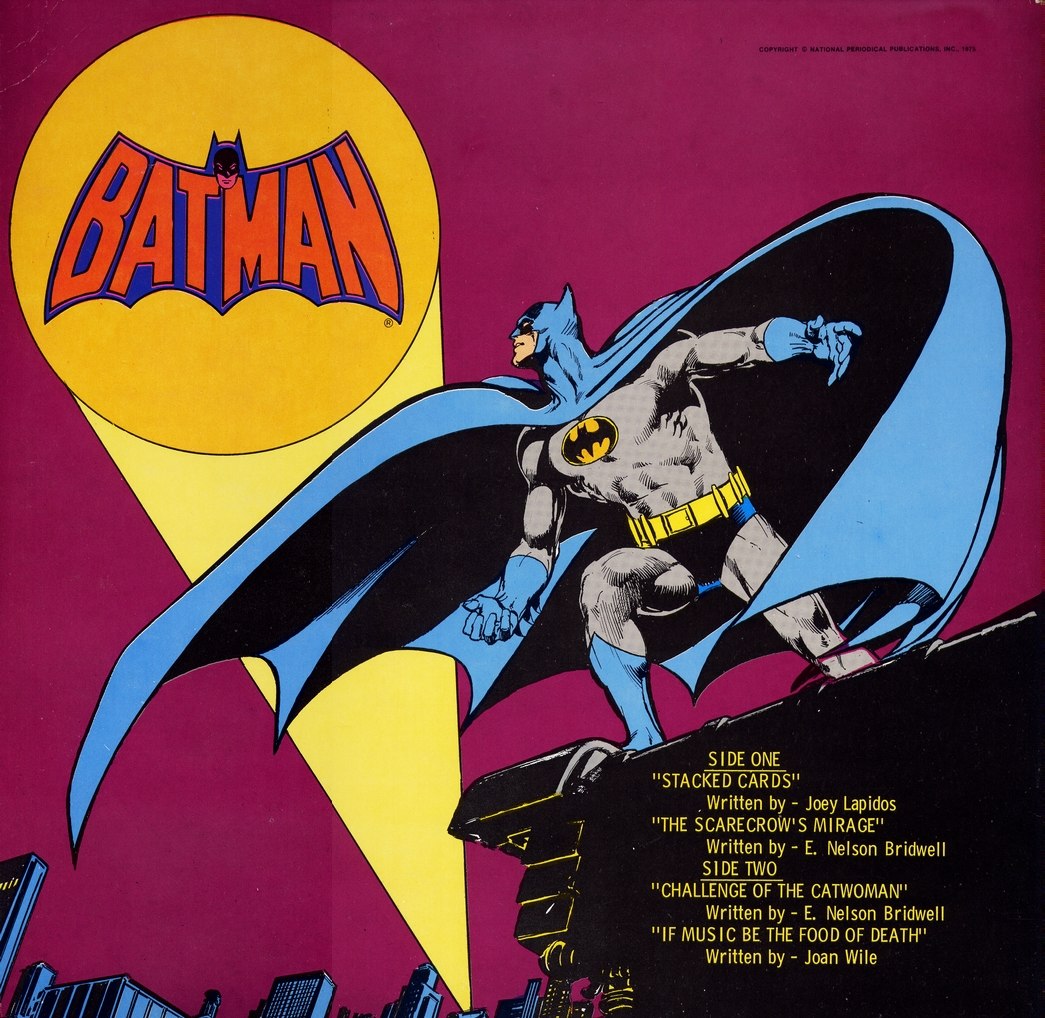
Adams’ back cover, meanwhile, has almost the identical layout as Jim Aparo’s front for the famed treasury Limited Collectors’ Edition #C-37, which came out the same year. I don’t know who’s swiping whom, but it obviously works with either artist.
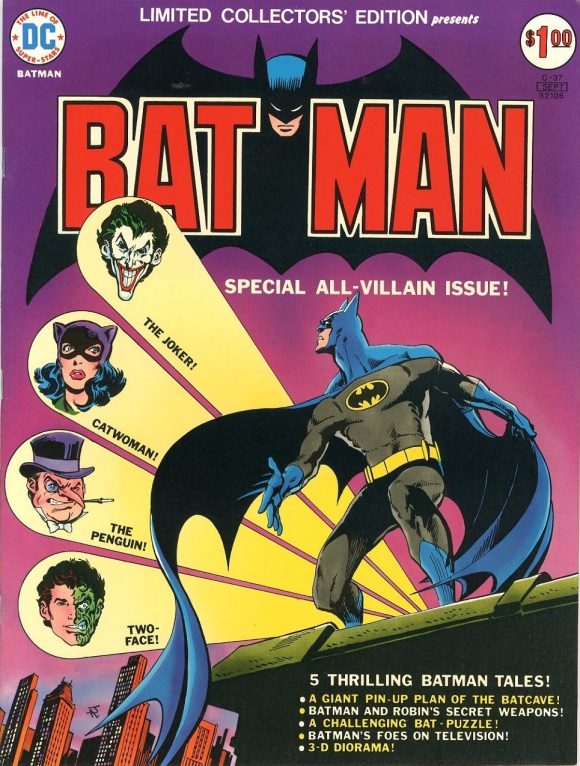
As I noted earlier, there are plenty of other Power Records Batman stories, including ones that came out in 1976. But other than the “Stacked Cards” book artwork, nothing will ever beat ol’ #8155’s total package.
—
NOTE: Want some more groovy Batman retro audiophilia? Links below!
—
MORE
— The Complete TOYHEM INDEX of Stories and Features. Click here.
— MUSICAL ADVENTURES AT 45 RPM: The Ginchy DC COMICS Records of the 1960s, by MARK WAID. Click here.
— ROBIN MEETS MAN-BAT: A Power Records Tale That Soars. Click here.
— Feast Your Eyes on NEAL ADAMS’ Original STACKED CARDS Cover. Click here.