A Visit to Chaberton Estate Winery – Winery Tour and Lunch at Bacchus Bistro

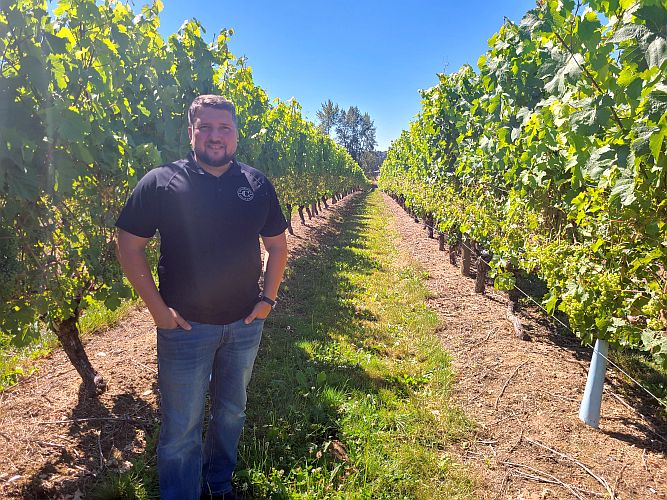
Chaberton Estate Winery is the pioneer estate of the Fraser Valley and in BC. They farm 44 acres of estate-grown fruit with other parcels from across the Okanagan Valley. The winery’s history was initially established by the Violets family, whose European lineage includes a Guinness World Record for a one-million-litre oak barrel. They sold their winery and vineyard in France and moved to the Fraser Valley, locating the site of the winery and then testing different grape varieties. Once they identified the best varieties for the climate, they began formally planting the vineyard in the mid-1980s. In 2004, the Violets sold the winery to a wine-loving Hong Kong businessman, Anthony Cheng, and his partner, Vancouver lawyer Eugene Kwan.
For me, to better appreciate a winery, I need to walk through their vineyard, see their fermentation tanks and their barrels for fermenting and/or aging wine, and talk to the winemaker about their methods and the vision for their wines. I had this experience recently as I visited Chaberton Estate Winery and spoke with winemaker Gary Zhygailo as we tasted through several of their wines. I published my wine tasting notes earlier.
This article gets into the tour of the vineyard, the winemaking facilities, and my well-deserved lunch at the Bacchus Bistro.
The Vineyard
Central to Chaberton’s identity is the commitment to dry farming, particularly within the heritage 1984 Block 1 Bacchus. Vine material was sourced from Germany via Washington State and grafted onto American rootstock. These vines represent some of the oldest in the province. Unlike the irrigated vineyards of the Okanagan, these vines have developed deep root development, reaching several meters into the silt and clay to access the water table. The lack of irrigation results in heightened fruit concentration and a resilient acidity profile that defines the estate’s technical signature, according to Gary.
The heart of the winery’s legacy is Block 1, where the Bacchus vines were planted in 1984 and still thrive. Other varieties like Siegerrebe and Ortega are own-rooted, grown from cuttings scouted and brought back from Washington State.
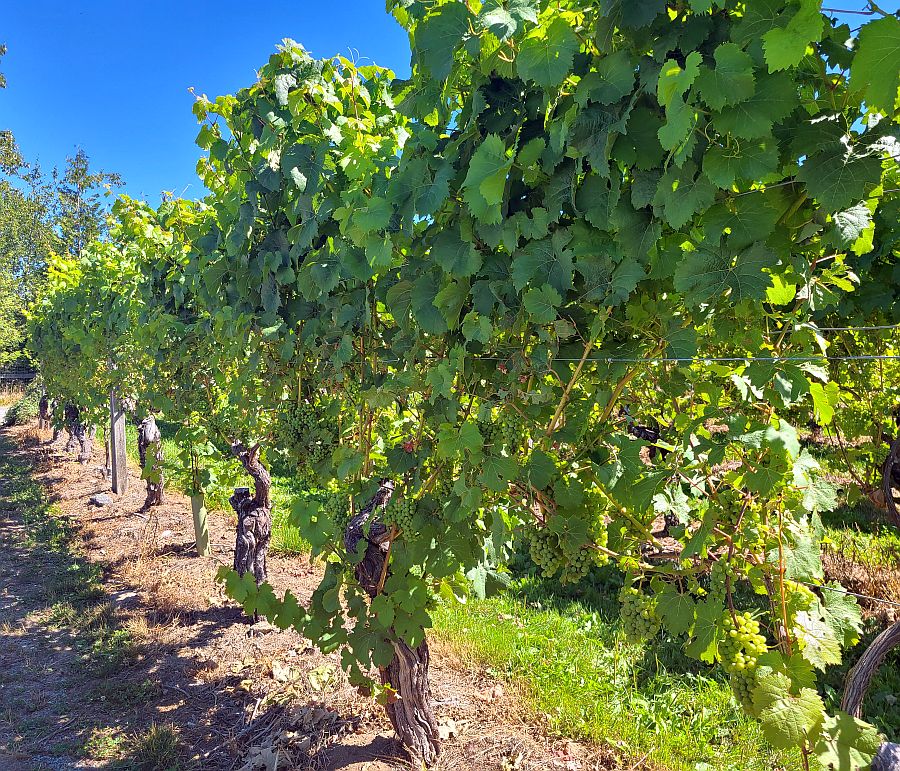
Unlike the irrigated Okanagan vineyards, Chaberton relies on dry farming, a strategic choice that highlights the Fraser Valley’s unique soil. The site features a specific layering of clay on top and silt on the bottom, a combination that offers superior natural water retention. By avoiding irrigation, the team forces mature vines to send roots several meters deep to find natural water sources. These deep systems create resilient plants that survive better than the shallower-rooted vines of irrigated regions.
In the Fraser Valley’s humid, maritime climate, canopy management is a necessity. The team employs early leaf removal to maximize sun exposure and performs strategic thinning on red varieties like Gamay. Walking the rows recently, the vines looked vigorous and healthy. Varietal selection is equally strategic; the winery prioritizes varieties with “loose bunches” to facilitate maximum airflow and mitigate the risk of botrytis and other fungal pressures.
Winemaking Process at Chaberton Estate Winery
Infrastructure of the Crush Pad
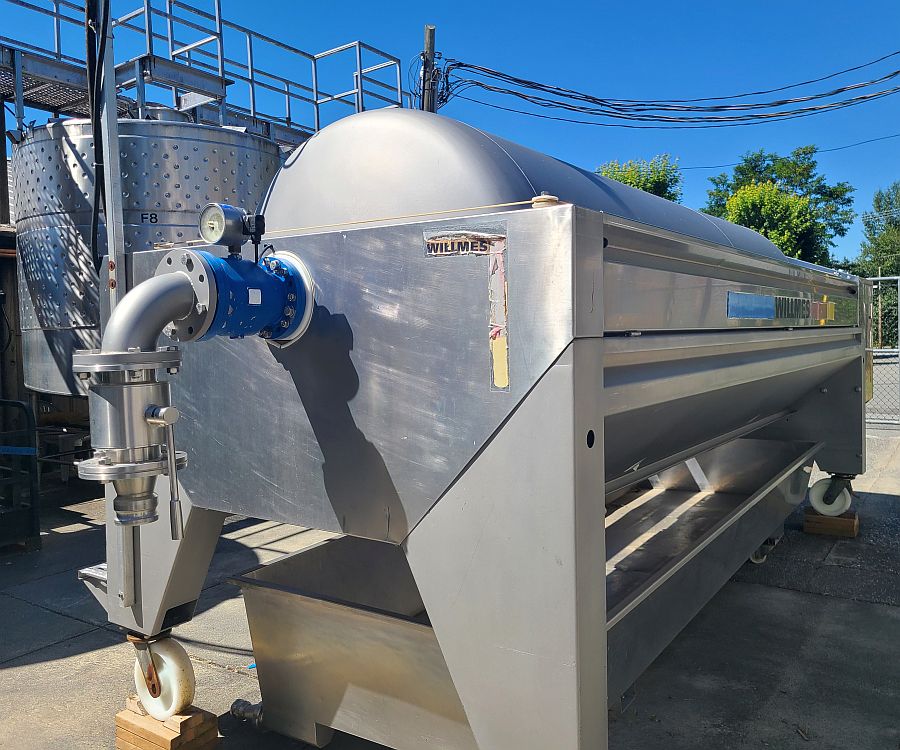
The strategic importance of the crush pad lies in its technological versatility. To handle the estate’s 200 tons alongside the 500 tons (75% of total volume) sourced from the Okanagan, the winery must manage diverse throughput requirements. They scaled their equipment so it can transition easily between small-lot estate fruit and large-scale interior fruit.
Juice extraction is managed via two high-capacity German presses:
- 20-Ton Press: Primary for high-volume Okanagan fruit.
- 8-Ton Press: Reserved for small-batch estate fruit and specialized “whole bunch” protocols. Whole bunch pressing is a deliberate enological choice for premium white lots; by bypassing the de-stemmer and pressing intact clusters, the winery produces a more delicate juice profile with lower phenolic extraction, essential for their high-end aromatic program.
Once juice extraction is complete, the focus shifts to stabilization and fermentation.
Fermentation Strategy and Tank Management
Temperature-controlled fermentation is critical for preserving aromatics of cool-climate white wines. Gary uses a settling period at low temperatures to ensure juice clarity and aromatic stability prior to yeast inoculation. This precision cooling is facilitated by a diversity of tanks, including Italian-made vessels and Canadian Ripley tanks from Summerland, that range from 5,000L to 9,600L, all equipped with integrated cooling jackets.
Following primary fermentation, the wines are moved to the barrel room, where the focus shifts to maturation.
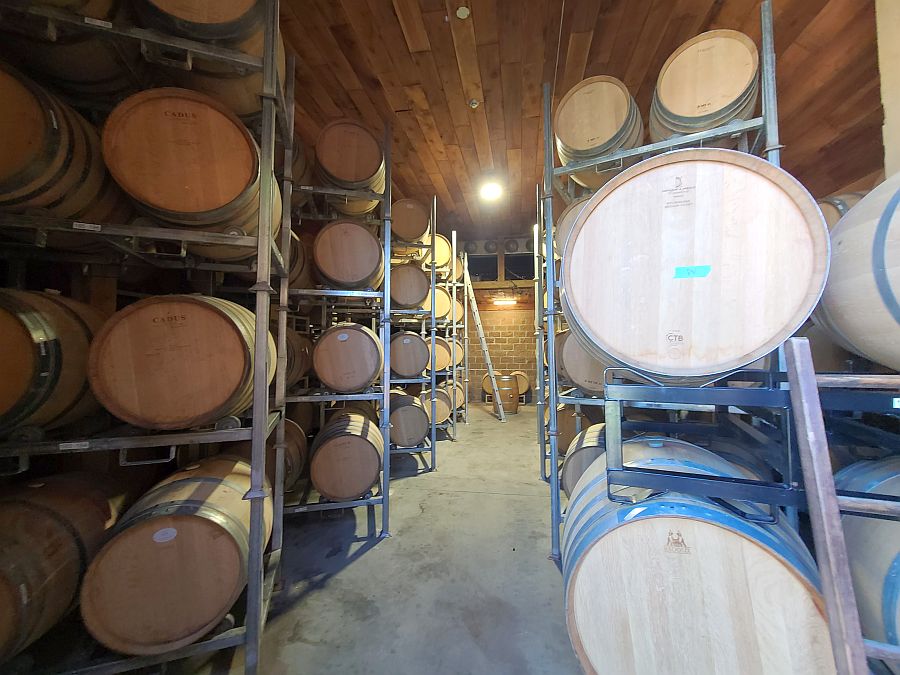
The Barrel Program and Maturation
Their barrel inventory comprises 225L and 400L vessels with an international sourcing strategy:
- French Oak: The standard for structural elegance.
- Hungarian Oak: Utilized via French cooperages for its specific spicy profile.
- Western Ukrainian Oak (soon!): An experimental addition characterized by an exceptionally tight grain profile and unique tannin release.
Bottling and Labelling
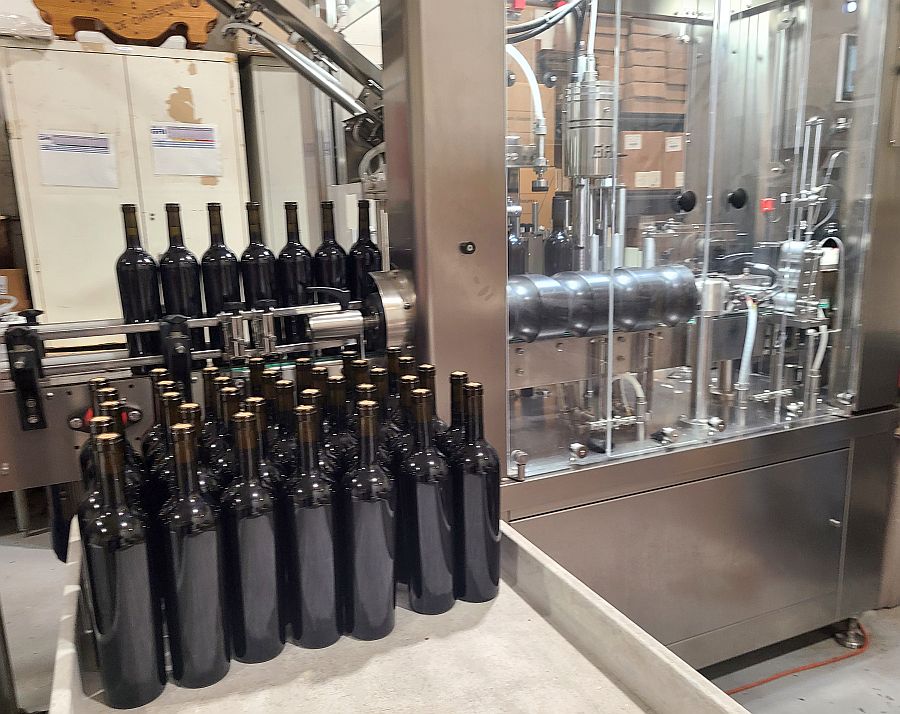
The packaging phase is the last stage before sales. Oxygen exclusion is the primary objective to prevent the degradation of the wine’s aromatic profile. The bottling line utilizes a high-precision nitrogen sparging system to displace oxygen within the bottle immediately prior to filling.
While white and aromatic wines are generally bottled and labelled simultaneously for immediate sales, the red wine program follows a “bottle-and-hold” strategy. Red wines are bottled and stored for at least one year prior to labelling. This allows tannins to resolve and soften, ensuring the wine is in peak condition when it finally reaches the consumer.
Lunch!
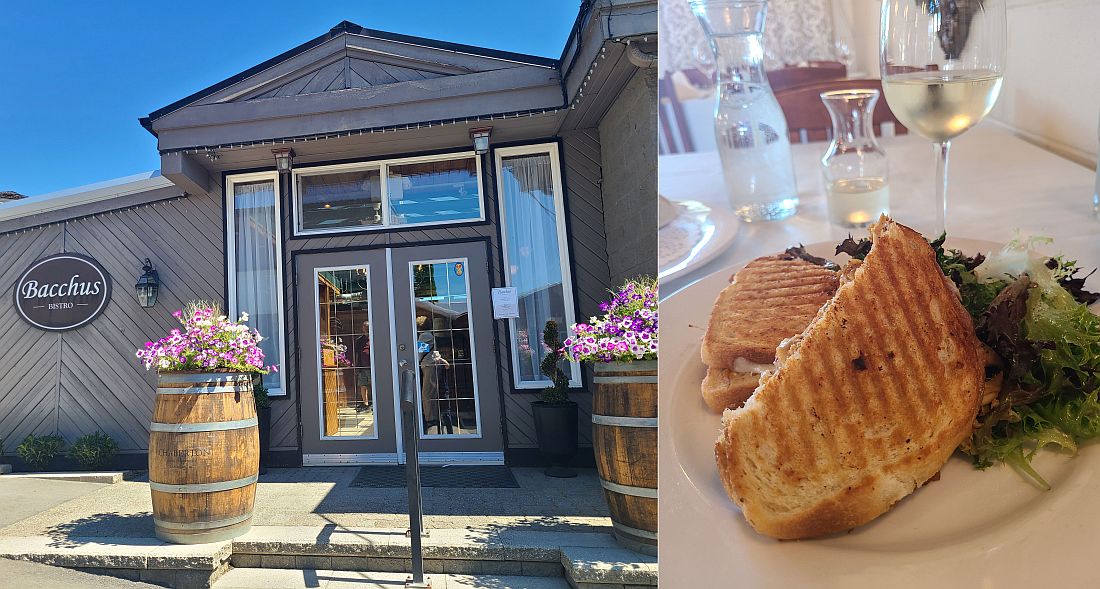
After walking through the vineyards, checking the crush pad and winemaking facilities and storage, and then sampling a wide range of wines with Gary, it was time for lunch at their Bacchus Bistro. It is quite a popular restaurant. I ordered the Spiced Chicken and Bacon Panini (which also came with a mixed greens salad) and paired it with a glass of their Chaberton Dry Bacchus wine. I really liked the Dry Bacchus from my tasting room experience and purchased a bottle to bring home. You could taste the cumin spice from the chicken, and I enjoyed the creaminess of the Havarti cheese in the panini. The fresh, bright flavours of oranges and peaches and acidity in the wine worked with the cumin spice and the creamy cheese. I did not really taste the bacon flavour and wondered if it was maybe very lightly cured? Having a stronger smoky bacon flavour, I think, would have made this pairing even better.
Thank you to Gary for walking me through the vineyard and the winemaking facilities, along with the wine tasting.