Craft beer’s current numbers explain why the taproom can no longer rely on the liquid alone. The Brewers Association reported a 4% decline in US craft production to 22.034 million barrels in 2025, and a 5.7% decrease in the volume of beer produced overall. Brewpubs and taprooms were down 1.7% and 3.9%, respectively, and down 8.9% for microbreweries. When demand for packaged beer is slowing, hospitality boosts food for the occasion, (non)alcoholic beverages, and repeat business. Even if it was about sport, trivia, or table games, it made for common ground for strangers before anybody had to come up with small talk.
When space, timing, and repeated interactions aren’t just a gimmick but central to the business model, a reliable event schedule should be used to make it happen for the local brewery, anyway. Providing a regular beer release, a seasonal beer, or a tiny tasting segment is great to ensure additional reasons for regulars to arrive, without making it seem like salesmanship. As time passes, those simple rituals can evolve into a comfortable social practice that people can be counted on to return for the event, the comfort and familiarity, and the sense of returning to old companions.
A Falling Market Rewards Better Rooms
According to the Brewers Association, 60 percent of craft breweries experienced growth in 2025, 39 percent grew, and one percent remained unchanged. Not all local taps are community or public taps. A reliable calendar, extended and attentive service, and enough diversity for a mixed group are essential for the regulars. Furthermore, the experience of hospitality alters what success will look like.
Even if the number of beers served is not as big as usual, a quiz can help keep tables full, food can help increase the average check, and an upcoming event can provide a reason to return again. This is where taproom sports management can offer a useful perspective, particularly when events are built around shared interests and repeat attendance. The metric worth watching is not only pints per hour, but also repeat visits per event format.
Sport Gives Strangers a Script
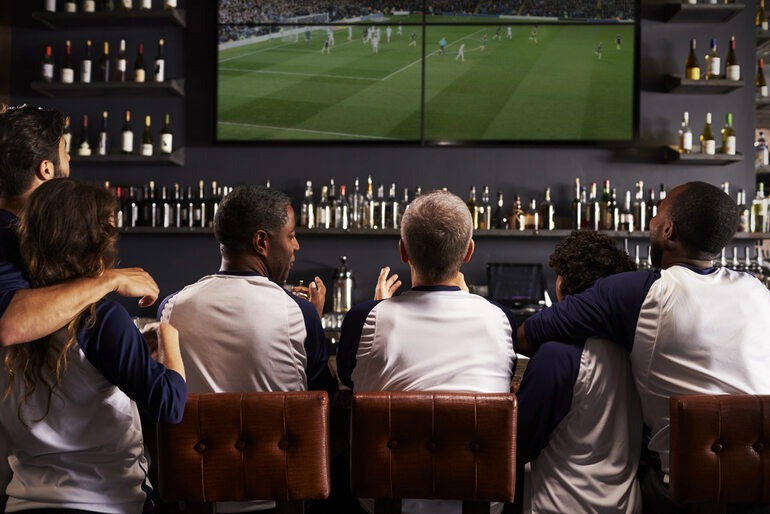
Building up, a half-time discussion, a ‘deciding moment’, a live match, and a finish all have a timetable of their own. The arrangement allows for late admissions without any disruption of the table, as it would in a film screening or ticketed event. The venue’s job is to make the match visible without letting ten televisions turn every conversation into noise. Scheduling matters more than screen count. A clear viewing zone and a quieter area serve two audiences at once. Commentary should be audible near the match without swallowing every order.
Games Keep the Table Talking
Low-key roles for people who don’t know each other include playing Trivia, darts, shuffleboard, and Board Games. A quiz team requires a reader, a quizzing expert, and someone who can make a guess, but that social work aspect is in the constitution. Short rounds also leave natural gaps for conversation and ordering. The best events avoid turning every visit into a championship. Complicated scoring and expert-only prizes discourage newcomers. A fixed start, visible rules, and a brisk host matter more than an oversized prize pool.
Digital Play Should Not Hijack the Table
Phones already sit beside the glass, so the question is how digital entertainment fits without replacing the people present. Casino play is built for individual decisions, even when friends discuss the screen. Opening an online casino should begin with checking the operator, game rules, provider, and account limits rather than copying another person’s stake. RNG outcomes do not improve because a table is celebrating, and alcohol can make a pre-set budget easier to ignore. The clean boundary is simple: decide the spending limit before the first paid round and do not treat shared excitement as evidence about probability.
Sports betting sits closer to the room’s main event because the same score changes both conversation and price. If tactics are not on everyone’s mind, each bet is held on one account, and one bankroll is shared. Odds, match status, and settlement need to be displayed on a betting website before the match begins. Decimal odds of 2.50 imply 40% before margin, while a shortening price records market action rather than guaranteeing the result. Keeping the bet small enough to forget during play protects the match from becoming a running account-balance check. Fast games use sound, colour and rapid feedback to create a self-contained break.
That makes them easy to open during an interval and equally easy to repeat without noticing the total time. A round on Lucky Slot should follow a review of the visible rules, stake control, and any automatic-play option. Each result must stand on its own; a losing sequence does not make the next outcome due. In a beer-focused setting, keeping the session contained also leaves room for enjoying a pint and the social side of the venue. Even if it’s bragging about a new tap or enjoying a tasting flight with friends, it is an enjoyable, productive way to connect with the community. Either assign a time or a set number of rounds for the table to keep the phone and resume a natural flow of discussion around them.
The Menu Should Make Pace Visible
Beer strength varies far more than glass shape suggests. In the United States, one standard drink contains 14 grams of pure alcohol, so a strong pint may represent more than one. A practical menu should:
- List ABV beside every beer.
- Offer smaller pours.
- Keep water and food easy to order.
- Give alcohol-free drinks equal visibility.
Those options give designated drivers and non-drinkers a real place at the table. They also let people staying for a full match alternate without leaving the event. Another beer should never be the price of remaining involved.
Community Is Built on Repetition
The US Surgeon General recommends local infrastructure and programmes that create regular opportunities to meet. A taproom cannot solve isolation, but a recurring quiz or supporters’ gathering tells people when the next contact will happen. A useful calendar therefore mixes dependable fixtures with occasional experiments. Track attendance, return rate, food sales, and how long tables remain occupied after the formal event ends.
One that only fills up the room once and never gets the same people to come again creates traffic; one that gets people to greet first before the host begins is a community routine. That habit may be formed at a rotating tap, a brewery tasting, or some combination of both, for a beer-oriented establishment or a recurring game-night pour that enhances the everyday experience and provides re-enlistment incentive to regulars. The best formats are those where the event is integrated into the venue, as follows, and where one can afterwards continue the conversation over a beer after the established programme is over.