Choosing the right KPIs
KPIs for any business should be chosen and monitored relative to specific business goals. These goals are often set by management and permeate throughout the organization (check out our posts on EOS for a helpful goal-setting framework).
The general idea is to work backward from quarterly or annual goals toward KPIs that indicate progress toward those goals. For example, you could have a business objective of $25,000 in new MRR, so the KPI assigned to the product team is “trial-to-paid conversion rate”. If they improve this conversion rate, there’s a higher likelihood of hitting the business objective of $25,000.
KPIs can differ by industry, business model, and stage of business, and some KPIs are irrelevant for one business and integral to another.
For example, in our guide to financial KPIs we have listed key performance indicators across a handful of business models:
These KPIs are listed to stimulate thinking but in no way are all directly related to every business using that business model. Once you’ve identified which KPIs make sense to your team, you need to set goals.
Setting SMART goals
The SMART framework is by far the most popular for KPI goal setting. The letters are typically taken to stand for Specific, Measurable, Attainable, Relevant, Time-bound.
-
Is your objective Specific?
-
Can you Measure progress towards that goal?
-
Is the goal realistically Attainable?
-
How Relevant is the goal to your organization?
-
What is the Time-frame for achieving this goal?
If you can answer each of these questions for your chosen KPI, and point it back to the strategic objective, you have yourself a winner.
Checking in on your KPIs
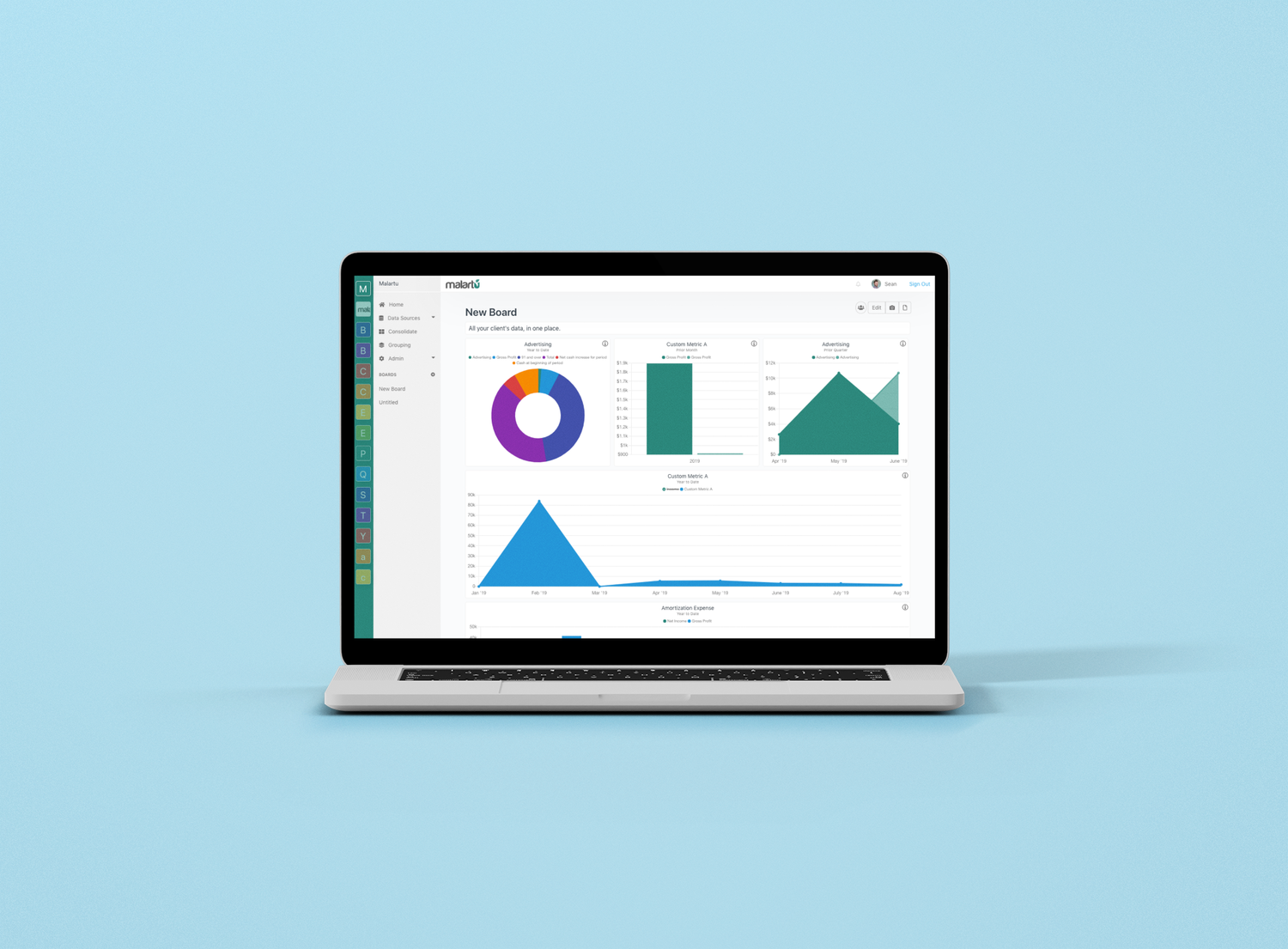
What’s measured is managed, so you need to setup a system for tracking your KPIs regularly. That’s where Malartu comes in. With your KPIs and goals defined, use Malartu to automate the calculation and visualization of each KPI in your company. These KPIs are calculated directly from data sources, so you can guarantee accuracy and accountability for your team.
Additionally, make sure to review the connection between KPIs and business objectives on a regular basis. Are you making progress toward SMART goals? Is this reflected in progress toward objectives? If you see progress in KPIs but not objectives, you have a strategic problem. If you don’t see progress in KPIs, you have a personnel problem.
Use our free guide to inspire your own KPIs